Get Full Government Meeting Transcripts, Videos, & Alerts Forever!
Get email alerts on the Family Law topic
No spam. Unsubscribe anytime.
Bill would require written findings in final child custody orders; committee agrees to carve out initial orders
Summary
House Bill 1626 would require courts to include written findings of fact and conclusions of law in child custody orders. Committee members and witnesses supported limiting the requirement to final orders to avoid bogging down provisional hearings.
House Bill 1626, introduced in committee by Representative Judy, would require courts to include the factual findings and conclusions of law that underlie child custody orders. The sponsor said the measure is intended to increase transparency about why a custody decision was made.
Representative Judy told the committee the bill is a compromise from prior co-equal parenting proposals and would affect a small share of custody cases. "This just brings some more transparency to this process," Representative Judy said.
Members raised concerns that requiring detailed findings in preliminary or emergency orders could slow the courts. Senator Freeman and other members suggested an amendment to limit the requirement to final custody orders so that judges are not required to produce written findings in short, triage-style initial hearings. Representative Judy agreed to work on language to exclude initial or provisional orders.
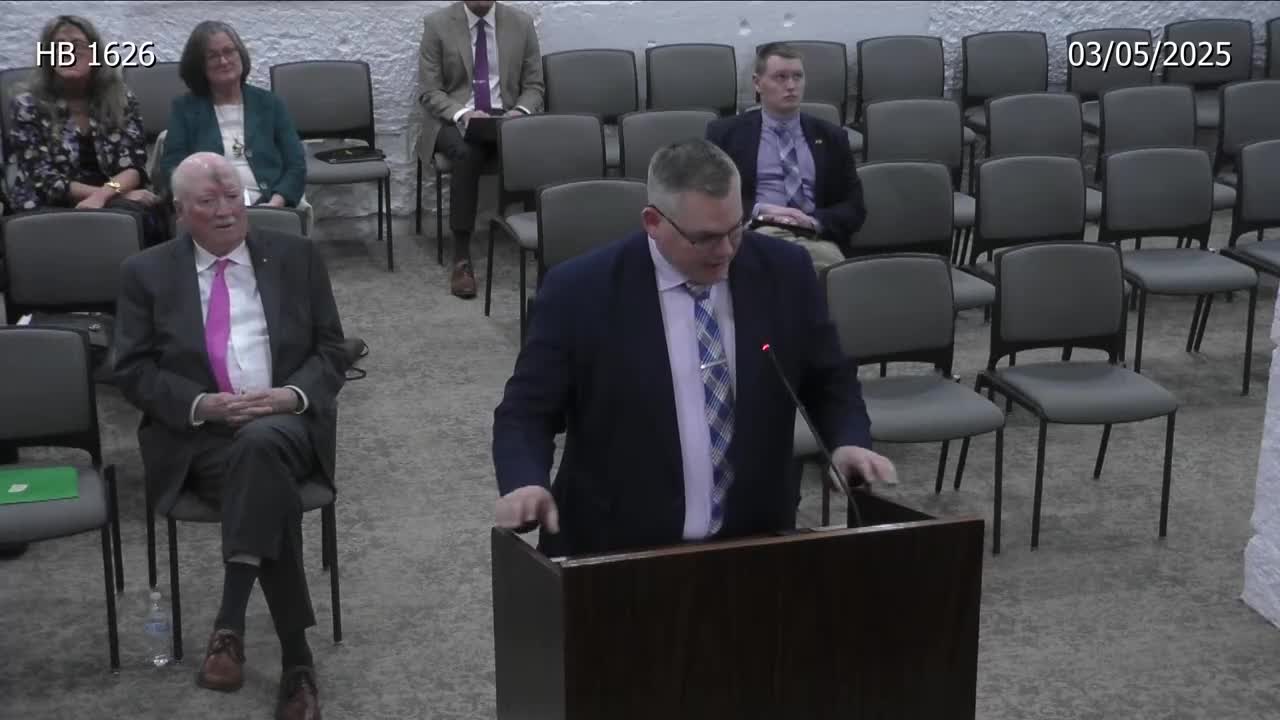
Nancy Cross, representing the family law section of the State Bar Association, testified that the section supports the bill as a compromise and that trial courts already exercise care drafting findings. Cross said the change would likely affect less than 4% of cases that are litigated and recommended removing a cross-reference to the court of appeals, which she described as a drafting error.
Committee members discussed the policy trade-offs: supporters argued parents deserve a clear record of what factors the court relied on, while critics warned about inserting sensitive details into public documents. The committee indicated it would adopt a second-reading amendment to exclude initial orders and move the bill forward; the roll call vote on the motion to advance was recorded as 9 to 0.