Get Full Government Meeting Transcripts, Videos, & Alerts Forever!
Get email alerts on the Child Protection topic
No spam. Unsubscribe anytime.
Committee advances bill raising penalties, narrows hospital reporting delegates for youth abuse cases
Summary
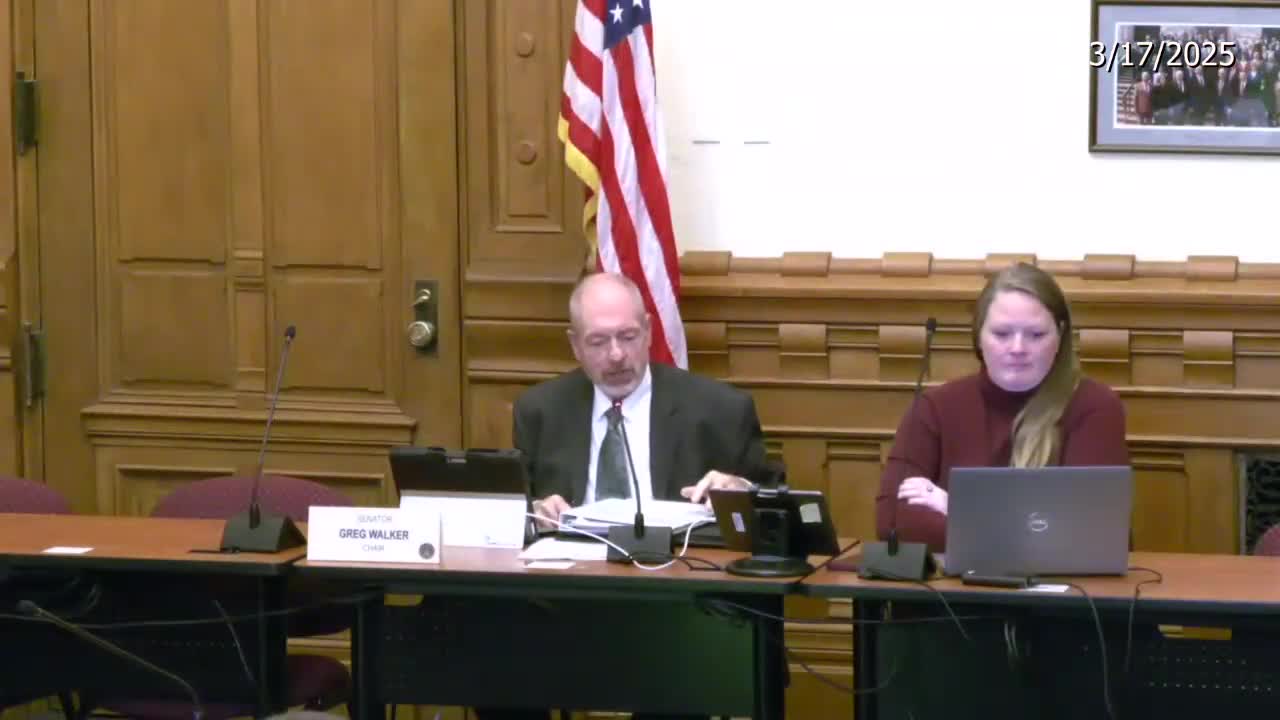
A Senate committee voted to advance House Bill 1412 after testimony from child-advocacy groups and parents; the bill raises criminal penalties for covered mandated reporters in youth-serving organizations and narrows how hospitals may delegate reporting duties.
A Senate committee advanced House Bill 1412, a measure that would increase criminal penalties for certain people who fail to report suspected child abuse within youth-serving organizations and change how hospitals delegate mandated-reporting duties.
The bill, presented by Representative Devon Cash to the Senate committee, would raise the penalty for covered mandated reporters in youth sports organizations, schools, ministries and other youth entities from a misdemeanor B to a misdemeanor A and make repeated failures to report by an entity a Level 6 felony. “HB 14 12 aims to do a few things. First, this bill will increase the penalty from a misdemeanor b to a misdemeanor a for those who have a duty to report knowledge of abuse and youth sports organizations, sports facilities, schools, ministries, and any other youth organization,” Representative Cash told the committee.
Supporters said the legislation responds to high‑profile abuse scandals and recurring reports that staff or supervisors at youth organizations failed to report suspected abuse. Shannon Perry, director of community outreach for the Children’s Advocacy Center of Southeastern Indiana, said delayed or delegated reporting can leave children at risk: “The reliance on third party designees to report suspected abuse or neglect places our most vulnerable children at risk,” she said.
Rep. Cash said the bill preserves existing duties for ordinary citizens and targets only those who have reporting duties “within the scope of their job working with children.” She also described a change on hospital reporting that narrows the previous statutory carve‑out allowing health care providers to delegate reporting. Under the bill, the person who actually examines or evaluates the child should be the person to make the initial report; if a delegation occurs the report must be documented in the child’s medical record and the delegated reporter must notify the person in charge of the facility.
Committee members pressed staff and the bill sponsor about the hospital delegation language and whether the delegate must notify the person who originally delegated the duty. Cash said hospitals and criminal‑code drafters worked to make the requirement parallel to existing practice in schools: the person who sees the child makes the report and the facility administrator is informed and the child’s file flagged so repetitive reports are avoided.
The committee adopted a technical committee amendment by consent that clarifies that routine caregiving consistent with a child’s biological characteristics is not, by itself, child‑in‑need‑of‑services conduct under the bill’s related language. After testimony and brief questions the committee voted to move the bill forward; the transcript records the committee tally as 6 yes, 0 no. Committee minutes show the bill was placed to be heard on the floor.
Supporters included child‑abuse advocates and foster‑care organizations. Opponents did not register during the hearing; committee discussion focused on drafting, hospital practices and ensuring the bill does not sweep up ordinary citizens who are mandated reporters under current law.
The bill now moves to the next stage of the legislative process.