Get Full Government Meeting Transcripts, Videos, & Alerts Forever!
Get email alerts on the Prosecutor Funding And Staffing topic
No spam. Unsubscribe anytime.
Committee hears bill to create special prosecutor unit and funding; held for further discussion
Summary
Members heard House Bill 1006, which would create a special prosecutor unit, a public prosecution fund and provisions for a prosecutor review board; committee members and witnesses debated funding, county roles and caseload metrics and the bill was held for further work.
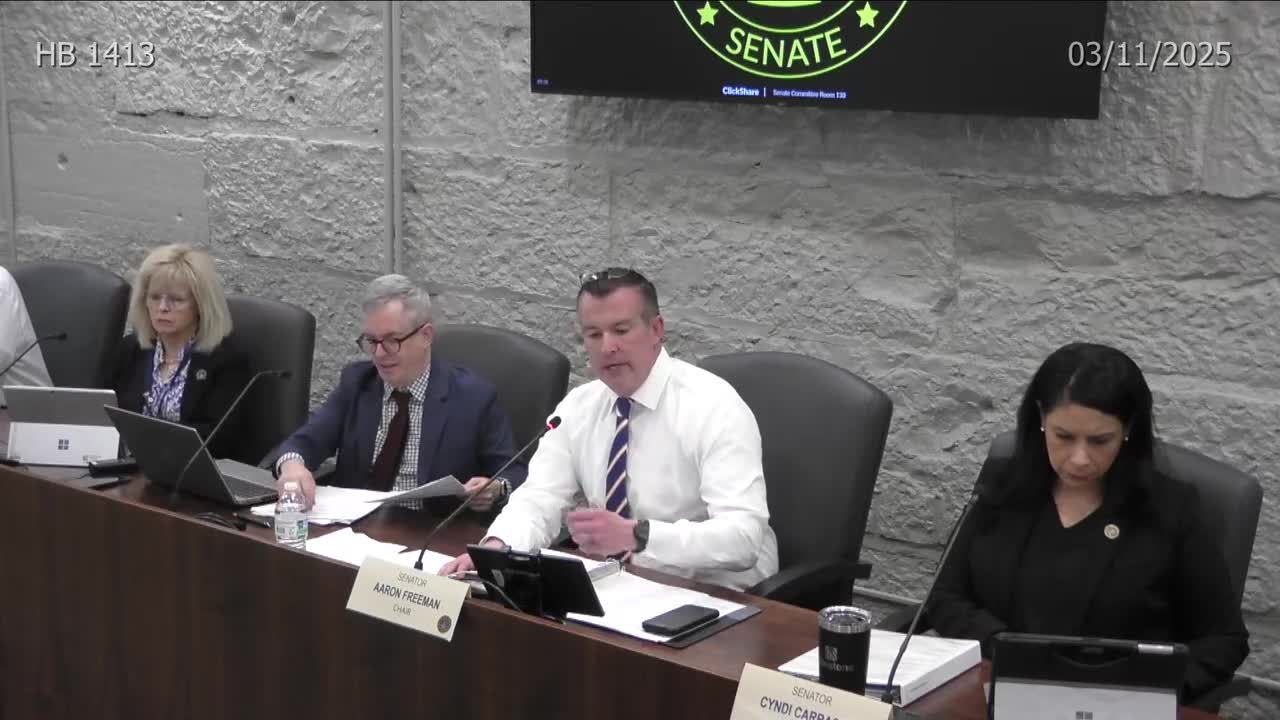
The Senate Corrections and Criminal Law Committee heard House Bill 1006, a bill the chair described as creating a special prosecutor unit, a public prosecution fund and a prosecutor review board, and providing mechanisms to address prosecutor staffing shortages in some circuits.
Chair Freeman said the bill would supplement frontline prosecutors, create a special prosecutor unit to assist in complex, resource-intensive cases, and establish a prosecutor review board and a noncompliant-prosecutor process that would require further discussion. "I think there's no more fundamental duty of government than to adequately fund our frontline prosecutors," the chair said as he described aspects of the bill.
Courtney Curtis, assistant executive director of the Indiana Prosecuting Attorney's Council, testified in support and described a statewide lawyer shortage for government attorneys. She said the state has roughly 800 prosecutors doing the work of about 1,200 and argued the bill would help retain experienced prosecutors and attract new ones by raising some salaries and creating a reimbursement structure that requires counties to share costs.
Committee members raised questions about caps, how reimbursement would work, and whether the state would be exposed to unlimited local requests for deputies. The committee discussed caseload standards and staffing metrics; Curtis said there are no formal statewide caseload standards for prosecutors, though staffing-need studies and public-defender caseload standards can be used as reference points. Andrew Cullen of the Indiana Commission on Court Appointed Attorneys also testified and said the bill'9s fiscal details should remain under appropriations review; he supported certain amendments concerning commission membership.
Members said they wanted further conversations about implementation, local budgeting, and whether the proposed special prosecutor fund and unit would create ongoing obligations. The committee held the bill for further work and signaled more negotiations and drafting before a final vote.
No vote was taken on HB 1006 during the hearing.