Get Full Government Meeting Transcripts, Videos, & Alerts Forever!
Get email alerts on the Operating Without License Causing Death topic
No spam. Unsubscribe anytime.
Committee advances measure to upgrade penalties when unlicensed driving causes death after local family's testimony
Summary
House Bill 1114 would allow elevation to felony charges when operating without a license causes death; the sponsor removed provisions on vehicle impound and payment of deductibles, and the amended bill passed 7–2 after family testimony and opposition from immigrant‑advocacy witnesses.
House Bill 1114 would change penalties for operating a vehicle without ever having received a license when that conduct causes death. The bill grew from a constituent case the sponsor described: a motorist killed a local man, Brad Kastner, and prosecutors said the statutory penalties available for unlicensed operation did not match the harm in the case because prior related charges had been diverted.
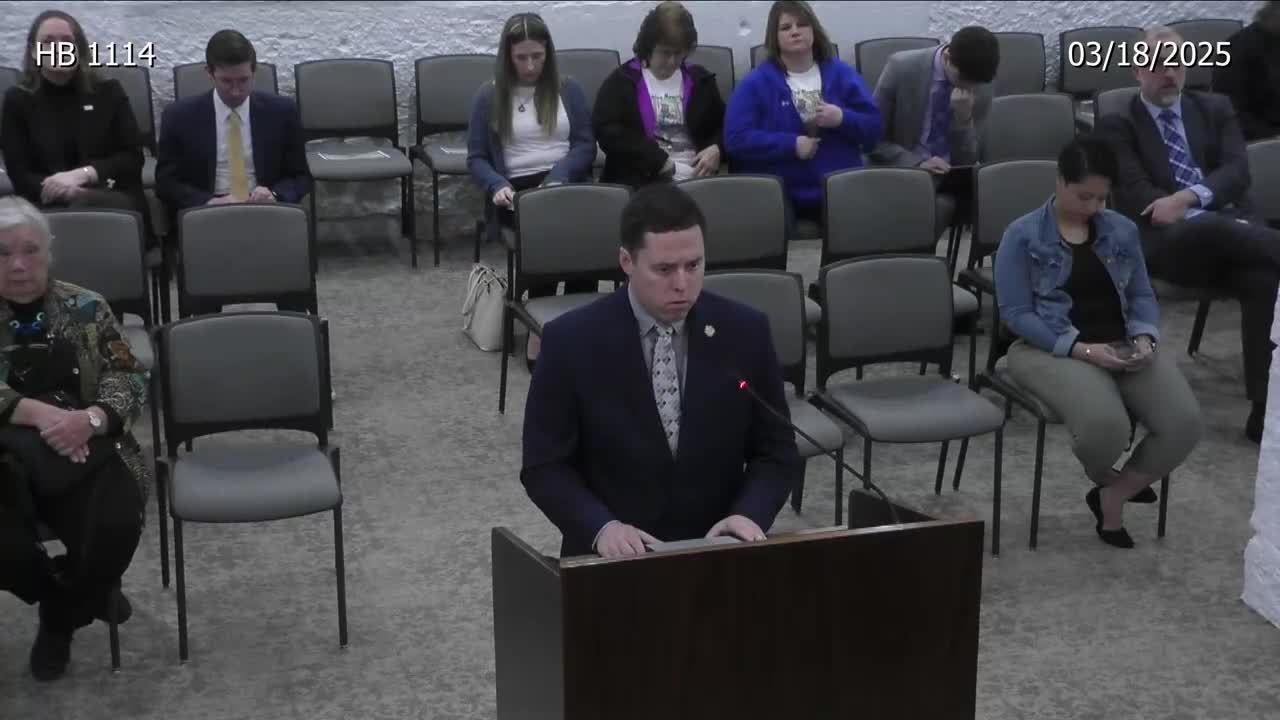
Representative Zimmerman described the bill as closing a perceived gap between operating while suspended (which can carry felony penalties in certain circumstances) and operating without a license. He said the bill would allow elevation to a Level 5 felony when operating without a license causes death. The sponsor also offered amendment 6, which removes two provisions the sponsor said were problematic: a payment‑of‑deductible provision and a mandatory vehicle‑impound requirement. The committee adopted that amendment by consent.
Kendra Kastner, the victim's sister, testified about the death of her brother, saying the driver “had been charged previously for driving without a license but was given pretrial diversions,” and that the family found the available charge—a class C misdemeanor in that circumstance—insufficient. She asked the committee to address the statutory gap so future families do not experience similar outcomes.
Opponents included Jacob Irvin of Exodus Refugee Immigration, who argued the bill's provision criminalizing unlicensed driving tied to vehicle registrations through LLCs or nonprofits could disproportionately affect immigrants and people using legitimate community resources. Fatima Perry and other community witnesses warned that increasing penalties could harm immigrant communities and non‑profits that provide transportation. The committee debated whether the bill would create unintended collateral consequences for residents who lack state IDs or lawful status but who rely on community supports.
After committee discussion and the adoption of the sponsor's amendment, the committee advanced the amended bill by a roll‑call vote reported as 7–2 in favor. Testimony and discussion focused on balancing accountability for fatal crashes with concerns about disproportionate impacts on immigrants and low‑income residents who may register vehicles through nonstandard means.