Get Full Government Meeting Transcripts, Videos, & Alerts Forever!
Get email alerts on the Transgender Athletics topic
No spam. Unsubscribe anytime.
Committee hears hours of testimony on bill to bar transgender women from collegiate women’s teams
Summary
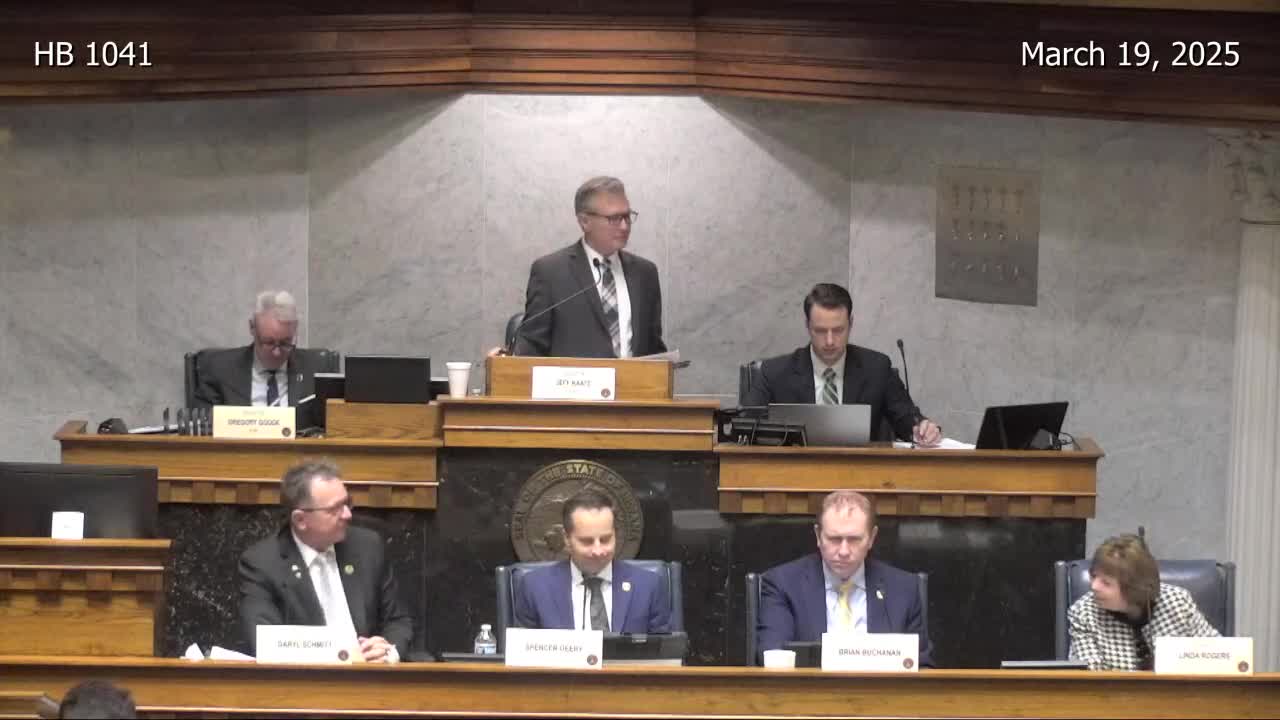
House Education and Career Development Committee members spent more than two hours on public testimony and questions for House Bill 10‑41, a bill that would require a state or private postsecondary institution in Indiana to designate athletic teams by biological sex and prohibit a student “assigned male at birth” from participating on teams designated female.
House Education and Career Development Committee members spent more than two hours on public testimony and questions for House Bill 10‑41, a bill that would require a state or private postsecondary institution in Indiana to designate athletic teams by biological sex and prohibit a student “assigned male at birth” from participating on teams designated female.
The bill’s presenter, Representative Davis, told the committee the proposal “ensures that female athletes are provided with a safe and even playing field at the collegiate level in Indiana.” She said the measure mirrors K‑12 language already adopted in prior legislation and would add a grievance procedure colleges must maintain and a private right of action for students deprived of athletic opportunity.
Supporters who testified said biological differences create an uneven playing field. Attorney Erica Steinmiller, representing a group that has litigated on behalf of female athletes, told the panel that the bill “sets lasting, reliable standards” tied to biology and that most states with similar laws have not experienced significant fiscal impacts. Several current and former female college athletes described personal experiences they said illustrated competitive or privacy harms when male‑assigned students were allowed on women’s teams.
Opponents — including advocates for LGBTQ+ youth, faith leaders, medical and social‑work organizations, parents and students — urged the committee to reject the bill. Zoe O’Halen Byrne, director of engagement for IYG, said the proposal “is built on the false claim that transgender girls are dominating women’s sports,” and noted state and national bodies have found no evidence of a widespread problem. Emma Vosky of Gender Nexus described the bill as “divorced from science” and warned it would encourage what she called bad‑faith complaints and privacy violations.
Several speakers raised procedural and practical concerns members probed during the hearing. Senator Ford asked how the grievance process would be enforced when two institutions disagree about a student’s status; Representative Davis said the bill leaves the procedure to institutions and that the bill mirrors the K‑12 approach. Senator Yoder and other members pressed the bill’s author about parents of intersex infants and the potential for misclassification at birth; Representative Davis repeatedly said that, under the bill, a person’s biological sex “as assigned at birth” is the governing designation. Witnesses for and against said the issue raises complex medical and ethical questions.
Multiple witnesses pointed to recent federal and private actions on the topic. Representative Davis and supporters cited an executive order from the federal level and Governor Braun’s executive order requiring the Commission for Higher Education to review policies; opponents noted the NCAA recently revised its participation policy and said national and association actions already address the issue for colleges.
The committee did not take a vote on House Bill 10‑41 at this meeting. Chair and members indicated they would continue to receive testimony and amendments before any further action.
Representative Davis and Senator Donato sponsored or introduced the measure in committee; the record includes extensive public comment both for and against the bill.
The committee hearing also included technical questions about how institutions would verify sex designations, whether a school would be obligated to administer any medical or genetic testing, and whether grievance protections could be abused to seek tactical advantages in competition. Those procedural questions remained open at the end of the hearing.