Get Full Government Meeting Transcripts, Videos, & Alerts Forever!
Get email alerts on the Giglio Disclosure Process topic
No spam. Unsubscribe anytime.
Indiana committee advances bill to create process for Giglio disclosures about law enforcement convictions
Summary
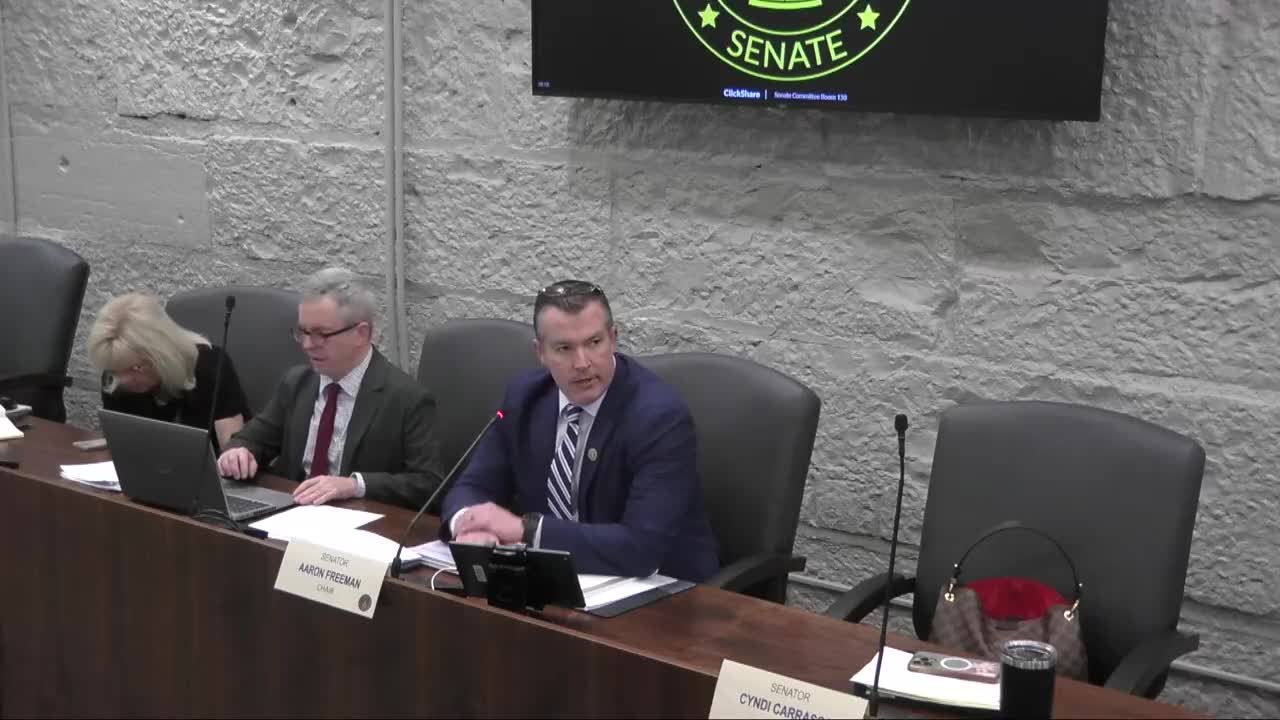
The Corrections and Criminal Law Committee advanced House Bill 1471, which sets a process for notifying prosecutors when a law enforcement officer has a potential Giglio disclosure and for placing officers on a prosecutorial list. An amendment that clarifies notification timing was adopted and the amended bill passed unanimously in the committee.
House Bill 1471 would create a structured process for handling so-called Giglio matters—information about a law enforcement officer's criminal conviction or other credibility-related issues that prosecutors may be required to disclose to defense counsel. The bill, presented to the Corrections and Criminal Law Committee, was amended to specify timing for notifications and passed on a 7–0 voice vote.
Representative Stirwold told the committee the bill was “worked on for quite some time between law enforcement and the IPAC,” and that the measure “tries to outline a process and give some structure to a process that we don't have right now.” The bill would require a law‑enforcement agency to notify the prosecutor when the agency believes a Giglio matter exists; the prosecutor would investigate and, if the finding is accurate, place the officer on a Giglio list. Affected officers would have a right to request reconsideration, and the prosecutor would adopt written policies governing the process.
Courtney Curtis, assistant executive director of the Indiana Prosecuting Attorney's Council, described the measure as balancing prosecutorial disclosure duties with officers’ procedural rights. “This bill in the current language, as amended balances our constitutional duties as it pertains to our ethical responsibilities of disclosure with the officer's rights to have some due process,” Curtis said. Bill Owensby of the Indiana Fraternal Order of Police and Sheriff Dan Mayworth of Adams County expressed support during committee testimony.
An amendment offered during the hearing clarified when a Giglio designee must notify the prosecuting attorney; Representative Stirwold and other presenters said the amendment was worked out with stakeholders. The committee adopted the amendment by unanimous consent and then advanced the amended bill. The roll call result reported by the committee chair was 7–0 in favor.
The bill does not itself set any particular sanctions; it focuses on creating a notice, investigation, listing and reconsideration process to guide prosecutors’ disclosure decisions. Supporters described the measure as the product of negotiated stakeholder compromise; opposing viewpoints were not recorded during the hearing.