Get Full Government Meeting Transcripts, Videos, & Alerts Forever!
Get email alerts on the Water Transfers topic
No spam. Unsubscribe anytime.
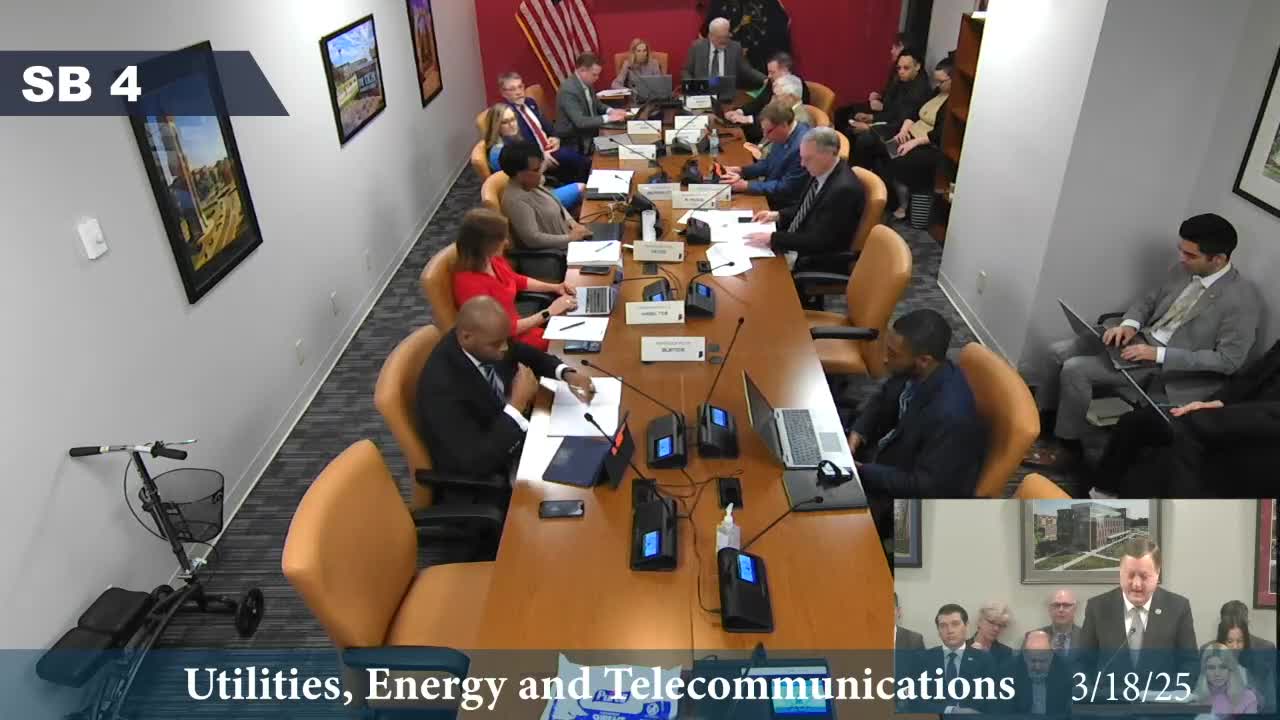
Committee hears SB 4 to regulate large water transfers, long‑haul pipelines; stakeholders urge clarifications
Summary
Senate Bill 4, introduced in the Senate by Senator Cook, would create new state oversight for large water withdrawals and long‑haul water pipelines, requiring a Department of Natural Resources permit for interbasin transfers and a certificate of public convenience and necessity from the Indiana Utility Regulatory Commission for certain long‑haul pipelines.
Senate Bill 4, introduced in the Senate by Senator Cook, would create new state oversight for large water withdrawals and long‑haul water pipelines, requiring a Department of Natural Resources permit for interbasin transfers and a certificate of public convenience and necessity from the Indiana Utility Regulatory Commission for certain long‑haul pipelines.
The bill’s author, Senator Cook, told the committee the measure "deals with the issue of competing uses of surface water" and is intended to bring "oversight and transparency to large transfers of water in our state." Her presentation described two thresholds in the draft: an interbasin transfer permit for movements of about 30,000,000 gallons per day and an IURC CPCN process for long‑haul pipelines meeting the bill’s long‑haul definition (discussed in the committee as involving pipelines of 10,000,000 gallons per day or more and extended distances in some contexts).
Why it matters: Committee members and witnesses said the bill responds to recent controversy over proposed transfers tied to the LEAP district and to broader planning concerns as industrial and large commercial users place new demands on regional water systems.
What the bill would do
- Define large interbasin transfers and require a DNR permit for transfers set at roughly 30,000,000 gallons per day (as described by the bill author).
- Require a certificate of public convenience and necessity (CPCN) from the IURC for certain long‑haul pipelines (the bill text discussed a 10,000,000 gallons‑per‑day threshold and committee discussion referenced a long‑haul pipeline definition tied to distance and capacity).
- Create criteria and processes for each agency to review applications; the draft includes a DNR permit process (including ability to return incomplete applications, a 90‑day DNR action clock, periodic certification requirements, and terms for permit revocation) and an IURC review of project finances and public‑interest findings.
Key technical and policy points raised by witnesses
- Utility operations and basin geography: Bridget O'Connor, director of government affairs and regulatory policy for Citizens Energy Group, said Citizens operates a regional system that spans multiple basins and uses reservoirs to move water within Central Indiana. O'Connor said Citizens supports the bill’s goal of oversight for "large transfers of water from one area of the state to another" and urged exemptions that do not interfere with ordinary utility operations.
- Rate recovery and cost allocation: Luke Wilson of the IURC described the commission’s role as a financial regulator and explained existing CPCN and main‑extension practices that affect how construction costs can be reviewed and recovered. Wilson said utilities may seek ongoing approval of construction costs during projects or bring a completed project forward at the end; the commission will review whether estimated costs are reasonable and whether the project is in the public interest.
- Environmental and groundwater concerns: Testimony from Indiana Conservation Voters and the Hoosier Environmental Council expressed general support for oversight but requested stronger protections for groundwater transfers and water quality safeguards, noting that roughly two‑thirds of the state depends on groundwater for drinking water.
- Consumer protections and public process: Kermit Olson of Citizens Action Coalition said his group moved from support to neutral because the bill could, as drafted, expose ratepayers to extraordinary costs if large projects are built to serve a single industrial customer and then do not materialize. Olson urged clearer allocation rules and suggested requiring field hearings in affected communities so customers can comment directly to regulators.
Clarifying amendments and exemptions discussed in committee
- Return‑flow exemption: An amendment explained a long‑haul exemption would apply to projects that return at least 50% of transported water after use to the withdrawal source; the 50% figure came from technical input described in committee testimony (studies cited in testimony reported different typical return percentages for cooling or processing uses).
- Post‑construction transfers: The amendment clarified a CPCN would be required at construction, but once a pipeline has an approved CPCN a subsequent sale, lease or transfer of the pipeline would not require a new CPCN; sellers would notify the commission within 60 days of a transfer.
- Narrow LEAP‑related exclusion: Committee members discussed language exempting agreements made before July 1, 2025 related to the LEAP district; some members and witnesses asked for tightening of that language to avoid unexpected future exemptions.
What remained unresolved at the hearing
- Precise definitions and unintended consequences: Representatives pressed for clearer language on the bill’s exemptions (for example, whether ordinary main extensions could be read as long‑haul pipelines) and suggested either deleting the main‑extension exclusion or adding a tighter definition after additional testimony.
- Rate allocation for large industrial projects: Several lawmakers and consumer advocates said the committee should more clearly address whether ratepayers or the large end users who prompt a pipeline should bear the bulk of construction costs. Committee staff and IURC testimony described existing main‑extension rules and revenue allowances but committee members said a follow‑up week of work on allocation language would be prudent.
- Groundwater and quality: Environmental witnesses urged future action (or separate bills) to address groundwater transfers and to add explicit water‑quality review for returned flows.
Meeting context and next steps
The bill drew extensive testimony from utilities (Citizens Energy Group, Indiana American Water), regulators (IURC and DNR staff), environmental groups, consumer advocates and industry associations. DNR legislative director Will Haynes noted the agency expects to work out technical terms in rulemaking (for example, definitions of perennial overdraft or streamflow depletion).
No final committee vote on SB 4 was recorded in the transcript; committee members and the bill author indicated a preference to continue work and consider technical revisions (including potential deletion of the main‑extension exemption and further work on cost allocation) before advancing the measure.
Speakers quoted in this article are shown in the committee record and testified at the hearing. The article does not infer outcomes beyond the committee discussion.