Get Full Government Meeting Transcripts, Videos, & Alerts Forever!
Get email alerts on the Casino Policy Study topic
No spam. Unsubscribe anytime.
Committee directs independent study of potential new or relocated casinos in two regions
Summary
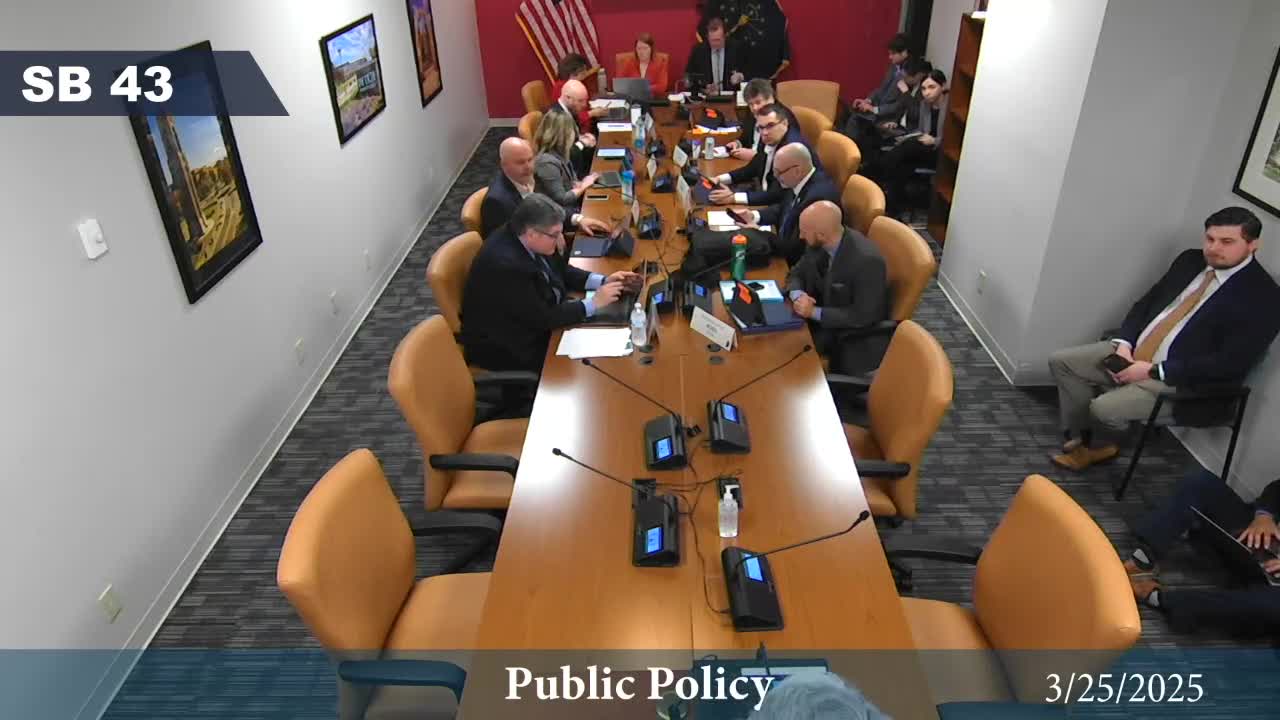
The House Public Policy Committee approved an amended Senate Bill 43 to fund an independent study on the economic impact of relocating or adding a casino license in the state’s top two regions; committee members made the study subject to available funding and extended the deadline for the consultant’s report.
The House Public Policy Committee approved an amended version of Senate Bill 43 that directs an independent consultant to study the economic impacts of a new casino (either relocation of an existing license or a newly issued license) in the state’s top two regions.
Amendment number 5 made the study subject to available funding, reduced the number of regions to be studied from three to two, and extended the report deadline from Oct. 1 to Nov. 1. Senator Jon Zay (testimony provided as Senator Zay) and other proponents said the state can benefit from objective, independent data before considering license moves.
Supporters framed the study as a data-driven step. Senator Zay said the industry is mature and that an independent study “gives us some conceptual economic impact” information on whether a relocation or a new license would maximize state revenues and local benefits. The amendment was described as leaving the choice of which two regions to analyze to the consultant.
Opponents in the hearing raised concerns that simply studying relocations or new licenses can destabilize existing operators. Jim Perrucker of Caesars Entertainment testified that even studying relocations is “a tremendously destabilizing issue for the industry,” because market uncertainty can affect investment decisions. Perrucker said the industry values regulatory stability and that study-driven speculation may prompt entrepreneurs to enter markets or owners to withhold capital expenditures.
Committee members debated that point; several representatives noted the study could also confirm that an additional license would not provide net state benefits, and they described the study as a way to obtain objective information rather than preordain a policy outcome. Representative Chris Miller asked whether studying the idea itself destabilizes the market; Perrucker reiterated industry concerns about market stability and potential investment consequences.
The amendment also narrowed the study’s geographic focus on the grounds that most of the state’s casinos already serve other regions and that the largest potential market “hole” is in Northeast Indiana, with Indianapolis also a frequently discussed market. The committee adopted the amendment by consent and then passed the amended bill by voice/roll call; the final committee vote recorded as 10-0 with several members excused.
The committee record shows the study will examine impacts on existing casinos and the horse racing industry and is structured to inform future legislative decisions. The amended bill passed out of committee and will proceed to the next step in the House process.