Get Full Government Meeting Transcripts, Videos, & Alerts Forever!
Get email alerts on the Parental Rights topic
No spam. Unsubscribe anytime.
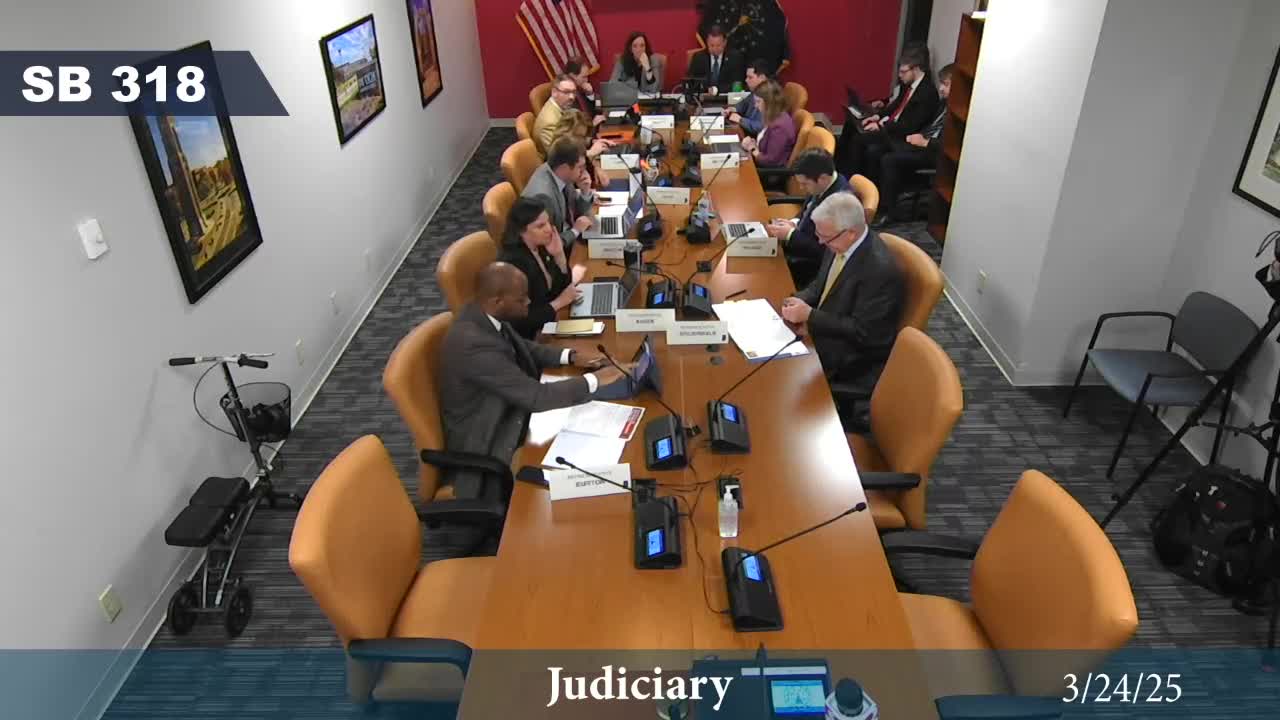
House Judiciary panel advances bill to codify parental rights after hours of testimony
Summary
The House Judiciary Committee voted 9–3 to advance Senate Bill 143, which would enshrine parental decision‑making as a fundamental right under Indiana law and allow parents to sue governmental entities that "substantially burden" those rights unless the government meets strict‑scrutiny standards.
The Indiana House Judiciary Committee voted 9–3 to advance Senate Bill 143 on a party-line leaning margin after a day of testimony from parents, health‑care trainees, attorneys and policy advocates.
Senate Bill 143 would make parental rights—"the right to direct the upbringing, education, health care and religious instruction of a minor child"—a fundamental right under Indiana law and allow parents to sue a governmental entity that "substantially burdens" those rights unless the government meets strict‑scrutiny standards. The bill includes exemptions stating that nothing in the statute authorizes child abuse or neglect determinations to be avoided.
The measure’s sponsor, Senator Brown, told the committee SB 143 is intended to "rightsize the ship in respect to parental rights," saying the bill applies to unemancipated children under 18 and would require governmental actors to meet the highest legal standard before interfering with parental decision‑making. "We're saying the parents' rights… should have some rights with respect to the government," Brown said during his opening remarks.
Supporters described individual cases in which they said parents were cut off from medical information or had children removed from their care without sufficient judicial review. Dawn Marie White, an attorney who represents parents in child welfare cases, said she regularly sees parents denied access to medical records before adjudication and asked the committee to ensure courts—not agencies—make decisions about restricting parental access. "The court should be making these decisions, not a governmental agency that is by definition adversarial to parents," White said.
Several witnesses urged the committee to pass the bill to create a clearer, state‑level legal pathway for parents who contend their rights were violated. Josh Hershberger of the Indiana Family Institute framed the bill as codifying federal case law for state courts and said it would give parents a more straightforward remedy without having to pursue federal litigation.
Opponents urged caution. Katie Healy, a nurse practitioner student, and the American Civil Liberties Union of Indiana’s legal director, Chris Daley, warned the bill could undermine adolescent confidentiality and was overly broad in its reach to "every government employee in the state." Daley told the committee the measure does not create mechanisms to protect minors’ privacy rights and could turn many public employees into mandatory reporters of private information. "This bill will not address" the problems families described, Daley said, and instead would "create a whole new infrastructure of private right of action against 13% of our workforce," referencing the proportion of state employees.
Committee members asked detailed questions about how the strict‑scrutiny standard would operate in child welfare and juvenile proceedings and how the bill would interact with existing statutes and immunities. Senator Brown and supporters said the bill preserves existing immunity provisions for judges and others and does not eliminate child‑abuse or neglect statutes. Brown noted the bill’s strict‑scrutiny requirement is intended to make interference with parental rights difficult, not impossible. "That's why we use strict scrutiny. That's why we use a compelling interest," Brown said in closing.
The committee adopted a technical amendment (amendment number 7, striking lines noted during the hearing related to burden language) by consent during the hearing, and the committee voted to pass the bill as amended. The committee recorded a roll call with nine members voting in favor and three opposed. The bill will move to the next step in the chamber’s process.
Votes at a glance Senate Bill 143 — Outcome: approved by committee (9–3). See actions[] for roll call.