Lifetime Citizen Portal Access — AI Briefings, Alerts & Unlimited Follows
SFFD reports sustained ambulance offload delays, urges hospital summit; Sixth Street triage pilot expands outreach
Loading...
Summary
Deputy Chief Simon Pang told the Fire Commission that ambulance patient offload times averaged about 50 minutes in February—well above the 30‑minute state benchmark—and urged a summit with hospital leaders. He also updated commissioners on the Sixth Street mobile triage pilot and neighborhood street‑crisis teams that the city plans to scale up.
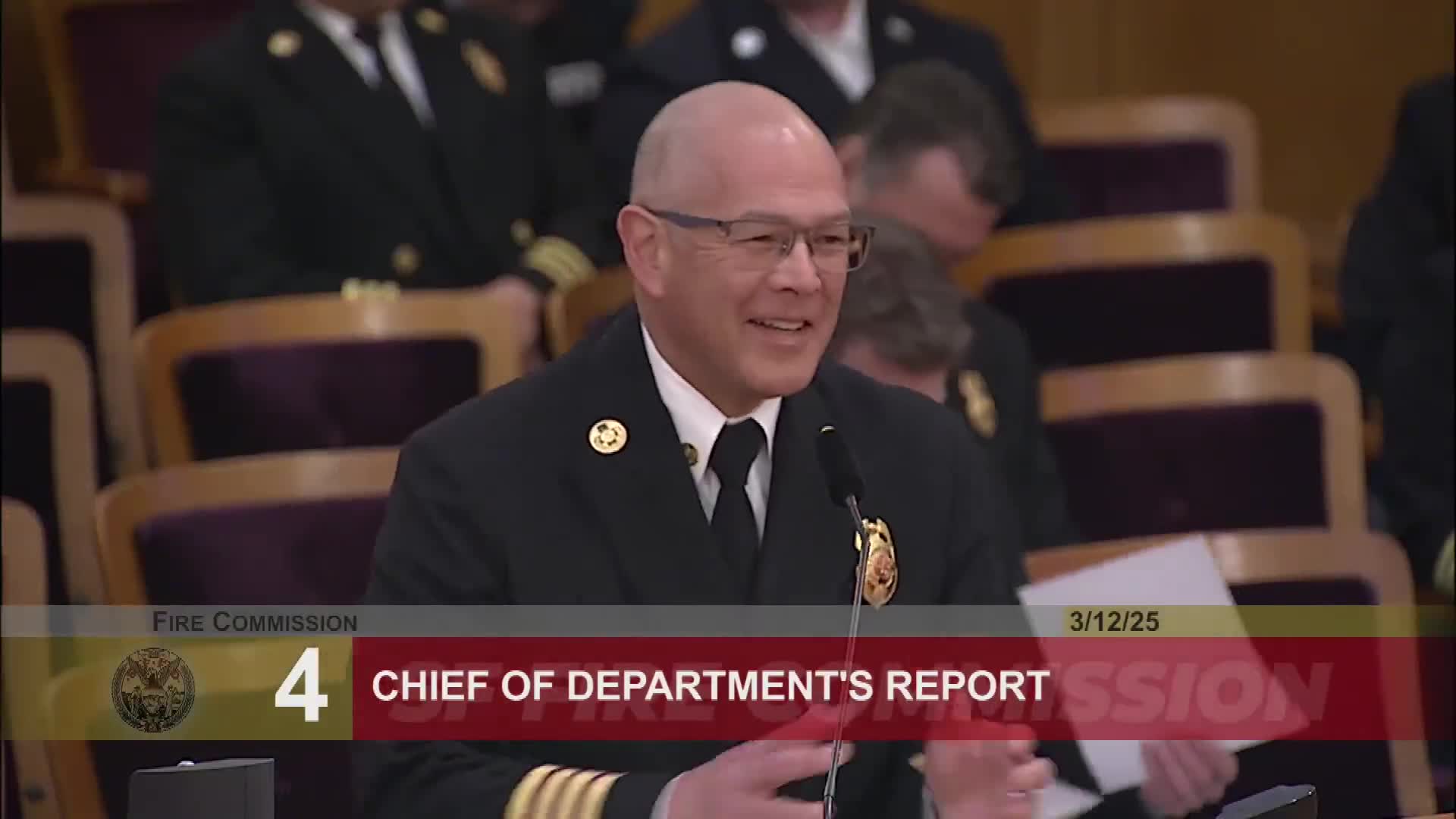
Deputy Chief Simon Pang reported to the San Francisco Fire Commission on March 12 that ambulance patient offload times (APOT) remained well above the state benchmark and that a large share of the department’s staffing stress stems from hospital delays and a private BLS‑ambulance pilot in the city.
Pang said the department’s average APOT in February was about 50 minutes, compared with the state benchmark of 30 minutes. "In February our average time to transfer care to the hospital was about 50 minutes," he said, and added the department recorded “1,173 times our ambulances were delayed at least 45 minutes to an hour, 742 times up to 90 [minutes], 122 times up to 2 hours, and 69 times over 2 hours.” He told commissioners the department is organizing staff town halls to validate data and said he has proposed an APOT summit with hospital leadership to look for fixes.
Why it matters: long offload times keep paramedics and ALS resources tied to hospitals, reducing field capacity and contributing to so‑called "medic‑to‑follow" events—instances where a paramedic from an engine must ride with a private ambulance because a Basic Life Support (BLS) crew lacks ALS capabilities. "We are not fans of the pilot, the BLS ambulance pilot," Pang said. "We certainly don't want to become permanent policy." He and other department leaders said reducing APOT delays is a prerequisite to reducing the system's reliance on private BLS ambulances.
Pang also gave an update on community paramedicine work and the Sixth Street mobile triage center, which opened Feb. 5 as a tented clinic and patrol base. He said the triage pilot has produced a mix of results: a slight increase in 911 calls in the corridor (largely from active outreach), small decreases in small outside fires and overdoses, and more mental‑health engagement. "Every time a street crisis response team was face to face with someone, 28% of the time they took that person somewhere other than a hospital," Pang said, noting that teams are able to transport some people to alternative destinations that better suit their needs.
Pang told the commission that the city intends to begin a larger rollout of neighborhood street teams, initially focused on the Tenderloin/Northern Police District and the Mission, with a citywide roving team. He warned that assigning staff to dedicated neighborhood teams reduces the availability of those staff for other system responses and that the fire department will need additional resources to sustain both roles.
Commissioners pressed for detail and offered support. Commissioner Alan Lowe asked whether private ambulance transports that later require SFFD ALS intervention could be billed to the private providers; Pang said the department would explore reimbursement mechanisms with the treasurer's office. Commissioners also urged including emergency‑department staff in the proposed APOT summit and recommended the commission receive a public report summarizing the town‑hall feedback and any hospital commitments.
The report included additional clinical statistics for February—Narcan and ketamine use, cardiac arrest outcomes and notable resuscitations—and described ongoing data quality work to ensure APOT timestamps reflect actual transfer of care rather than informal nurse signatures while patients remained on SFFD gurneys. Pang said the department will continue to refine its reporting before engaging hospital leadership at scale.
Looking ahead: Pang said the department is arranging an APOT summit with hospital leadership and will present a follow‑up to the commission after the town halls and initial hospital discussions.