Get Full Government Meeting Transcripts, Videos, & Alerts Forever!
Get email alerts on the Area Plan Older Americans Act topic
No spam. Unsubscribe anytime.
DAS reviews Area Plan update: Older Americans Act funds limited; service unit targets cut
Summary
DAS staff presented the fiscal year 2025–26 Area Plan update required by the Older Americans Act, noting San Francisco will receive about $7.8 million in OAA funds (roughly 7% of community‑based services budget) and that service unit targets for congregate and home‑delivered meals will be reduced by about 10%.
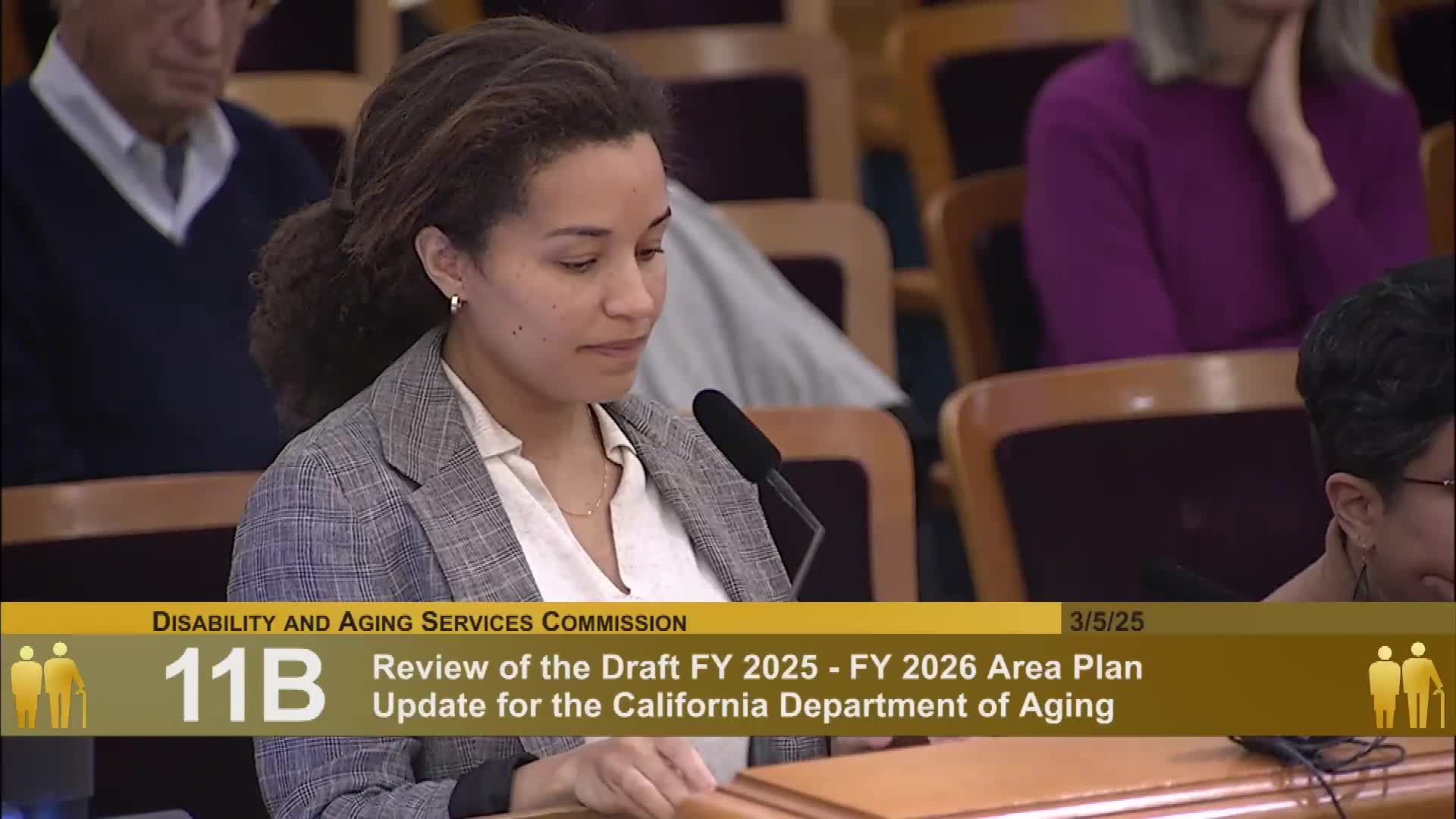
Analysts from the Human Services Agency and DAS presented the draft Area Plan update for fiscal year 2025–26, the required update to the four‑year plan submitted to the California Department of Aging that outlines how Older Americans Act (OAA) funds will be used locally.
Izzy Claytor (HSA policy and planning) explained the OAA funding the local Area Agency on Aging will receive — roughly $7.8 million — and emphasized that OAA funds account for only a portion of DAS community‑based services (staff cited a roughly $105 million community‑based services portfolio). Claytor and Executive Director Kelly Dearman described demographic context: about 191,000 San Franciscans age 60+ (nearly one quarter of the city), and about 11% of seniors — roughly 22,000 individuals — living below the federal poverty level.
Service unit adjustments and narrative goals The draft update reduces service unit targets for several OAA‑funded services because of funding availability and rising costs; congregate meals and home‑delivered meal units were cited as decreasing by approximately 10%. Nutrition counseling units are also reduced due to mayoral budget cuts and declining demand for certain therapeutic diet services. Staff noted the OAA funding is only a subset of DAS’s full portfolio, and many programs rely on other city, state and philanthropic funding.
The area plan’s narrative goals remain focused on five priorities: equity, workforce development and collaboration, employment and economic security, health and well‑being, and safety and protection from abuse and neglect. Staff highlighted several ongoing initiatives tied to those goals: the Disability Cultural Center’s virtual programming (with a brick‑and‑mortar opening planned for July 2025), expanded trainings (including elder abuse prevention and LGBTQ+ cultural humility), the Employment Navigation and Benefits Support program, and newly launched CalAIM community supports and Enhanced Care Management programs that help people transition from skilled nursing facilities to assisted living or private residences.
Legal and programmatic notes Staff also reported that San Francisco implemented the statewide conservatorship expansion under State Senate Bill 43 in January 2024; the public conservator received over 140 referrals in the first year, a nearly 35% increase from the prior year. Staff said the department has launched a centralized intake and a Benefits and Resource Hub to expand access to conservatorship and less‑restrictive alternatives.
Why it matters: The Area Plan sets service targets and spending priorities for Older Americans Act funds; the presented reductions reflect limited OAA resources and rising program costs, with implications for meal and counseling services for older adults.
Provenance (selected evidence spans) - Area Plan presentation (topicintro): transcript excerpt at 3245.8252 — "Good morning, commissioners. My name is Izzy Claytor, and I am an analyst in the Human Services Agency's policy and planning unit. I am presenting today with director Dearman on the area plan update for fiscal year 2025–26." (topicintro) - Funding and service unit context (topicfinish): transcript excerpt at 3345.5498 — "We will get about $7,800,000 in Older Americans Act money, whereas the entire DOS budget for community based services is about a $105,000,000." (topicfinish)