Get Full Government Meeting Transcripts, Videos, & Alerts Forever!
Get email alerts on the Pepco Prudence Exelon topic
No spam. Unsubscribe anytime.
Pepco witness defends prudence framework, customer focus and Exelon ties during Maryland PSC hearing
Summary
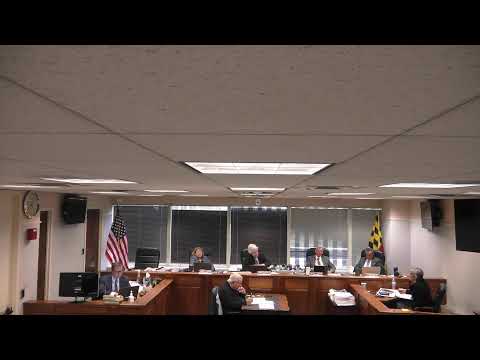
Elizabeth Morgan Downs O’Donnell, Pepco’s vice president for regulatory policy and strategy, testified under oath at the Maryland Public Service Commission evidentiary hearing in case No. 9655 about how the company evaluates prudence, customer impacts and the parent company’s financial relationships.
Elizabeth Morgan Downs O’Donnell, Pepco’s vice president for regulatory policy and strategy, testified under oath at the Maryland Public Service Commission evidentiary hearing in case No. 9655 about how the company evaluates prudence, customer impacts and the parent company’s financial relationships.
O’Donnell said Pepco relies on multi‑level internal review processes — including project concurrence committee (PCC) decks for large capital projects and vice-president-level approvals for smaller projects — and ongoing monthly and management budget reviews for O&M spending. She told the commission those materials and filings are the primary documentary sources to show what the utility knew when it made decisions.
Why it matters: The hearing is a final reconciliation of Pepco’s multi‑year rate plan and focuses on whether the company’s actual expenditures were prudently incurred and therefore eligible for customer rate recovery. O’Donnell’s testimony framed the company’s case that projects were planned, evaluated and adjusted under documented processes and that some under-recovery reflects factors outside the company’s control.
Customer impacts and affordability O’Donnell disputed a contention by OPC witness Alvarez that Pepco failed to consider the customer perspective, saying, “I don't agree with that assertion.” She pointed to customer satisfaction and reliability survey results (overall satisfaction in the mid‑80s and reliability in the mid‑90s) as evidence Pepco factors customer experience into operational choices, while acknowledging she did not have an affordability score at hand and offered to follow up.
O’Donnell said the company evaluates customer, social and environmental benefits in PCC decks and that benefit–cost analysis (BCA) is one tool among several: “A benefit cost analysis certainly can be utilized as a part of a full portfolio of assessing a project's value,” she said, but also warned some project benefits are not readily quantified and BCA may not fit every project type.
Prudence framework and project controls O’Donnell described three parameters Pepco uses to demonstrate prudence: that (1) capital additions are "used and useful" (i.e., serving customers) or O&M is reasonably incurred; (2) projects passed a reasonable business‑judgment decision process; and (3) costs were managed reasonably during execution. She told questioning the commission may properly examine decisions at multiple points in a project’s lifecycle and that PCC decks and subsequent project materials explain the rationale at those decision points.
On oversight of projects under $1.5 million and portfolio decisions, O’Donnell said lower‑threshold projects are reviewed by subject‑matter experts and approved at the vice‑president level, while programmatic work is informed by filings, testimony and sometimes regulatory requirements.
Livingston Road and contractor management Responding to OPC questions about the Livingston Road battery project, O’Donnell said Pepco actively monitored the contractor, identified deficiencies and ultimately terminated the contractor when remediation failed. She said Pepco sought alternative recoveries for the roughly 50% of the project cost for which the contractor was accountable, described the project as a pilot from which the company is learning, and cautioned that failed execution should not deter experimentation in potential distribution‑deferral technologies.
Exelon relationship and financial exhibits OPC introduced excerpts from an Exelon investor presentation and Exelon’s Form 10‑K. Counsel asked O’Donnell to confirm dividend lines in the financial statements showing roughly $463 million in dividends paid in 2022, $252 million in 2023, and $359 million in 2024; O’Donnell said those figures matched what the document showed but urged examining net contributions alongside dividends, noting a "contributions from parent" line that offsets dividend outflows in consolidated cash‑flow presentation.
O’Donnell acknowledged Exelon is the parent of Pepco Holdings LLC and that Pepco is a regulated utility subsidiary; she said the utility is ring‑fenced from the parent on merger‑imposed protections and that the primary focus in rate review should remain Pepco’s own operational and financial condition.
Documentation and timing OPC pressed whether information Pepco included in rebuttal and surrebuttal was available earlier and whether the company faced impediments to providing historical documentation with its direct testimony. O’Donnell said most actuals were known and that the company added responsive materials during rebuttal in reaction to intervenor testimony and lessons learned from other MYP reconciliations, but denied there were impediments preventing the company from filing the historical data earlier.
Exhibits and procedural matters During the witness block the commission admitted Pepco exhibits (identified on the record with an "FR" final reconciliation suffix) and OPC exhibits that Pepco and other parties used in cross‑examination. O’Donnell said Pepco provided PCC decks and other project materials either in direct testimony or through discovery in prior MYP proceedings and that operational witnesses would supply detailed project‑level evidence.
The hearing continues with additional operational witnesses and project‑level testimony scheduled; O’Donnell said Pepco believes much of the reconciliation request reflects prudently incurred costs, with some components attributable to noncontrollable events such as storms and market impacts.