Facilities update: district weighs integrated security, building automation and 10‑year capital plan
Loading...
Summary
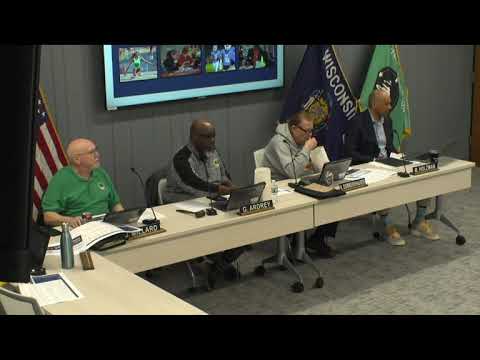
District facilities staff briefed the committee on early implementation steps for the voter‑approved facilities referendum and on a separate 10‑year capital maintenance plan at the March 18 Finance, Buildings and Grounds Committee meeting.
Julie Yerke, the district’s facilities planner and project specialist, and Mr. McCray outlined several near‑term priorities tied to security and mechanical systems. Yerke told the committee the district is exploring integrated security platforms and continues vendor interviews; the district is evaluating camera systems, card access (fob) readers, digital door sequencing for school start/close times, air phones (entry intercoms), paging and visual messaging systems, and fire alarm and building automation systems (BAS).
Yerke described the district’s BAS migration from an older Andover system to Tridium Niagara and explained the move from pneumatic controls to direct digital control (DDC) for HVAC. She said schools currently rely on a mix of manually operated door closures after bells and that an automated time‑door sequence would reduce the need for manual hardware such as Allen wrenches and keys for daily door operations. She described the security decision as multi‑disciplinary: IT, facilities, human resources, building staff, the school resource officer, and a district safety director all have different user and administrative needs for an integrated system.
Referendum breakdown and capital planning
McCray reminded the committee the voter‑approved borrowing total was $151,800,000 and said administration allocated that amount among priorities in the referendum: approximately $124.5 million for critical maintenance, about $11.1 million for safety and security upgrades, and $16,250,000 for special‑education learning‑space improvements. He noted that the referendum amount represents roughly 16.3% of the district’s previously identified $934,000,000 need for maintenance and improved learning spaces.
Yerke illustrated why the district must continue long‑range planning even with referendum funds. She said the district’s annual capital‑improvement allocation is $1,000,000 (about $0.50 per square foot across the district’s roughly 2.1 million square feet). Yerke offered a homeowner analogy: at that per‑square‑foot rate the district’s annual allocation equates to about $960 per homeowner using local housing averages, and major items such as an HVAC replacement and roofing together can total roughly $23,000 — meaning at current funding rates it would take decades to accumulate enough pay‑as‑you‑go funds for large replacements. “We need to borrow to fund this gap,” Yerke told the committee.
Fund balance and emergent repairs
Administration said Fund 46 (long‑term capital maintenance) currently holds under $10 million and that the district has used a mix of fund 46 dollars, operating allocations, and other sources (including ESSER when applicable) to address immediate repairs. McCray and facilities staff described a recent Parker High School rooftop air‑handling‑unit membrane failure that required contractors on site for emergency work; staff used the example to emphasize how physical‑plant failures can create unplanned costs and why a dynamic 10‑year plan matters.
Process and calendar
Administration asked the committee to review a draft capital maintenance plan in March, return a final draft for committee review on April 15 and request committee recommendation to the full board on April 22, 2025. Staff said the draft deliberately focused on thematic prioritization (safety, mechanical systems, roofs, athletic sites, and educational adequacy) and that detailed sequencing (for example, which roof sections at which building and in which year) will be refined with consultants and district boots‑on‑the‑ground validation.
Why it matters
Facilities and security system decisions affect daily school operations, safety protocols and long‑term capital needs. Staff asked the committee for thematic feedback rather than line‑by‑line edits and said they will provide a version showing how referendum dollars, routine capital allocations, and other funding streams fit together across a 10‑year horizon so the public can see what the referendum covered and what remains to be addressed.