Get Full Government Meeting Transcripts, Videos, & Alerts Forever!
Get email alerts on the Operating Budget topic
No spam. Unsubscribe anytime.
District presents FY25–26 budget assumptions; staff warn of near‑term shortfall and health‑insurance uncertainty
Summary
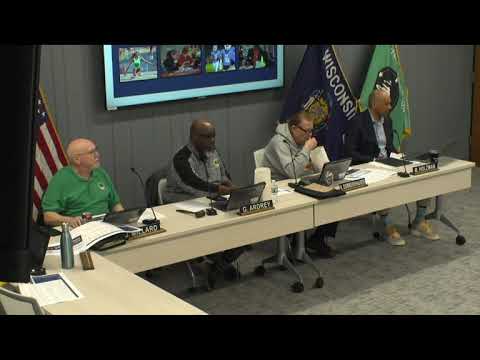
District staff presented a high‑level update on fiscal‑year 2025–26 budget development at the March 18 Finance, Buildings and Grounds Committee meeting, detailing assumptions for wages, benefits, and other cost drivers and warning of an emerging budget gap.
District staff presented a high‑level update on fiscal‑year 2025–26 budget development at the March 18 Finance, Buildings and Grounds Committee meeting, detailing assumptions for wages, benefits, and other cost drivers and warning of an emerging budget gap.
In the committee briefing, administration outlined core planning assumptions used for the district’s preliminary modeling: a CPI‑U‑based wage assumption around 3% (district staff noted they were modeling roughly 2.5% movement in some scenarios); a forecasted health‑insurance increase of about 12.5%; dental insurance projected at about 5%; student transportation costs modeled at roughly 4%; and a utility‑cost assumption of about 4%. Staff also said categorical special‑education aid remains modeled at the state‑level percentage currently used in grant calculations (staff described special‑education aid as “a sum amount” that can be consumed differently if overall district expenses change).
Administration flagged several items for board attention: the district currently models a budget shortfall (described in the meeting as being “about 1,500,000 in the hole” during early development), staffing and health‑insurance assumptions remain in flux, and some activity start‑up costs are larger than prior estimates — for example, the athletics director told staff the first‑year start‑up cost for a hockey program is about $75,000.
Superintendent Holtzman and other staff urged public engagement with state budget hearings and reminded the committee of the calendar constraints: the district expects an initial state aid estimate on July 1 based on adopted state budget numbers and that the board typically considers a preliminary budget in July. Staff emphasized the difference between an estimate and a final aid determination and said they will return to the board with updated modeling once the district receives final numbers from the state.
Context and committee reaction
Committee members asked for clearer visual differentiation between known and assumed figures in future materials; Commissioner Ardery asked that items with confirmed values be colored differently than items still under negotiation. Several commissioners and administrators noted the need to brief newly elected board members after the April board election so that they understand the district’s fiscal context.
Why it matters
Wage‑and‑benefit forecasts, health‑insurance cost trends and state aid estimates drive the district’s operating budget. Staff said the combination of benefit inflation and staffing decisions is the primary driver of the modeled shortfall and that the district will return with updated figures for board consideration once state aid figures and final insurance pricing are available.