Get Full Government Meeting Transcripts, Videos, & Alerts Forever!
Get email alerts on the Religious Freedom Resolution topic
No spam. Unsubscribe anytime.
House adopts religious freedom resolution after floor debate over teachers and public expression
Summary
Lawmakers approved HCR 15, a concurrent resolution reaffirming religious freedom principles, while members debated language that could be interpreted to permit teachers to express faith in public schools.
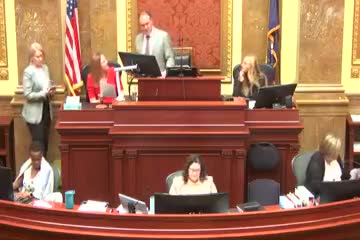
SALT LAKE CITY — The Utah House adopted first substitute HCR 15 on March 3 after a prolonged floor debate that centered on how the resolution might affect public-school employees and whether it could be misread to encourage religious expression in classrooms.
Sponsor Representative Mike Peterson argued HCR 15 “reaffirms the fundamental rights enshrined in our nation’s founding documents” and said the resolution “supports the right of public expression” and “fosters respectful interfaith dialogue.” “Religious freedom is not just a privilege. It is a right. It's not a partisan issue,” Peterson said on the House floor.
Representative Doug Owens voiced concern about a clause he identified as lines 65–66 of the resolution, saying it “invites teachers to openly express their faith in our public schools” and could be misinterpreted to allow paid government employees to use the instruments of government to proselytize. “I can see that being subject to misinterpretation,” Owens said.
Representative Andrew Stoddard questioned whether the resolution’s protections would apply equally to minority or nontraditional faiths, asking whether a Wiccan or a practitioner of other faiths could display religious items in a school. Peterson referenced U.S. Supreme Court decisions in American Legion v. American Humanist Association (2019) and Kennedy v. Bremerton (2022), and framed the resolution as consistent with those rulings, emphasizing religious expression that has historical or traditional grounding.
Other members described personal and historical reasons for supporting the measure and urged colleagues to endorse religious expression safeguards without turning them into directives for classroom instruction. Representative Peterson said the resolution does not name or endorse any single religion and that it reflects a broad affirmation of liberty.
The House adopted HCR 15 on a final vote of 61 yes to 12 no; the resolution will be transmitted to the Senate for consideration.
The floor debate shows lawmakers divided over the scope and possible interpretations of nonbinding resolutions that reaffirm constitutional principles. Supporters said HCR 15 reiterates Utah’s commitment to religious liberty; critics warned that teachers and other government employees must remain mindful of the Establishment Clause and not use official channels to advance faith.