Get Full Government Meeting Transcripts, Videos, & Alerts Forever!
Get email alerts on the School Antisemitism Policy topic
No spam. Unsubscribe anytime.
Senate bill to require schools to address antisemitism to same standards as other discrimination passes committee
Summary
Senate Bill 352 would require K–12 schools and institutions to adopt policies treating antisemitic harassment and discrimination the same as any other form of discrimination prohibited by state or federal law; sponsors said the bill brings parity and clarifies school responsibilities; committee approved the measure by voice vote.
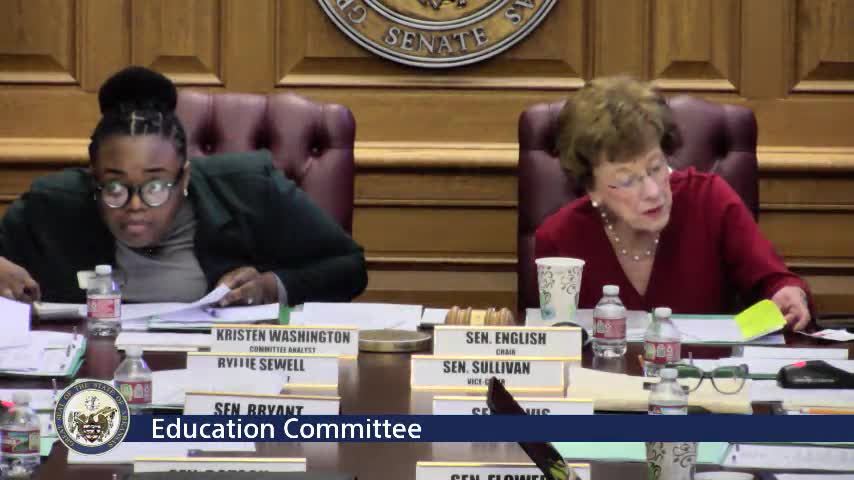
Senator Matt Stone presented Senate Bill 352 to the Senate Education Committee, a measure to require public schools to address antisemitic harassment and discrimination with the same policies and procedures that cover other protected classes.
The bill directs school districts and educational institutions to ensure policies and programs treat antisemitic harassment “in the same manner as any other form of discrimination prohibited by state or federal law,” and it asks schools to adopt reasonable time, place and manner restrictions on speech to protect the rights of all students.
Why it matters: Supporters said the bill codifies parity for Jewish students and staff within existing anti-discrimination frameworks, and that it provides schools with a clear definition and expected response procedures. Opponents and some witnesses raised concerns about how the bill’s definitions could interact with free-speech protections on campus.
Senator Stone said the bill’s amendments clarify that harassment “is addressed in the same manner as any other form of discrimination” and that the language brought the Jewish community “up to parity to enjoy the rights and benefits that other races have.” He described amendments to make the text consistent with state and federal nondiscrimination law.
Outside witnesses offered contrasting views. Gabriel Grossman, who identified himself as an adviser to the Combat Antisemitism Movement and an author of local anti-antisemitism measures, urged swift action and argued rising antisemitism in 2023–24 merited legislative attention. He said adopting a definition and requiring schools to treat antisemitism like other prohibited discrimination would send a strong signal. "When there's rising antisemitism, it's an early warning sign of broader society's ills," Grossman said.
Law professors testified on opposite sides. Professor Josh Silverstein opposed the bill, arguing its incorporated definition of antisemitism could be overly broad and sweep in constitutionally protected speech; he said the definition’s lead author has counseled against applying it to campus speech. Professor Robert Steinbach countered that the bill aligns with existing law and that it reasonably brings parity for Jewish students under anti-discrimination standards.
Committee members asked how the bill interacts with prior state actions. Senator Brianne Davis and others pointed out language in the bill requiring parity and noted the bill references the antisemitism definition previously adopted in state code (Ark. Code §16-1-2350). Senator Reginald Murdock pressed whether singling out one group risked narrowing protections for others; supporters said the bill is intended to be additive and not exclusive and that the text explicitly requires schools to treat antisemitism the same as other prohibited discrimination.
The committee recorded general support and took the question. The chair called the voice vote and announced, “The ayes have it.” The sponsor closed urging passage, saying the measure brings parity without diminishing protections for other groups.
What’s next: The committee approved the bill and it will move forward in the Senate’s legislative process.
Ending note: The bill drew both policy and constitutional questions at the hearing; supporters framed it as aligning school anti-harassment policy with documented rises in antisemitic incidents, while opponents cautioned about definitional overbreadth and campus-speech consequences.