Get Full Government Meeting Transcripts, Videos, & Alerts Forever!
Get email alerts on the Higher Education Research Foreign Contracts topic
No spam. Unsubscribe anytime.
Committee debates bill to bar universities from research and agricultural contracts with certain foreign parties; lawmakers raise concerns over scope
Summary
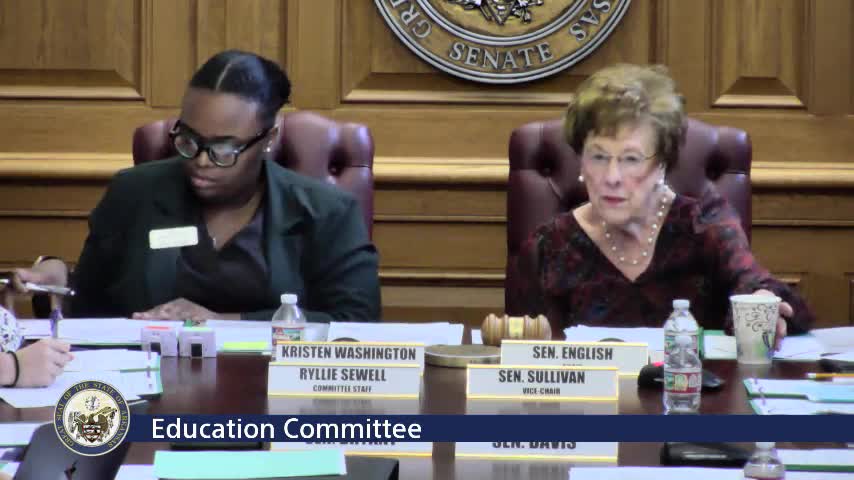
The Senate Education Committee debated and failed to advance a bill that would prohibit state higher-education institutions from conducting research or entering into contracts with certain foreign parties, amid questions about whether the language could bar legally present students and routine academic activity.
The Senate Education Committee debated a bill that would bar institutions of higher education from conducting research, entering nondisclosure agreements, engaging in production of agricultural products or selling agricultural products — including seeds — with parties tied to certain foreign governments or entities.
Senator Blake Johnson, sponsor of the measure, said the bill targets contracts between state institutions and foreign entities he described as adversaries. "We don't wanna help that Chinese based company to develop anything that will compete and... take our intellectual property," Johnson said, describing concerns about seed companies and foreign purchasers.
Several senators pressed Johnson on the bill’s scope and language. Senator Murdock and others asked whether the prohibition would block individuals lawfully present in the U.S. — including students or researchers on visas — from conducting research. Johnson and other supporters said the intent is to prevent contracts or agreements that transfer intellectual property or seed varieties to prohibited foreign parties, not to bar individual students legally enrolled at Arkansas institutions from education and on-campus research.
Committee discussion focused on the statute the bill references for the definition of a "prohibited foreign party." Several senators read from or cited the cross-referenced provision (identified in the transcript as "18 11 8 0 2"), which lists several categories including a citizen or resident of countries subject to International Traffic in Arms Regulations (ITAR), foreign governments, and parties organized under foreign laws. Senator Dodson summarized the referenced definition for the committee and said the provision appears to apply to governments and entities; committee members debated whether the definition could be read to include individuals in some circumstances.
Senator Flowers and other members said the bill as written risked being overbroad. Flowers read portions of the cross-reference and said it could be interpreted to include individuals from the listed countries; she urged the sponsor to narrow the language to avoid barring legally present students or researchers. "I can appreciate what you're trying to do... but to say an individual that's here studying in our institutions can't participate in research... I do agree that that need to be cleared up," Flowers said.
Senator Johnson said the bill aims at institutional contracts with foreign companies — for example, seed trials or non-disclosure agreements with firms based in countries the sponsor described as adversaries — rather than individual student enrollment.
At the end of the hearing, the committee held a roll-call vote. The transcript records several individual votes (Senator Dodson: aye; Senator Murdoch: no; Senator Davis: aye; Senator Flowers: no; Senator Sullivan: aye) and two senators recorded as not voting. The committee chair announced there were "not enough votes," and the motion did not carry.
Ending: Senators agreed the bill addresses a real concern about protecting research and agricultural intellectual property but that the language needed clarification to avoid unintended consequences for legally present students and standard academic work. Supporters and opponents agreed to consider narrowing the bill’s text before it would be brought forward again.