Get Full Government Meeting Transcripts, Videos, & Alerts Forever!
Get email alerts on the Groundwater Study Pfas topic
No spam. Unsubscribe anytime.
Evansville Water and Sewer Utility to Drill Monitoring Wells at Former Roberts Stadium for PFAS and Groundwater Study
Summary
The Board of Parks Commissioners approved a right-of-entry agreement allowing Evansville Water and Sewer Utility to take soil borings, water samples and install monitoring wells on the former Roberts Stadium green space to assess groundwater quantity and PFAS levels.
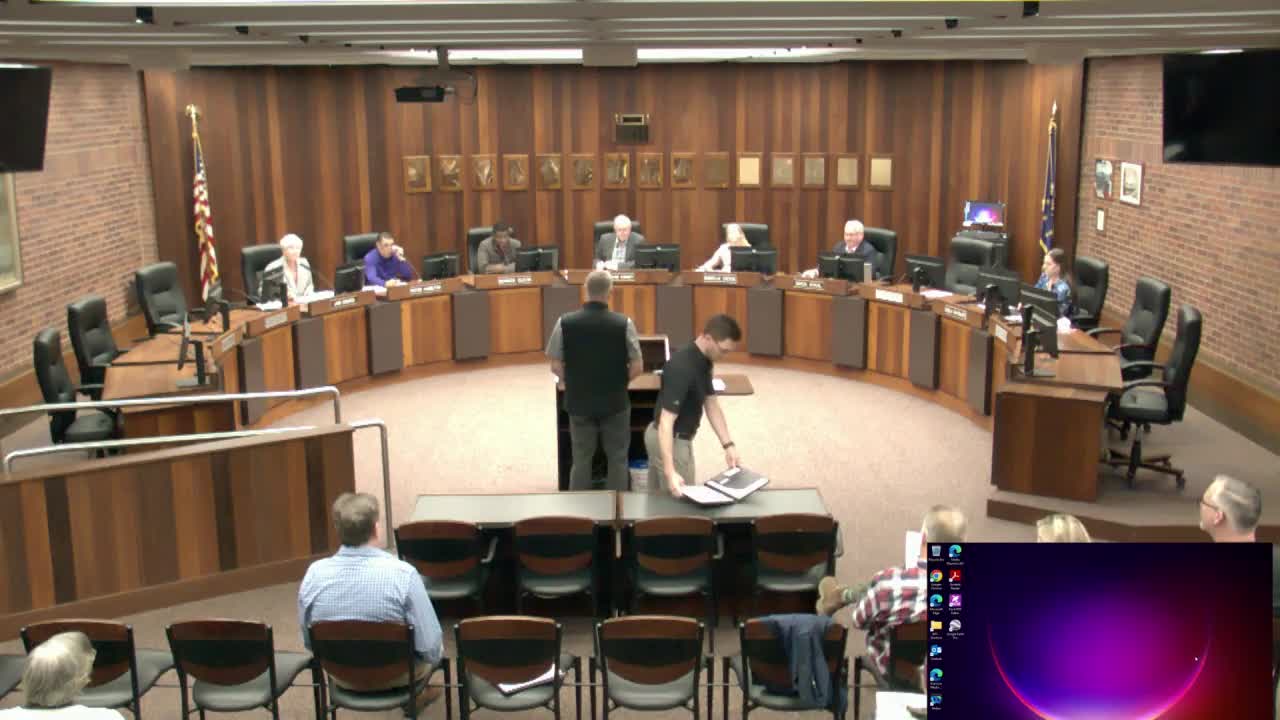
The Board of Parks Commissioners on March 19 approved a right‑of‑entry agreement allowing Evansville Water and Sewer Utility (EWSU) to mobilize a sonic drill rig to the former Roberts Stadium green space to collect soil cores, water samples and install monitoring wells.
EWSU Director of Planning Sean Wright told the board the work is part of a regional evaluation of groundwater availability and quality, motivated in part by concerns about PFOS/PFAS contamination observed in the Ohio River. Project manager Logan Guffey said the utility has so far found “lower and often non‑detectable levels of PFOS in the local groundwater supply,” and now seeks to confirm groundwater quantity and further quality data at selected sites.
Guffey described the field work: sonic drilling to bedrock (assumed between 8 and 130 feet below surface), collection of soil core samples, water‑quality samples from borings, and installation of two‑inch monitoring wells at each boring for ongoing level monitoring. He said mobilization is planned within a two‑week window beginning around April 11, with fieldwork expected to take about a week (the utility allowed a two‑week band for weather delays). Wright and Guffey said the drill rig would be located in the green space where Roberts Stadium once stood and would not affect adjacent traffic; they also said they would coordinate specific drill locations with Parks staff, including “Miss Crook.”
Board members asked about potential contaminants other than PFAS. Guffey said the utility is conducting separate efforts to evaluate petroleum and other contaminant sources and emphasized the current effort is investigative: building a subsurface model to inform whether groundwater could be used in the municipal drinking system. He said disturbed turf and disturbed areas will be restored “to as good or better condition,” and monitoring wells may be left with unobtrusive markers so they can be found for future sampling.
The board approved the right‑of‑entry by voice vote after a motion and second; no roll call was recorded.