Get Full Government Meeting Transcripts, Videos, & Alerts Forever!
Get email alerts on the Road Funding topic
No spam. Unsubscribe anytime.
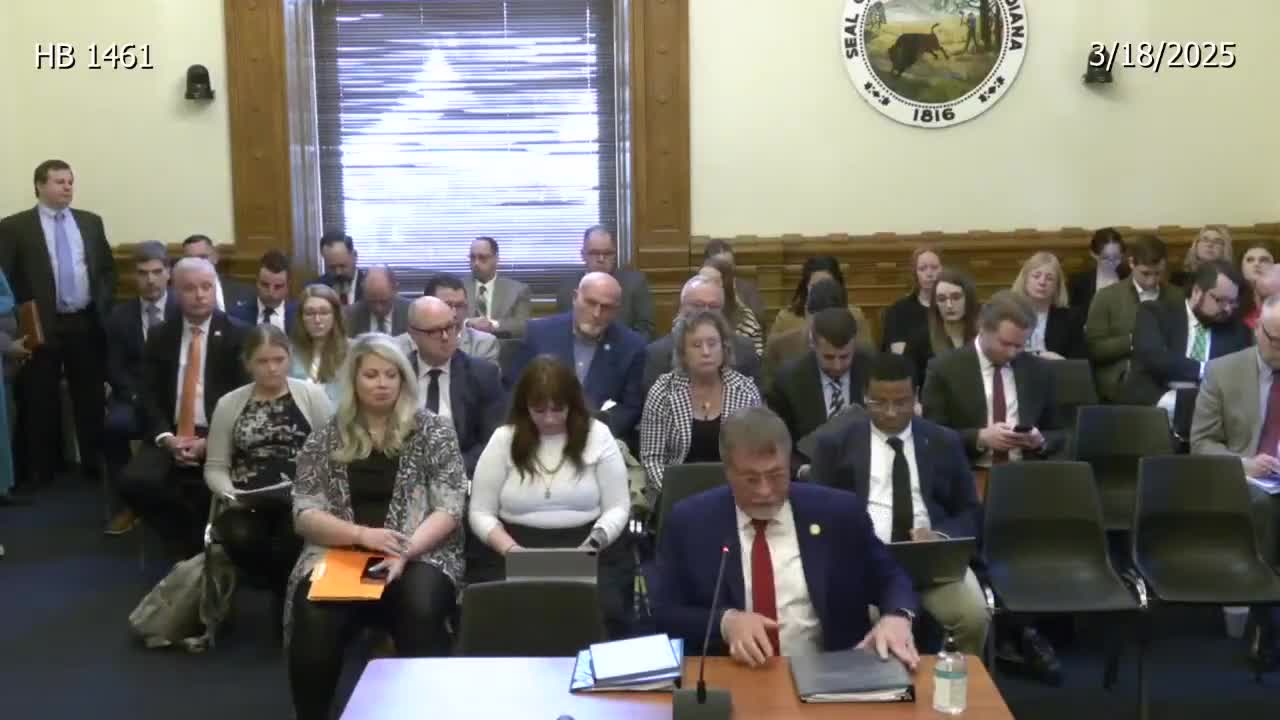
Lawmakers debate sweeping road-funding bill that would expand local options, add community-crossings tiers and create a path to tolling
Summary
Representative Pressell presented House Bill 1461, a multi-part road-funding bill that would change CCMG distribution, expand some local taxing authority, tie MVH restrictions to PASER pavement ratings and ask the administration to pursue a federal tolling waiver.
Representative Pressell opened discussion of House Bill 1461 as the committeeshifted to a broad road-funding proposal intended to address projected shortfalls in road and bridge funding. "There are a lot of options in this bill. Some of them good, some of them bad," the sponsor told the committee, and said he "does not have support for everything in this bill" but emphasized the need to develop sustainable funding options.
Representative Pressell described several core elements of the bill: expanding wheel-tax availability for counties above a population threshold, creating two $100 million tiers in the Community Crossings Matching Grant (CCMG) program with the second tier available to counties of 100,000 population or more plus all cities and towns, lowering matching requirements for smaller units, directing additional Marion County funding ($50 million) for secondary streets if matched locally, and tying some motor-vehicle-highway (MVH) restricted-fund flexibility to local pavement-management performance (a PASER rating of 6 or better and fewer than 15% failing assets). The bill would also reinstate the "Local Tracks" program for grade-crossing projects and direct a request for information on new road-assessment technologies.
On the subject of tolling, Representative Pressell said the bill would instruct the Indiana Department of Transportation (INDOT) to submit a waiver request to the Federal Highway Administration where applicable; he stressed this would be one option among many and that any decision to reduce the gas tax or otherwise substitute revenue sources would require later legislative action. "If a waiver is granted, what's the revenues that that would produce?" a senator asked. Representative Pressell replied that if a waiver is granted the revenue outlook must be evaluated before taking action to lower other user fees.
INDOT's legislative director, Aaron Wainscott, told the committee that the department has already postponed more than 300 projects and that inflation combined with increased fuel efficiency and EV adoption has eroded purchasing power. He reported substantial input to a revenue task force that estimated roughly $1.2 billion of state need in coming years and additional local needs; INDOT staff cited large increases in steel, structural steel and asphalt prices and noted the statereliance on fuel consumption for roughly 82% of state transportation revenue.
The committee heard broad stakeholder testimony. The Indy Chamber supported the bill's direction, saying tolling would let out-of-state commuters pay their fair share and that the bill's provisions provide additional tools for local governments. City of Indianapolis representatives urged funding formulas that better reflect vehicle miles traveled rather than centerline mileage, and local government groups praised reduced match levels for smaller units and requested continued flexibility. The Build Indiana Council, labor representatives, manufacturers and the Indiana Railway Coalition also testified in favor of increased, predictable investment.
Township representatives told the committee they support transparency and a capital-improvement plan requirement but oppose a provision in the bill that would allow 30% of a township's annual budget to be transferred or committed without clearer treatment of restricted funds and the local accounting mechanisms township officials use for debt service or other non-discretionary obligations. "Those restricted funds were protected," said Andrew Durham, Center Township trustee, describing composted funds such as payee programs and debt-service accounts that are not general-purpose township money.
Concerns discussed in the hearing included: the possibility of substituting new user fees for the current gas-tax base; how quickly a federal tolling waiver could be obtained (the sponsor and NDOT staff said the process could take up to four years and that a waiver is not guaranteed); township accounting and the intended reach of any allowable transfers; and operational questions such as truck parking and weigh-station staffing raised by trucking-industry witnesses.
Representative Pressell said he plans to circulate amendments, continue stakeholder meetings and reconvene the committee for additional testimony next week. The hearing concluded with the committee accepting testimony and pausing further action while staff and stakeholders work on amendment language.
Key technical details captured in committee discussion: - Task force estimates and NDOT analysis: sponsor cited an approximate $1.2 billion state shortfall projection and large local needs (the transcript cited a wide range of local needs from $900 million to $2.5 billion depending on assumptions); NDOT confirmed inflation and vehicle-efficiency trends have reduced purchasing power and led to postponement of projects. - Community Crossings changes: creation of two $100 million tiers, second tier for larger counties and municipalities; eligibility and matching rules to be determined by INDOT allocations. - PASER-linked flexibility: local units with average PASER >=6 and fewer than 15% failing assets could reduce MVH restricted share from 50% to 40%. - Marion County allocation: the bill includes provision for $50 million for Marion County secondary streets, conditional on a local match. - Tolling pathway: the bill directs INDOT to pursue available federal waiver pilots for tolling; committee members emphasized that legislative action would be required before reducing other dedicated road revenues.