Get Full Government Meeting Transcripts, Videos, & Alerts Forever!
Get email alerts on the School Accountability topic
No spam. Unsubscribe anytime.
Bill directs State Board to craft new A–F accountability methodology and delays letter grades while rulemaking proceeds
Summary
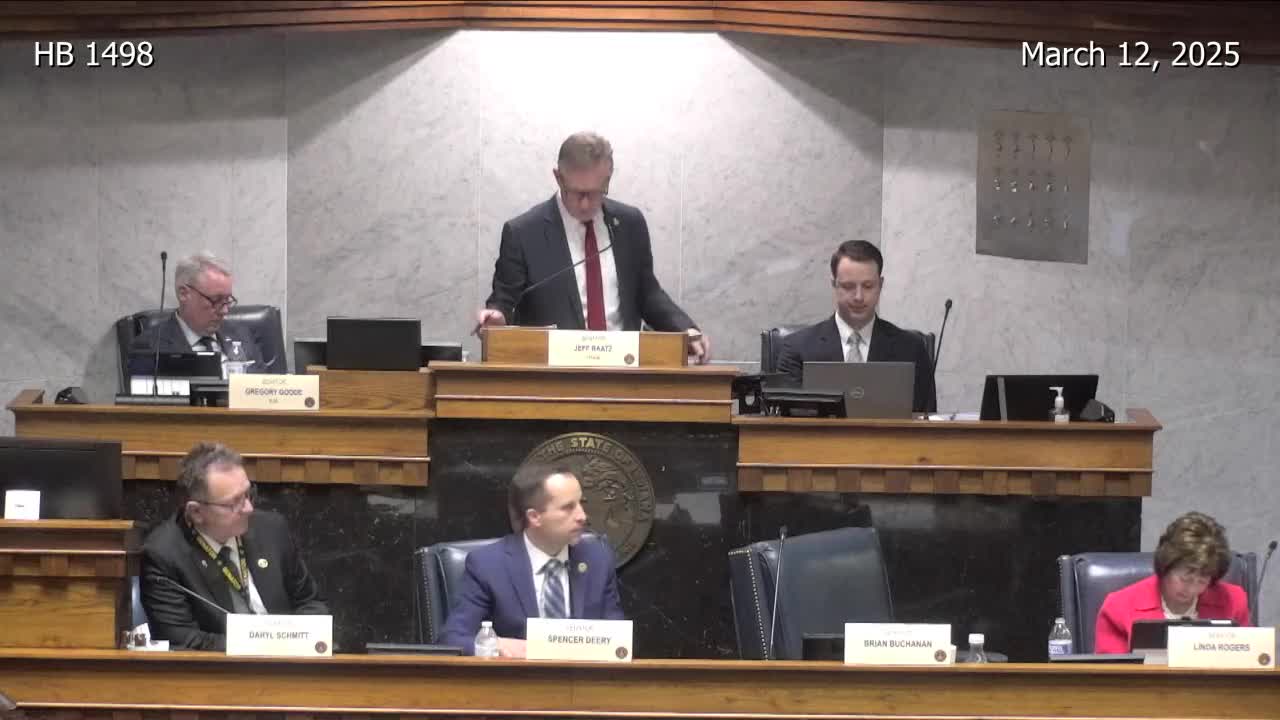
Representative Behning presented House Bill 1498 to require the State Board of Education to establish a revised A–F accountability methodology using multiple indicators, prioritize diploma‑seal attainment and statewide assessment results, and allow the board to issue null letter grades for the transition year while rulemaking occurs.
House Bill 1498 would require the State Board of Education to adopt a new A–F school accountability methodology by year’s end and prioritize multiple measures including proficiency on statewide assessments, the I‑read third‑grade results, and attainment of diploma seals tied to the redesigned diplomas. The bill directs the board to base the new methodology on data available on the Department of Education’s public dashboard and to include proficiency and growth measures as primary indicators.
Representative Behning told the committee the bill replaces the current formula with a new methodology and directs the State Board to consider additional indicators; he recommended that a draft amendment drop a proposed mandatory “graduation on‑track” indicator and instead treat it as an additional optional measure so the board has implementation flexibility. Secretary Jennifer Jenner told the committee the department supports a transparent rulemaking process and noted the board and department will conduct two public drafts and comment periods as required by law. She also said that null or no letter grades for the transition year would give schools time to implement the new system and that the department will kick off rulemaking after the legislative action in April.
Stakeholders including Stand for Children, Indiana Association of School Principals, the Indiana Chamber, and teachers’ groups testified or submitted comments. Witnesses advocated for including measures of closing achievement gaps and a ninth‑grade on‑track indicator tied to credits earned, and urged clarity about how chronically underperforming schools will be addressed after adoption of the system.
The committee discussed concerns about comparing schools with different student demographics and asked the department to consider metrics that show growth for lower‑performing percentiles as well as ways to analyze performance relative to community income. Secretary Jenner said Idaho GPS and other data tools already allow comparative views and that the rulemaking process will include stakeholder input; she and witnesses emphasized the need for multiple indicators beyond test scores.
No final vote was recorded at the hearing; committee members indicated they expect amendments during the rulemaking and public comment process.