Get Full Government Meeting Transcripts, Videos, & Alerts Forever!
Get email alerts on the Carbon Sequestration topic
No spam. Unsubscribe anytime.
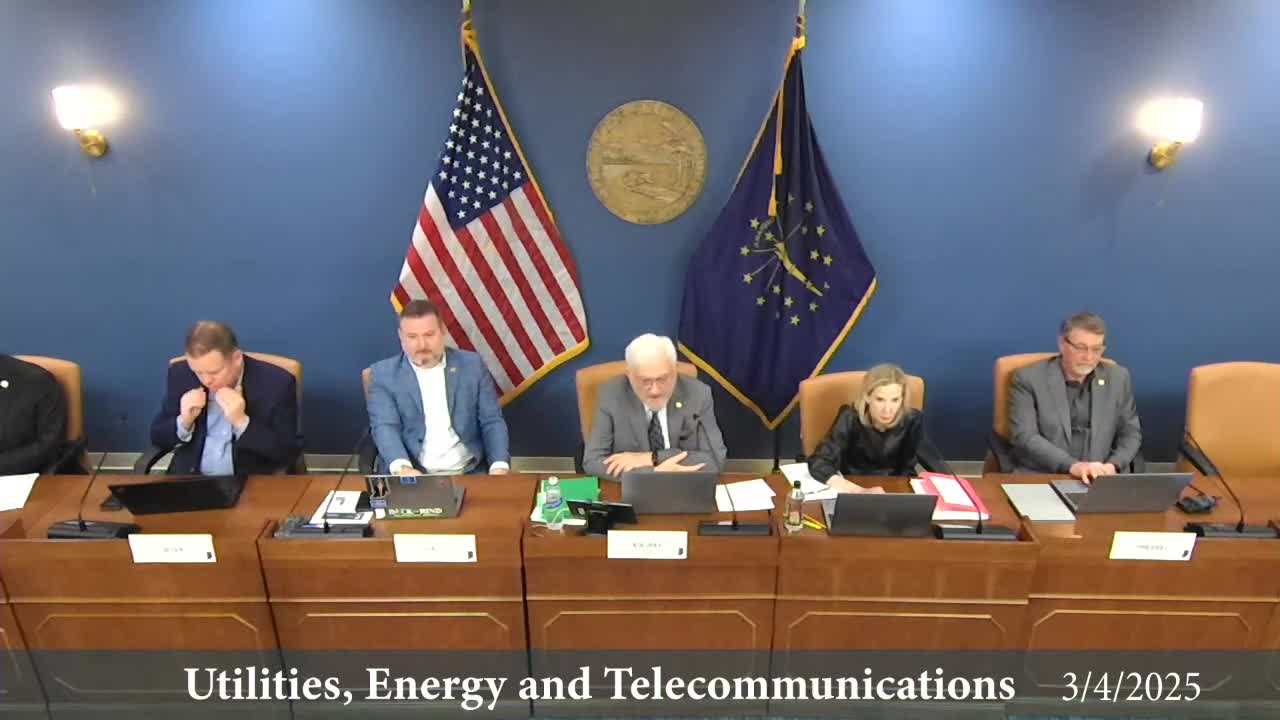
Committee hears carbon sequestration cleanup bill and amendment; vote postponed to address funding and permitting details
Summary
The Utilities, Energy and Telecommunications Committee on April 22 heard Senate Bill 457, a statutory cleanup for carbon dioxide sequestration permitting and pipelines; DNR requested a $1 million capped administrative fund in an amendment and the committee deferred a vote to allow budget and technical details to be resolved.
The Utilities, Energy and Telecommunications Committee heard Senate Bill 457 on April 22, a statutory cleanup and permitting clarification package for carbon dioxide sequestration projects and associated pipelines. Committee sponsors and the Department of Natural Resources (DNR) presented an amendment that would reestablish an administrative fund and set a $1 million cap to support state oversight if DNR seeks primacy for Class‑6 injection well permitting from the Environmental Protection Agency (EPA).
DNR Chief of Staff Maddie Comer told the committee the agency is pursuing primacy over Class‑6 permits and asked the legislature to reestablish an administrative fund to support program operations. "We believe that we can run the program for an estimate of a million dollars and we are supportive of a million dollar cap of that administrative fund with the excess collections reverting back to the general fund," Comer said. She told lawmakers the cap would allow DNR to implement the program effectively while returning excess fees to the state general fund.
Sponsor remarks and the amendment clarified permit and certificate requirements for carbon dioxide transmission pipelines in certain circumstances. One clarified provision states a certificate of authority would not be required if a carbon dioxide transmission pipeline begins and ends on the surface property of the storage facility and crosses only parcels that already carry a private easement or private right‑of‑way, according to the amendment’s language described on the record.
Testimony and public remarks reflected a mix of industry support, technical detail and local concern. Mark Schublak of CountryMark and Wendy Kraus of Heidelberg Materials said the bill provides needed clarity for projects, with industry witnesses describing large private investments—Heidelberg said its Mitchell plant capture project aims to store roughly 2 million metric tons of CO2 per year and cited a $750 million plant modernization investment. Caitlin Smith of Indiana Farm Bureau said her organization was neutral on most of the bill but supported pipeline mitigation language important to agriculture. The American Petroleum Institute testified in strong support of the bill.
Opponents and concerned witnesses raised implementation and safety questions. Frances Spooner, a licensed real estate broker and former county planning official, noted material presented by industry suggesting an underground CO2 plume can extend beyond a lease area and urged stronger local control and clarity on property rights. Citizens Action Coalition’s Kerwin Olson said he was neutral but raised two concerns: DNR’s decision to apply for primacy without broader legislative consultation, and ambiguity in the bill about whether a referenced "permit" means a permit to construct or a separate permit to inject. Olson noted this ambiguity could trigger integration orders before injection permits are final; he said one Class‑6 permit previously issued in Indiana has been remanded back to EPA Region 5.
Because the administration and budget officials had outstanding questions about how fees and the trust fund should be structured, the sponsor asked the committee not to vote the bill that day. The sponsor said the measure will be amended and scheduled for an amend‑and‑vote next week; the chair noted no additional testimony will be taken at that future amend‑and‑vote.