
Committee approves bill to require utilities to evaluate advanced transmission technologies in planning
Get AI-powered insights, summaries, and transcripts
Sign Up Free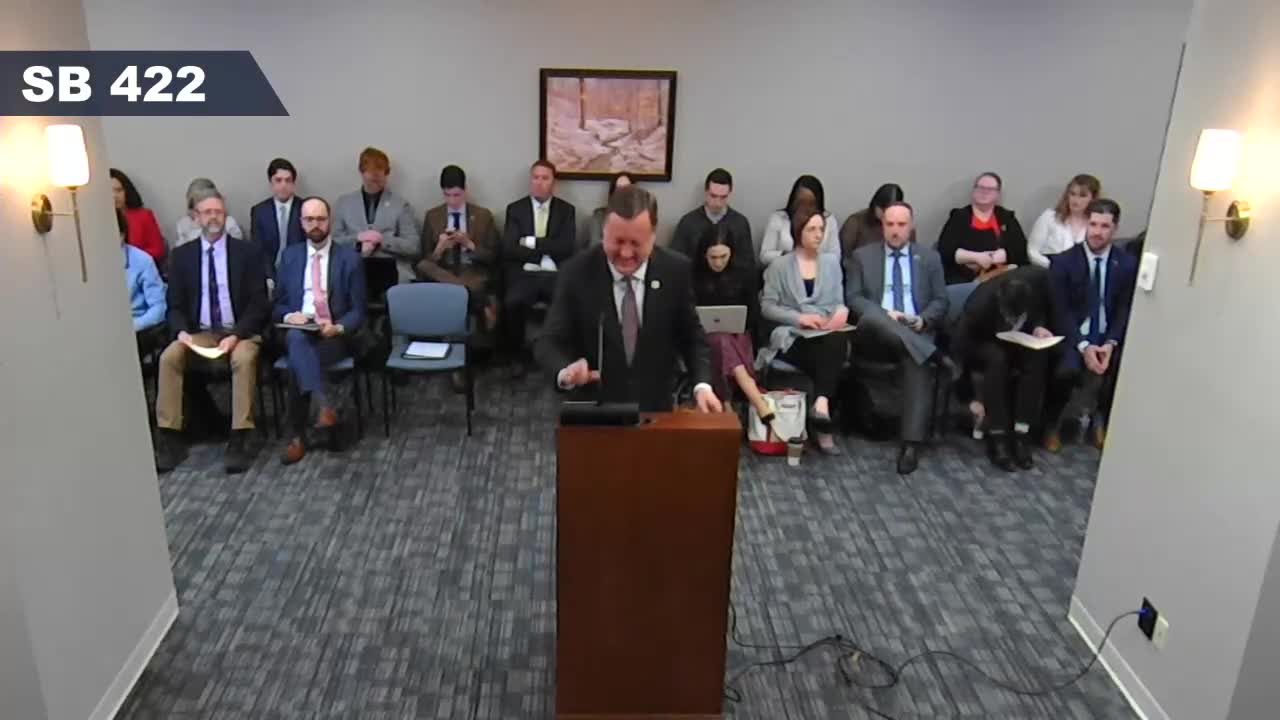
Summary
The Utilities, Energy and Telecommunications Committee voted to advance Senate Bill 422, which would require utilities to consider advanced transmission technologies in integrated resource plans and direct the IURC to study their application, supporters said the technologies can increase grid capacity and lower congestion costs.
The Utilities, Energy and Telecommunications Committee on April 22 approved Senate Bill 422, which would require utilities to include advanced transmission technologies (ATTs) in their integrated resource plans (IRPs), direct the Indiana Utility Regulatory Commission (IURC) to study applications, and encourage deployment under IURC oversight.
Supporters said the bill is intended to reduce the need for new transmission construction by squeezing more capacity from existing lines and lowering congestion costs. "These are software or hardware technologies that increase the capacity, efficiency, reliability, or safety of an existing or new electric transmission facility," Carter Harms of Pew Charitable Trusts told the committee during an informational presentation on ATTs.
The bill’s supporters, including utilities and environmental groups, outlined examples and pilot results. Jeff Cummins of AES Indiana described a limited pilot of real‑time monitoring sensors: "It took less than 2 weeks to deploy these, and we didn't have to use any outages," he said, adding that AES installed 42 sensors on five transmission lines across Indiana and Ohio to gather initial operational data.
Witnesses and organizations that testified in support included Pew Charitable Trusts, AES Indiana, Audubon Great Lakes, Indiana Conservation Voters, Hoosier Environmental Council, Conservatives for a Clean Energy Future, Indiana Electric Cooperatives (representing Hoosier Energy and Wabash Valley Power Alliance), AARP Indiana, the Indiana Energy Association and others. Testimony cited national estimates of congestion costs and studies saying grid‑enhancing technologies can increase capacity and reduce costs; proponents noted deployment times of months to a few years versus a decade or more for new transmission lines.
Committee members asked few technical questions during the hearing. Proponents emphasized that technologies discussed include advanced conductors and dynamic line rating sensors, which they said can increase line capacity and reduce congestion. Harms summarized potential benefits, including reduced land use from avoiding new lines and lower costs for consumers, and pointed to other states that have enacted encouraging policies. AES cautioned its pilot data set was limited and called for further study before generalizing results.
The committee passed the bill on a roll call. The committee’s recorded vote lists 12 members voting in the affirmative and one member excused; no opposing votes were recorded.
The bill will move forward in the legislative process. Committee supporters said they expect further technical review and potential follow‑up as utilities and regulators integrate ATT evaluations into planning.