Get Full Government Meeting Transcripts, Videos, & Alerts Forever!
Get email alerts on the Medicaid Administration topic
No spam. Unsubscribe anytime.
FSSA agency bill advances; adds beneficiary advisory committee, juvenile screening and removes TB screening for childcare workers
Summary
Senate Bill 486, an FSSA agency bill, passed the House committee. It implements federal Medicaid requirements including a beneficiary advisory committee, juvenile screening before release, limits on third‑party payer denials tied to prior authorization, removes tuberculosis screening from childcare staff rules, and updates advisory council makeup.
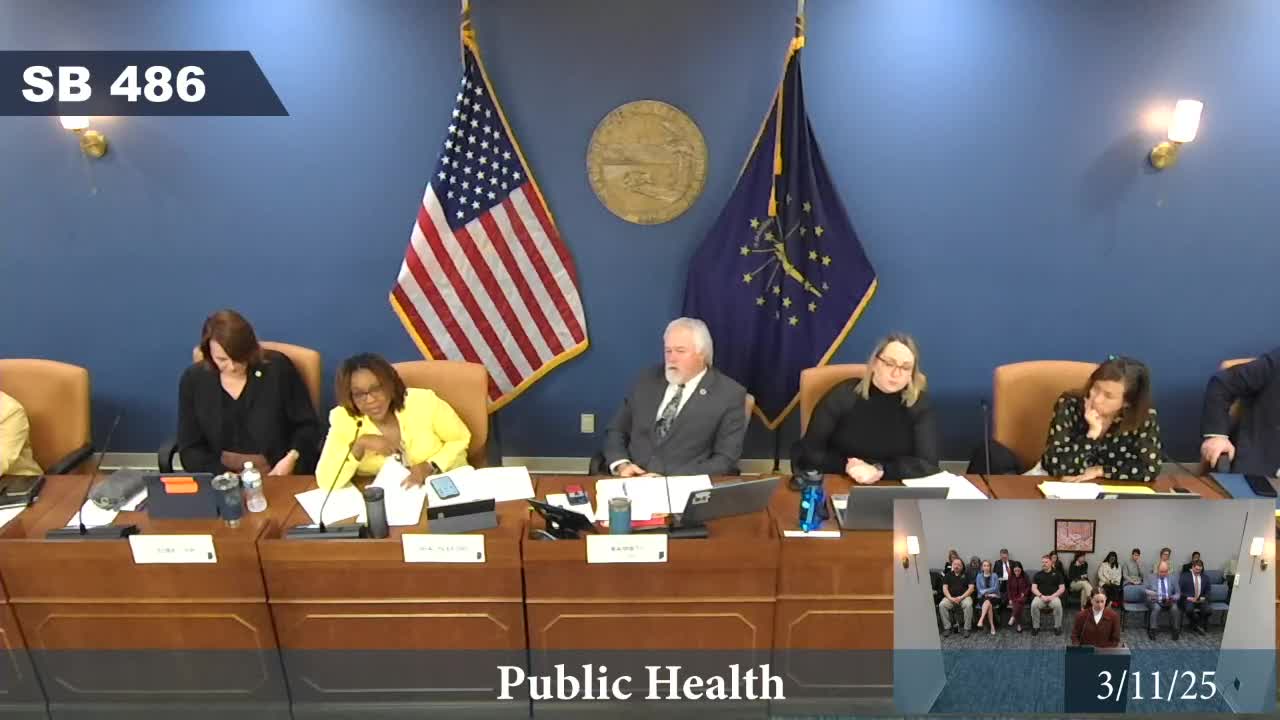
The House Committee on Public Health approved Senate Bill 486 on Oct. 27. The bill implements several federal requirements and administrative changes for the Family and Social Services Administration (FSSA) related to Medicaid and related programs.
Kayla Skinner, interim legislative director for FSSA, described five main goals of the bill: permit eligible juveniles to receive screening and case management services 30 days before release from juvenile facilities and require juvenile facilities to apply for Medicaid on their behalf; prevent third‑party payers from refusing payments to the state solely because an item or service did not receive the payer’s prior authorization; expand and clarify membership and meeting rules for the Medicaid Advisory Committee (MAC) and create a federally required beneficiary advisory committee composed of Medicaid members and caregivers; amend CPR and childcare provider rules to comply with federal standards and remove a state requirement that childcare employees undergo tuberculosis screening; and add lived‑experience membership requirements to the substance abuse and mental health advisory council.
Representative Shackleford, a MAC member, said he welcomed the beneficiary advisory committee because it will give Medicaid recipients and families a direct avenue to comment without relying solely on provider or association intermediaries. Committee members asked how common the TB‑screening requirement was in other states and were told the Office of Child Care had advised the state that the federal guidance no longer required TB screening for staff. The committee recorded a roll call and the chair announced, “Bill passes 13.”
FSSA described the changes as federal‑compliance and administrative updates intended to improve continuity of care, clarify program governance and remove a licensing barrier for childcare hiring. The bill passed the committee and will move forward in the legislative process.