Get Full Government Meeting Transcripts, Videos, & Alerts Forever!
Get email alerts on the Child Welfare Reform topic
No spam. Unsubscribe anytime.
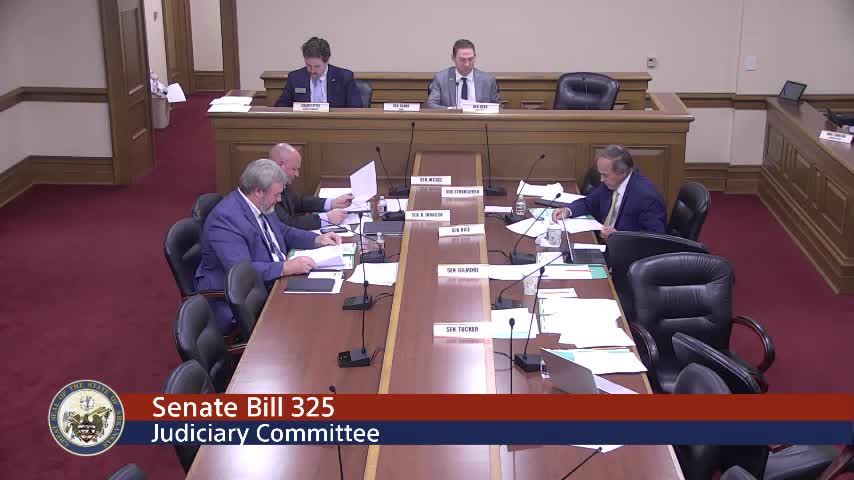
Committee passes child‑welfare reforms to narrow registry and standardize screening; stakeholders consulted
Summary
Senate Bills 325 and 326 revise child‑maltreatment definitions and procedures, narrow who must remain on the central registry for child maltreatment, standardize hotline screening practices, and adjust procedures for reinstating parental rights and visitation. Sponsors and stakeholder groups said amendments reflect broad input.
Sen. Allen Clark presented a package of child‑welfare bills (SB 325 and SB 326) aimed at narrowing the child‑maltreatment central registry and changing screening and removal procedures. Clark said the bills remove certain neglect findings from the registry and add protections for child safety while preventing unnecessarily broad listings that can block employment for caregivers.
Clark said the bills were amended after a stakeholder meeting with judges, Department of Human Services (DHS) and advocacy groups. KC Family Programs senior director Michelle Martin testified as a technical adviser and walked through the bill’s changes: clarifying a best‑interest standard that considers family integrity and timely permanency, defining pattern‑based neglect language in certain sections, and requiring the hotline to use a standardized assessment tool and to consider family history and the reporter’s relationship in screening.
Jay Robertson of Opportunity Arkansas testified in support, saying an overstretched registry can prevent people with minor neglect findings from obtaining employment and supporting their families. Clark said the bill leaves abuse and sexual‑abuse findings intact on the registry but removes or narrows certain neglect classifications, particularly where the registry was applied too broadly.
Committee members asked about judicial discretion for home evaluations and whether standardized tools should be “validated.” Martin and Clark said the legislation preserves judicial discretion and that stakeholders preferred a standardized tool selected and reviewed by state experts; the committee accepted stakeholder amendments and advanced the bills by voice vote.
Why it matters: Sponsors and several stakeholders said the change targets unintended consequences from an expansive registry, balancing child safety with opportunities for adults to work. Opponents or concerned stakeholders (state police and some judges) were consulted and provided input but did not record formal opposition in the hearing transcript.