Get Full Government Meeting Transcripts, Videos, & Alerts Forever!
Get email alerts on the Capital Punishment Expansion topic
No spam. Unsubscribe anytime.
Senate advances bill to expand capital penalty to sexual abuse of young child amid constitutional debate
Summary
Sen. Matt Stone's Senate Bill 375 would make certain sexual assaults of children 13 and younger eligible for capital punishment. Supporters framed the bill as protecting children from severe abuse; opponents cited U.S. Supreme Court precedent (Kennedy v. Louisiana) and warned of procedural, evidentiary and resource challenges.
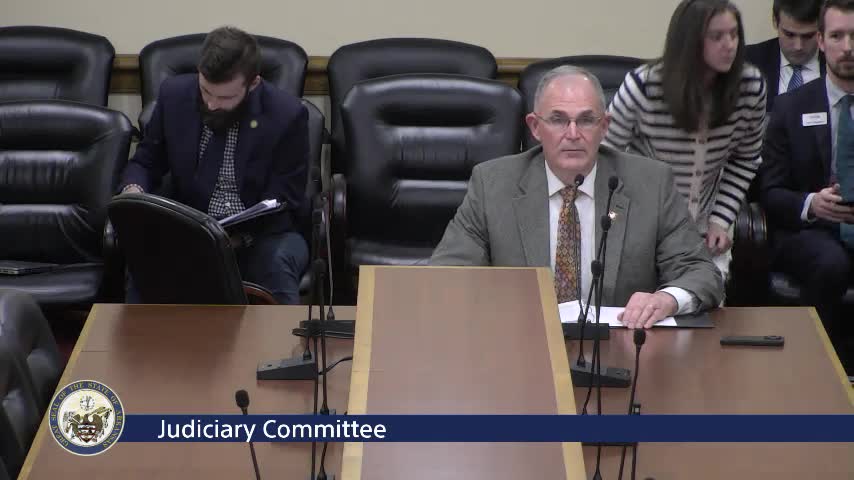
Sen. Matt Stone presented Senate Bill 375, which would expand capital punishment eligibility to certain sexual offenses against children age 13 or younger. Stone framed the measure as responding to horrific child abuse and argued for the state's ability to impose the severest penalties in extreme cases.
Dylan Jacobs, deputy solicitor general with the Attorney General's Office, described the constitutional landscape and acknowledged that current U.S. Supreme Court precedent (Kennedy v. Louisiana, 2008) bars capital punishment for non‑homicide offenses, meaning implementation would depend on the Court changing or on future litigation.
Jeff Rosenzweig of the Arkansas Association of Criminal Defense Lawyers opposed the bill. He said Kennedy v. Louisiana makes the statute constitutionally problematic now, and he warned of practical problems if the law changed: high risk of false or uncorroborated allegations in sex‑abuse cases, the potential for abusive or retaliatory claims in custody disputes, and large additional defense costs requiring more death‑penalty‑certified counsel and mitigation resources.
Prosecutors present said their office assesses each case carefully and that not all eligible cases would be prosecuted as capital cases. Laurie Temperas, deputy prosecutor coordinator, said prosecutors weigh the evidence and the appropriateness of seeking death in each case.
Committee discussion probed whether the bill would significantly increase litigation, whether juvenile defendants were excluded from capital exposure (the bill preserves the prohibition on capital punishment for those under 18), and whether safeguards could be written to reduce wrongful convictions. The committee voted to pass the bill by voice vote.
Why it matters: The bill attempts to expand capital punishment to non‑homicide sexual assaults on young children — an area the U.S. Supreme Court has ruled off‑limits. Supporters argued the law is needed for the most horrific cases; critics warned it is currently unconstitutional and would invite substantial litigation and resource pressures.