Get Full Government Meeting Transcripts, Videos, & Alerts Forever!
Get email alerts on the Human Trafficking topic
No spam. Unsubscribe anytime.
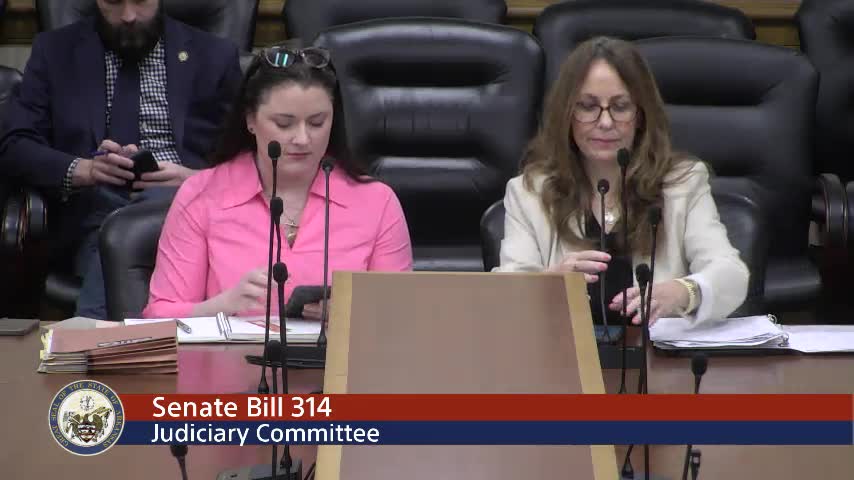
Senate panel raises penalties for solicitation in human-trafficking package; bill passes
Summary
The Senate Judiciary Committee advanced Senate Bill 314, which increases penalties for solicitation tied to commercial sex as part of a three-bill human-trafficking package. Supporters said the measure aims to reduce demand; opponents warned it duplicates existing statutes and risks abuse.
Sen. Missy Irvin, District 24, told the Senate Judiciary Committee that Senate Bill 314 raises penalties for people who solicit commercial sex, describing it as part of a three‑bill package to combat human trafficking. "This bill is designed to, try to eliminate the need, the the the demand for the human traffickers, by increasing the penalties for those who are soliciting ***," Irvin said.
Irvin said the bill makes the first offense a class A misdemeanor and increases the fine. "The first offense would still be an unclassified misdemeanor, but increase the the fine to at least thousand dollars and no more than a hundred and 20 days in jail ... First offense is class A misdemeanor," she said during the committee hearing.
Alex Benton of the Attorney General's Office told the committee that a class A misdemeanor in Arkansas carries a ceiling penalty of up to $2,500 and up to one year in jail. "A class A misdemeanor in Arkansas is ... it can result in a fine up to $2,500 and up to 1 year in jail," Benton said, describing the ceiling the change creates for prosecutors and sentencing.
Several committee members probed alternatives. Sen. Mark Tucker suggested focusing on patterns of repeated conduct rather than increasing penalties for a single incident, citing a retail theft statute that aggregates conduct over time. "My concern with the bill is that we're increasing penalties for a one‑off offense when people may not be engaged in human trafficking," Tucker said, suggesting an approach that escalates penalties after repeated acts.
Supporters said the upgrade from a misdemeanor category and other changes create a record and help prosecutors identify recurring conduct. Benton described the design: elevating the first offense to a class A misdemeanor creates a record that can be considered in later prosecutions.
Jeff Rosenzweig, representing the Arkansas Association of Criminal Defense Lawyers, testified in opposition. He said the conduct this bill targets is already covered by existing law and cautioned the change would encompass conduct that need not involve actual trafficking. "Arkansas Code 5‑18‑104 ... patronizing a victim of human trafficking ... the law already deals with what Senator Irvin says this bill is for," Rosenzweig said, arguing the bill would felonize second alleged encounters with minimal proof and risk abuse.
Irvin closed by emphasizing the bill's intent to cut demand for commercial sex as a tool to combat trafficking and defended due process protections. The committee voted by voice to give SB 314 a do‑pass recommendation.
Votes at a glance: SB 314 — Motion to do pass; voice vote; motion carried.
Why it matters: Sponsors framed the bill as part of a concentrated legislative effort to reduce demand for commercial sex and strengthen records that can be used to prosecute recurring offenders. Opponents argued the changes overlap existing trafficking statutes and risk prosecutorial overreach when convictions are based on uncorroborated allegations.