Get Full Government Meeting Transcripts, Videos, & Alerts Forever!
Get email alerts on the Fire And Emergency Services topic
No spam. Unsubscribe anytime.
Ross council hears wide-ranging fire and EMS briefing; declines to direct manager to pursue alternatives
Summary
At a lengthy March council meeting Ross officials and fire chiefs outlined recent deployment studies, ambulance availability and wildfire-prevention work. After discussion and public comment the council did not give the town manager majority direction to research any of five service‑delivery alternatives presented.
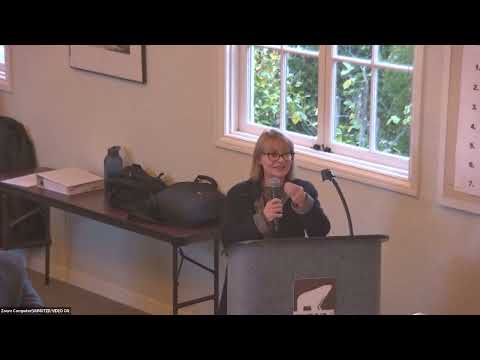
Ross — The Ross Town Council on March 13 received a multi‑agency briefing on fire and emergency medical services and on wildfire prevention, then debated but declined to direct the town manager to pursue any of five alternatives for changing how fire and ambulance services are provided to the town.
Town Manager Chris Johnson opened the discussion by listing five options the council could ask staff to research: contracting with Kentfield Fire District, contracting with Central Marin Fire, updating a cost estimate to rebuild a Ross fire station, developing a cost estimate to operate a standalone Town of Ross fire department, or asking the Ross Valley Fire Department (RVFD) to continue operating a Ross station by amending the RVFD joint powers agreement. The council heard detailed presentations from Chief Jason Weber (Marin County Fire), Chief Dan Mahoney (Ross Valley Fire) and Mark Brown (Marin Wildfire Prevention Authority), who together summarized deployment studies, recent operational changes and local wildfire‑mitigation work.
The most immediate policy question before the council was whether it wanted the town manager to spend staff time and resources to study any of those five alternatives. After public comment and council discussion, no single recommendation secured a majority vote; the council did not direct the town manager to pursue any of the listed alternatives.
Why it matters: council members and dozens of residents said they were concerned about response times, wildfire risk and insurance availability after the 2019 and 2023 Citygate/Ross Valley Paramedic Authority (RVPA) deployment studies showed material differences in ambulance availability and unit utilization compared with earlier reports. Chief Weber framed the discussion around recent data: "Closing the Ross Fire Station will add about 2 minutes of travel time for the engine company," he said, while also noting that County dispatch and a new central dispatch floor will soon allow automatic‑vehicle‑location (AVL) dispatching to send the closest appropriate resource across jurisdictional lines for life‑threatening “echo” calls.
What the studies and chiefs said: According to the 2023 deployment data presented by RVPA staff and Chief Weber, the ambulance unit based at Ross (Medic 18) was committed to incidents on average 21% of the time (meaning about 79% availability across a 24‑hour period). In 2023 there were 96 ambulance responses dispatched as Ross incidents; 26 of those (about 27%) did not require patient transport, and the reporting identified one cardiac or respiratory arrest. The 2023 Citygate analysis — discussed by staff at the meeting — found the Ross station ambulance was available to respond to incidents in Ross about 71% of the time in the single‑year dataset, down from an 85% figure shown in a prior, two‑year analysis. Chief Weber cautioned that smaller datasets can vary, and he urged focus on adding capacity where needed rather than on a single percentage.
Operational changes and capabilities: Chiefs and the county dispatch official described existing mutual‑aid and surge mechanisms. Ross Valley Fire Department has rebalanced staffing so that, after July 1, daily engine companies are planned as three‑person crews, rather than two; the department also plans to add an additional firefighter and administrative battalion chief. Countywide, officials described 35 staffed engine companies and 13 ambulances in the county system, and noted that on red‑flag days the county can up‑staff additional engines (the chiefs said up to ten engines countywide) and that the new consolidated dispatch center in Los Gamos will support camera‑based early detection and AVL dispatching to the closest appropriate resource regardless of jurisdiction.
Wildfire and prevention work: Mark Brown, executive officer of the Marin Wildfire Prevention Authority (MWPA), summarized local prevention investments and work. He said MWPA has funded shaded fuel breaks, defensible‑space inspections and chipping programs and that the authority is building a public, aggregated data set to help insurers and modelers incorporate local mitigation work into risk assessments. "Wildfire does not care about any jurisdictional boundaries whatsoever," Brown told the council, describing coordinated projects across zone lines and the authority’s goal to reduce structure exposure.
Public comment and council concerns: More than two dozen residents spoke during public comment, including a number who urged the council to restore a staffed engine company and rebuild a fire station in Ross, and others who emphasized wildfire mitigation and countywide mutual aid tools. Several speakers cited recent high‑profile wildfires outside the county as a reason to keep local engine capability. Council members asked detailed questions about datasets, simultaneously occurring incidents and the projected cost and time to rebuild a station.
Council action: The council declined to provide the town manager with majority direction to research any of the five alternatives presented (joining/contracting with Kentfield, joining/contracting with Central Marin, updated rebuild cost estimates, cost to operate a Town of Ross fire department, or an RVFD amendment to keep a station in Ross). There was no formal vote to change current service arrangements at the meeting; the council’s decision on further study was procedural and reflected a lack of majority support for any single research directive. Town Manager Johnson confirmed that routine coordination and the planned transitions already approved by the RVFD board and member jurisdictions will continue.
What comes next: Staff said the countywide AVL dispatch project and the centralized dispatch floor will come online within months and that RVFD implementation steps for staffing changes are scheduled around July 1. Council members signaled differing priorities: some urged prompt progress on the town’s civic‑center projects and paramedic facilities; others called for continued local advocacy and additional study. Residents and council members who want to pursue private fundraising or a bond to rebuild a Ross station were encouraged to organize outside the town staff process; the town manager noted that staff capacity for parallel, time‑intensive studies is limited.
Ending note: The meeting underscored the competing pressures in a small jurisdiction — high public expectations for rapid emergency response, rising wildfire risk, and the large capital and operating costs required to house and staff modern safety facilities. Officials said the county’s improved dispatch tools and planned staffing changes are designed to maintain service levels while larger funding or facility decisions are considered.