Get Full Government Meeting Transcripts, Videos, & Alerts Forever!
Get email alerts on the Legislation topic
No spam. Unsubscribe anytime.
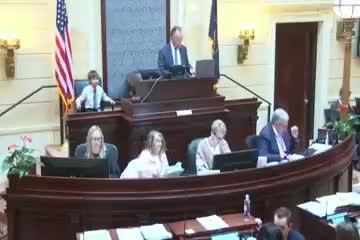
Utah Senate passes scores of bills; alcohol, SNAP restriction and school grants draw the most debate
Summary
The Utah State Senate cleared a large set of bills in floor action, voting on education, public safety, tax and regulatory measures. Major debates centered on an alcohol bill carving out local restaurant allowances and changes to grocery pickup, and a contentious proposal to bar SNAP purchases of sweetened carbonated beverages.
SALT LAKE CITY — The Utah State Senate on the floor returned dozens of bills to the House or advanced them to the speaker’s signature after votes on a broad slate of measures ranging from education supplements and commercial vehicle registration to changes in state permitting and social-support rules.
Among the measures approved were bills affecting K-12 and higher education, criminal penalties, wildfire prevention and regulatory processes. Two of the most contested debates on the floor focused on a package of alcohol policy changes (Senate Bill 328) and a House bill that would prohibit the use of SNAP benefits to buy sweetened carbonated beverages (third substitute House Bill 403). Both passed after extended floor discussion.
Why this matters: The floor actions move numerous bills closer to becoming law (or back to the House for final signatures) and show the Senate’s priorities this session — changes to education policy, criminal penalties and state regulatory frameworks and targeted social policy changes. The SNAP restriction drew sustained public-policy debate on nutrition, administrative feasibility and dignity for benefit recipients; the alcohol bill included a new, limited local allowance for a park development and operational changes for grocery pickup.
Votes at a glance (selected floor outcomes) - Fourth substitute Senate Bill 99, “Excellence in Education and Leadership Supplement Amendments” — Passed (22–0; 7 absent). Sponsor explanation: language added to give school districts “a little bit more flexibility in plan design,” per Senator Fillmore.
- Third substitute Senate Bill 170, “School Discipline Amendments” — Concurred and passed (27–0; 2 absent). The House had required immediate notification for certain seclusion events and restricted seclusion of kindergarten students.
- Third substitute Senate Bill 171, “Indigent Defense Amendments” — Concurred and passed (27–0; 2 absent).
- Senate Bill 251, “Commercial Vehicle Registration Amendments” — Passed and returned to House for speaker signature (23–0; 6 absent). Sponsor said changes were technical from the tax commission.
- Sixth substitute Senate Bill 328, “Alcohol Amendments” — Passed (24–2; 3 absent). Sponsors said the substitute removed an unfunded provision and narrowed a local latitude carve-out to a single site (a park at Point of the Mountain) and kept operational fixes such as allowing curbside grocery pickup of alcoholic beverages with ID verification.
- First substitute House Bill 246, “Statewide Online Education Program Amendments” — Passed (26–0; 3 absent). Sponsor described new requirements for provider report cards, a model syllabus, and centralized registration.
- First substitute House Bill 79, “Adaptive Driving Equipment Amendments” — Passed (24–0; 5 absent). Enacts a sales-tax exemption for certain adaptive driving equipment under specified conditions.
- First substitute House Bill 85, “Environmental Permitting Modifications” — Passed (23–1; 5 absent). Sponsor said it implements parts of an executive order to streamline permitting while keeping environmental protections.
- House Bill 251, “Pollinator Program Amendments” — Passed (25–0; 4 absent). Converts a pilot pollinator program into a permanent program, sponsor said.
- Third substitute House Bill 403, “SNAP Funds Amendments” (prohibiting use of SNAP to buy soft drinks) — Passed (15–13; 1 absent). Sponsor framed the measure as aligning SNAP with its nutritional purpose; opponents raised enforcement complexity and concerns about dignity and narrow definitions of “nutritional value.”
- Second substitute House Bill 260, “First Credential / First-Credential Program” — Passed (20–5; 4 absent). The bill aligns fiscal notes and establishes a credentialing pathway and small scholarships for students earning credentials in high school.
- Third substitute House Bill 302, “Minors in State Custody Amendments” — Passed (25–0; 4 absent). The bill redirects a portion of survivor benefits into an account for youth who age out of state custody.
- First substitute House Bill 462, “Rural School Funding Amendments” — Passed (23–4; 2 absent). Creates a one-time $4.3 million grant program for construction or refurbishment of rural school sports facilities, with local reporting requirements.
On the floor: two extended debates Alcohol bill (Senate Bill 328) Senators described a lengthy amendment process that removed an unfunded mandate and narrowed a proposed expansion of local authority to one specific park development at the Point of the Mountain. Senator Fillmore, sponsor of the education bill earlier, explained changes to the alcohol measure: “The sixth substitute keeps everything that is currently in the fourth substitute except it takes out an unfunded provision,” and retains certain operational changes such as allowing grocery pickup with ID verification.
Senator Stevenson, the primary sponsor on the alcohol bill, described the package as the result of negotiation: “This has been a little — the alcohol bills are always frustrating and they're complicated ... after further discussion, we agreed that it would be beneficial to consider the bill, reconsider the bill.” He also summarized operational changes that the substitute restores, including options for curbside pickup and adjustments to bonding requirements for licensees.
SNAP beverage restriction (House Bill 403) The proposed restriction on buying sweetened carbonated beverages with SNAP funds prompted divided floor debate. Sponsor Senator Brammer said the purpose is to align taxpayer-funded nutrition assistance with foods that provide “nutritional value,” arguing the program should not subsidize soda. Brammer said the bill excludes beverages that contain milk or are more than 50% fruit or vegetable juice by volume.
Opponents questioned enforceability and the effect on recipients’ dignity. Senator Thatcher said, “Who’s going to police this ... where do we draw the line?” Senator Wyler recounted constituents’ experiences and expressed support for the restriction; Senator Riebe described the role of rural schools and community equity when speaking for other measures. Senator Baldry and others urged caution and noted individual circumstances such as children with special dietary needs. The final roll call on HB 403 recorded a closely divided vote: 15 in favor, 13 opposed, 1 absent.
Other business The Senate received several House communications that multiple bills had been transmitted for the president’s signature or returned for filing. The chief clerk of the House, Megan S. Allen, signed communications for bills that the House concurred in the Senate amendments and for bills the House rejected and transmitted for filing.
What’s next Bills that passed the Senate will return to the House either for the speaker’s signature (for those previously amended by the Senate) or for further consideration, depending on whether the Senate concurred in House amendments. Several measures were circled and held for further negotiation, and the floor calendar was rearranged in the session’s later actions.
Votes and records The roll-call tallies and sponsor remarks above reflect floor statements and roll-call announcements recorded on the Senate floor during this session.