Get Full Government Meeting Transcripts, Videos, & Alerts Forever!
Get email alerts on the Council Rules topic
No spam. Unsubscribe anytime.
St. Joseph County Council adopts updated meeting rules after extended debate
Summary
After hours of debate and public comment, the St. Joseph County Council voted 5-4 to adopt a rules update that rewrites the council's procedural manual, adjusts quorum language and formalizes how the council president places items on agendas.
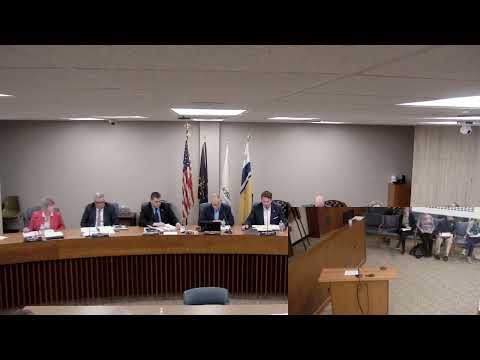
The St. Joseph County Council on March 11 adopted a broadly rewritten set of council rules, passing the resolution on a 5-4 vote after several hours of debate and public comment.
The rules revision, introduced by Councilman Brian Tanner as a committee-backed resolution, reorders and modernizes the council's procedural manual, updates references to state law, requires written notice to all members for all meeting types, and changes language related to quorum and agenda placement. "A quorum does not limit the attendance and participation of any council member," Tanner said while presenting the changes, arguing the revisions bring the rules into closer alignment with Indiana code.
Supporters said the document fixes decades-old formatting and clarity problems and adds mechanisms for resolving procedural disputes. Tanner told the council the rules committee aimed to make the document searchable and easier to maintain and to provide processes so that agenda items could not be permanently blocked without clear notice or opportunity for override. "The proposed language ... is actually a check on power and an improvement to assurances that the bills which get filed with the council have multiple paths of inclusion on the agenda," Tanner said.
Opponents said the changes centralize power in the council presidency and the rules committee and risk silencing minority members. Councilwoman Amy Drake moved to remove the new agenda-override language and to retain the council's current quorum of six; her amendment was debated and denied, and the full rules resolution was approved without that change. "This is empowering the president in a way he has never been empowered before," Drake said during debate, urging that the council not adopt provisions that could be used to "swipe their voice off of an agenda."
Public commenters were divided. Some residents praised the modernization and called the changes "clearer, more equitable and more efficient." Others warned the proposal risked partisan control and said citizens could be disenfranchised if their representative's measures were kept off an agenda. Tom Rowe, who had requested a revision to the rules in prior years and spoke in favor, said the document included useful review mechanisms. "If it doesn't work, review it," Rowe said.
The council roll call produced five "yes" votes from Councilman Mark Catanzarite, Councilman Brian Tanner, Councilwoman Shabazz, Councilwoman Hess and Councilman Daniel Schuetzl; Councilmen Randy Figg and Andy Rutten and Councilmen Thomas and Amy Drake voted "no." The resolution passed 5-4.
The new rules also add (among other changes) a standing process for regular review of council rules, incorporate existing remote participation procedures into the main text, and specify that bills involving fiscal appropriation must be routed through the auditor using a standard form.
Council members who supported the update said it was overdue and designed to reduce ambiguity in practice. Opponents repeatedly requested delay or phased adoption to permit further review. Several members urged continued transparency and frequent review if unintended consequences appear.
The council will publish the revised rules following the vote and said the rules committee will monitor implementation and consider follow-up amendments if necessary.