Get Full Government Meeting Transcripts, Videos, & Alerts Forever!
Get email alerts on the Code Of Conduct topic
No spam. Unsubscribe anytime.
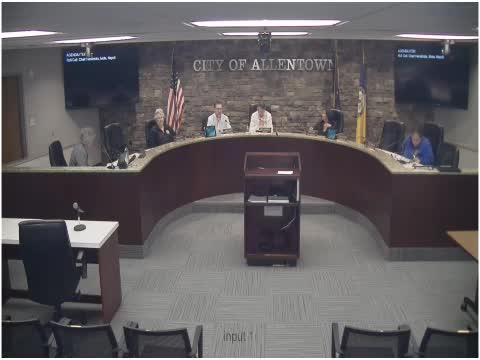
Allentown committee begins drafting council code of conduct, debates public-comment rules
Summary
Allentown City’s Rules, Intergovernmental Relations and Strategy Committee discussed a draft code of conduct and related standard operating procedures at a recent committee meeting, focusing on how council members and members of the public should interact during committee and council meetings.
Allentown City’s Rules, Intergovernmental Relations and Strategy Committee discussed a draft code of conduct and related standard operating procedures at a recent committee meeting, focusing on how council members and members of the public should interact during committee and council meetings.
Committee Chair President Hendricks opened the meeting and identified council members on the committee, saying the evening’s work would include “discussions on drafting the components of a good code of conduct and standard operating procedures.”
Councilwoman Mota, who presented background on the draft, said the goal is to “create some guide rail for our meeting for ourselves and the administration and the public. The end goal I have in mind is to create an efficient and effective decision making process that end with productive results.” Mota said the clerk posted version 3 of the draft on the city agenda website and asked committee members for feedback.
Why it matters: The committee’s work would set behavioral expectations for elected officials and the public, clarify how public comment periods differ across meeting types, and create internal procedures for the clerk’s office. Committee members said clearer rules could reduce recurring disruptions and help meetings run more efficiently.
Committee members focused on several specific issues. Councilman Napoli urged consistency across rules and called the draft “a great start,” saying clearer procedures could help the body be “more productive” and “more efficient.”
Councilwoman Afa raised multiple concerns about how the draft treats public speakers, noting the document appears to treat all public comment periods the same even though committee meetings are often more conversational. “Committee meetings for us are more conversational,” Afa said, and suggested the draft explicitly distinguish between (a) courtesy-of-the-floor public comment, (b) public comment on agenda items during regular council meetings, and (c) comment during committee meetings so that back-and-forth can occur where useful.
Afa also urged clearer language on interruptions, timers and enforcement. She noted that the draft allows the president or chair to interrupt a speaker “if needed,” and suggested the committee define specific circumstances that would justify an interruption because interruptions can escalate tensions and cause confusion about allotted time. On enforcement she asked the committee to clarify what “removed for the remainder of that session” means—whether “session” refers to a single meeting or a series of meetings that night.
Clerk Mike confirmed he can pause the public-comment timer and said he could “give you another 30 seconds” when asked, a detail several members said should be reflected in the procedures. Members also discussed returning a condensed, one-page summary for public distribution while keeping a longer, more detailed document for internal use.
Members raised accommodation language for hats, religious observance and disability needs. Afa and others asked the draft to make clear that religious headwear, medical needs, or other accommodations should be allowed and explicitly protected in the policy.
Members discussed modeling decorum: several speakers said council should set the tone by refraining from criticizing each other in public and by enforcing the same standards of respect it expects from the public. Examples from other local bodies were cited: one member said Lehigh County commissioner meetings and Bethlehem’s meetings maintain “decorum” even on controversial issues and suggested Allentown adopt similar norms and consistent enforcement.
Committee members referenced a towing ordinance discussed previously as an example of committee-style back-and-forth with the public producing useful changes; Napoli mentioned a towing bill he helped draft that will be introduced next week and said that process illustrated where committee dialogue with stakeholders can improve ordinances.
No formal motions or votes were recorded during the meeting. Members agreed to continue refining the draft, with the chair asking colleagues to submit suggested edits; members said they expect a condensed public-facing summary and a fuller internal operating-procedures document.
The committee adjourned after members confirmed they would continue work on a shorter public summary and the fuller draft for internal use.