Get Full Government Meeting Transcripts, Videos, & Alerts Forever!
Get email alerts on the Title1 Staffing And Retention topic
No spam. Unsubscribe anytime.
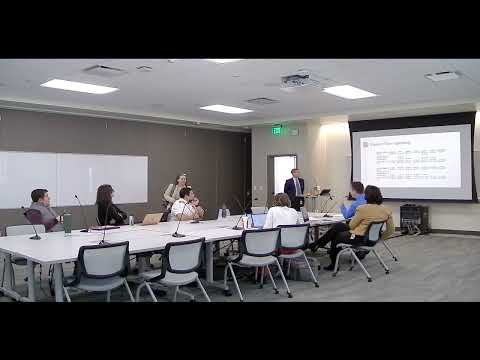
Salt Lake School District study session examines Title I staffing, pay and retention options
Summary
At a Salt Lake School District study session, district staff presented research and local data on Title I teacher retention, current Title I spending, and possible strategies including differentiated pay, extended time and targeted staffing.
At a Salt Lake School District study session, district staff presented research and local data on Title I teacher retention, current Title I spending, and possible strategies including differentiated pay, extended time and targeted staffing.
District researcher Dr. Grama summarized national studies that found mixed results: evidence that one-time or time-limited bonuses can increase short‑term retention in Title I schools (one study showed a $5,000 bonus improved retention for core assessed teachers) and that a $20,000 transfer stipend in a 10‑district pilot attracted high‑value teachers and produced measurable gains in elementary math and reading over a two‑year pilot. Dr. Grama said those studies raised sustainability questions — "where does the funding come from if you're going to be able to be sustainable in a project of that scale" — and noted effects were stronger for elementary grades and for teachers in core assessed subjects.
Staff also highlighted local programs and comparisons. The district's Peer Assistance and Review program, fully funded by the board in 2013, employs five consulting teachers who mentor new educators; district staff said, "in the first 5 years of the program, we were able to be above the state average and find their teacher retention rate by 23 percent." Neighboring districts show mixed approaches: Granite offers a $1,000 annual stipend for Title I teachers and Jordan provides two $750 payments during the school year; Canyons, Murray and Davis reported no differentiated Title I pay (Murray said it tried and later stopped a stipend due to staff divisions).
Staff reviewed how current Title I grant dollars are being used in Salt Lake schools: most elementary Title I allocations are funding teachers (to lower class sizes or add FTE), paraprofessionals and, at some sites, behavior or intervention specialists. A district presenter said Title I funds for this year total roughly $4–5 million and that the grant is projected to decline by several hundred thousand dollars next year.
The presentation included preliminary cost estimates for several differentiated‑pay models. Examples shown to the board included one additional day of pay costing about $178,000 (districtwide for current Title I teachers), a $1,000 stipend totaling about $374,000, a $5,000 stipend totaling about $1.8 million, and larger figures for higher stipends or many extra minutes/days of pay. Staff said their teacher count used for calculations was about 362 Title I teacher FTEs; board members questioned some calculations and cited differing estimates when discussing the cost of a $10,000 stipend.
Board members, school staff and a Title I teacher from Glendale Middle School told the board they were more likely to favor additional on‑site staff and protected planning time than a broad differentiated stipend. A Glendale Middle teacher, speaking during the session, said she preferred spending money "on taking care of our students" with more mental‑health supports and staff in buildings because "if our students are taken care of, then our teachers are taken care of." Several board members noted that many Title I schools use existing Title I allocations for paraprofessionals and additional teachers and that staffing needs vary by site.
Discussion touched on specific staffing models and constraints. Mountain View (sometimes referred to as Mountview) was cited as sharing a counselor 0.5 FTE with another school; staff said elementary allocations are commonly one counselor per school as a baseline, while middle and high schools are allocated counselors on a per‑student basis. District social worker staffing was described as seven district social workers (five plus two) whose positions are filled but rely on ongoing funding; staff and board members noted state and grant funding streams for counseling and social work have decreased or been time‑limited, complicating sustainability.
Board members asked staff to survey Title I sites and to gather teacher, family and administrator input so the district can identify site‑specific needs before recommending a funding model. Staff (including Dr. Grama, Alan and Logan) indicated they had enough direction to craft surveys and site outreach and planned to return findings to the board; staff also noted a related study session is scheduled next month and that updated state legislative funding estimates may be available in April and could affect options.
Board members and staff emphasized two tradeoffs: any district decision would require (1) reallocating existing local revenue or (2) raising additional revenue to sustain staffing changes, and (3) caution when relying on short‑term philanthropic or grant "soft money," which frequently expires after a few years and can leave schools unable to sustain positions.
The session closed with general agreement to develop a targeted survey and site outreach to capture teacher, administrator and family priorities for Title I schools and return with recommendations and cost models at a future meeting.