Get Full Government Meeting Transcripts, Videos, & Alerts Forever!
Get email alerts on the Local Grants topic
No spam. Unsubscribe anytime.
Ketchikan Gateway Borough grants committee recommends $352,004.71 in awards, backs $47,995.25 supplement to reach $400,000 cap
Summary
The Ketchikan Gateway Borough Grants Committee voted unanimously to recommend funding $352,004.71 in grant requests for FY 2026 and approved an amendment recommending the assembly allocate an additional $47,995.25 proportionally to applicants to reach a $400,000 funding cap. The recommendations go to the borough assembly for final approval.
The Ketchikan Gateway Borough Grants Committee voted unanimously to recommend funding grant applications totaling $352,004.71 for fiscal year 2026 and approved an amendment asking the borough assembly to allocate an additional $47,995.25 proportionally to applicants so the program can reach a $400,000 funding cap.
Peter Amelon, borough staff, told the committee that "the total program funding this year is set at $400,000. We had about $352,000 in total requests," and that the scoring averages displayed to the committee were based on the four members who submitted scores on time. Amelon said one committee member did not submit scores on time and staff planned to return to the assembly later this summer for further discussion of possible program changes.
The committee debated procedural and policy implications before a formal vote. Committee member Trevor Shaw moved to approve "all applications and corresponding funding requests as submitted in the total amount of $352,004.71." Shaw later offered an amendment to "increase the total grant funding to applicants by $47,995.25, and for that amount to be distributed proportionately to applicants according to the original requested funding amount." The amendment passed on a roll call vote of 4-0, and the main motion to recommend full funding also passed on a 4-0 roll call.
Members discussed the program's scoring and application quality. Committee member Palmer urged applicants to answer application questions fully, saying, "I just wanna urge everyone whenever in the future... make sure you're going through and really answering the questions every year," noting missing details on goals and barriers had lowered some scores. Committee member Bradbury and others echoed the need to improve the scoring matrix and suggested adding clarifying notes so reviewers can explain the reasoning behind scores.
Staff and several committee members noted that some program rules could be affected if the assembly accepts the committee's recommendation. The committee discussed two limits in the current guidelines: a $25,000 per-applicant cap (or 25% of an applicant's operating budget) and a funding formula tied to prior sales-tax revenue (historically a percentage of a three-year average). Borough management had recommended capping funding for the year at $400,000 rather than applying the formula; the committee's two recommendations (the $352,004.71 awards and the $47,995.25 supplemental allocation) would require assembly review and, if accepted, could require the assembly to suspend or modify elements of the existing grant guidelines.
The committee also reviewed scoring results and emphasized transparency for applicants: individual scoring sheets and committee comments are available on the borough website so applicants can see how committee members scored their submissions.
The committee made clear these are advisory recommendations. Final awards and any suspension or modification of the program guidelines must be approved by the borough assembly during the budget process later this summer. Amelon told the committee staff will return to the assembly for further direction after the budget process.
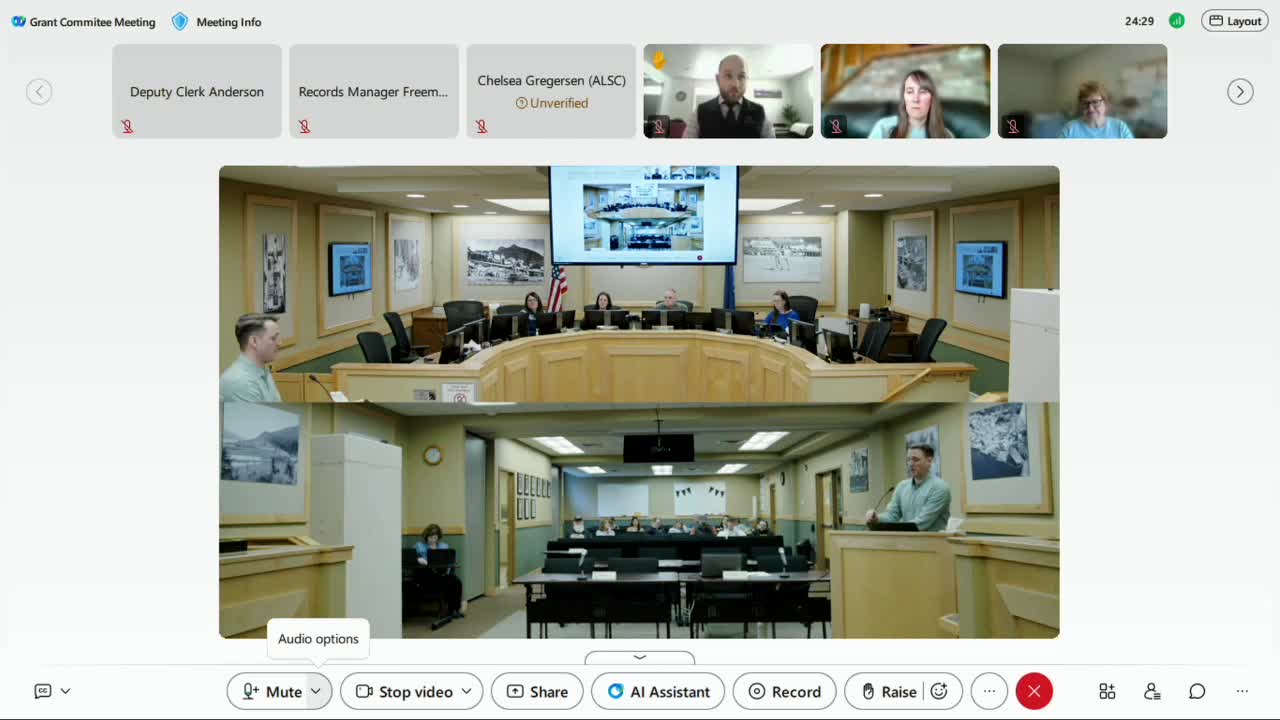
The meeting included extended technical difficulties with the WebEx connection; the committee recessed twice to resolve audio issues before completing the review and votes.