Get Full Government Meeting Transcripts, Videos, & Alerts Forever!
Get email alerts on the District Budget topic
No spam. Unsubscribe anytime.
Pelham board reviews 2025–26 budget line-by-line; final proposal set for April 22 ahead of May 20 vote
Summary
School officials reviewed detailed line items across facilities, personnel, transportation, benefits and debt service as they prepare a final 2025–26 budget for presentation April 22 and a public vote May 20. Board members flagged insurance, health care and pension cost increases and discussed staffing trends and potential efficiency gains.
The Pelham Union Free School District Board of Education spent much of its April 2 meeting on a line-by-line review of the proposed 2025–26 budget, with administrators outlining changes across facilities, human resources, transportation, benefits and debt-service lines ahead of a final district presentation April 22 and a public vote on May 20.
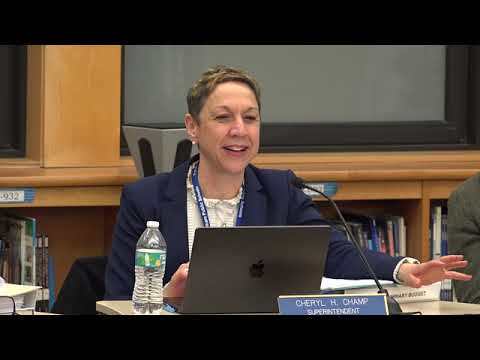
District Superintendent Dr. Champ opened the review, saying, “Tonight, we are focused on 2025, 2026 budget. This is our third meeting where we will review the budget line items.” The discussion ranged from custodial and grounds equipment to large cost drivers such as health insurance and pension contributions.
Why it matters: the board must present a final budget to voters on May 20 if it approves the proposal. Several cost lines — insurance, health care and state pension contributions — were identified as significant pressure points that could affect tax impact and program decisions.
Administrators gave department-level detail. John Condon, Director of Facilities, walked board members through pages B5–B7 of the budget book, describing custodial and grounds categories, mechanical-equipment replacement, fuel and light-and-power contingencies and contract services such as roof and masonry inspections. Condon noted higher expected fuel and water costs and said buildings’ dual-fuel systems and interruptible gas service can affect expenses in extreme weather.
Executive Director for Human Resources and Leadership Dr. Fitzgerald described personnel and HR technology plans. She said the district is considering additional Frontline Education modules — recruiting & hiring, Frontline Central and analytics — to move onboarding and recordkeeping from paper to digital, reduce manual handoffs and provide better analytics for staffing decisions: “It will really increase our ability to use data and to access data quickly.”
Business office staff (Jim Ceballos) reviewed benefits, transportation and debt service. Key figures discussed included: roughly $12 million for employee health insurance (year-to-year active plan increase around 9.1% and ~8% for retirees), a New York State Employees’ Retirement System contribution cited at about 16.5% of payroll for non-teaching staff, and an estimated $390,000 in transportation costs for field trips and athletic events. The district also noted typical state transportation aid reimbursement of roughly 46% on qualified expenditures.
Board members reviewed staffing charts showing a net increase in instructional FTEs over the last decade while general-support (administrative/clerical/custodial) staffing remained essentially flat. Administrators told the board the district has grown instructional staff to support new programs and clinical support (counselors, social workers, psychologists) but is monitoring operational support capacity.
Several board members asked about one-time versus recurring increases, and whether infrastructure projects included in bond propositions would reduce maintenance or mechanical costs in future years. Condon and other staff said potential HVAC and capital work could lower some mechanical and fuel costs but noted large projects are scheduled for summer windows and depend on voter approval for scope and timing.
Votes at a glance: the meeting recorded several procedural approvals and policy votes. The board approved minutes from previous meetings, adopted four policies (7.1–7.4) after waiving a third reading, and passed multiple consent agenda items. All recorded motions referenced in the transcript passed without recorded opposition.
What’s next: administrators said the finance committee will meet in the coming week and the district will present a finalized budget April 22. Staff said they will update transportation counts following the April 1 deadline and incorporate any state aid changes if the state budget is settled before the May vote.
Ending: board members asked for follow-up analyses, including a breakdown of staffing increases attributable to special education versus new programming, and more detailed tax-impact modeling for the bond propositions and multiple-proposition scenarios.