Get Full Government Meeting Transcripts, Videos, & Alerts Forever!
Get email alerts on the Ems District topic
No spam. Unsubscribe anytime.
Weston County residents, providers debate forming EMS taxing district
Summary
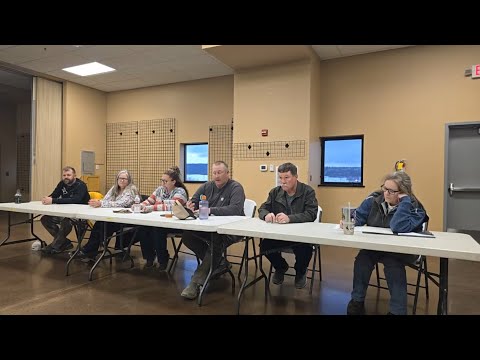
Weston County commissioners held a public hearing to gather comment on whether to begin the process of forming an emergency medical services district that could levy property taxes to fund local ambulance services.
Weston County commissioners held a public hearing to gather comment on whether to begin the process of forming an emergency medical services district that could levy property taxes to fund local ambulance services.
Supporters, ambulance providers and a state EMS official said a taxing district could provide a predictable revenue stream to sustain and expand services as volunteer staffing declines. Opponents warned the district would disproportionately tax rural landowners, give appointed boards broad powers and could be created by the commission without a direct countywide vote under the statute cited at the meeting.
Under the statute cited during the hearing (referenced by speakers as "title 18 12 1 0 5 b"), commissioners described two paths. The first would put an initial mill levy to voters; the second, which exists under a 2023 change to state law discussed at the meeting, would allow a county commission to establish a district by resolution and appoint a board of directors without a public vote. A county attorney would still need to complete the formal process, and commissioners said the process requires public notice and a minimum 60-day period before further action.
Proponents said funding is needed to maintain response capacity as volunteer numbers fall. "I think an EMS tax and district is a needed piece of the puzzle to make sure that you have a sustainable ambulance," said Brad Keith, a training supervisor who said he works with county health and state EMS offices. Keith added the district would not be a "silver bullet" and that fee-for-service billing would likely remain part of operations.
Local ambulance representatives described current staffing and cost pressures. An Upton-area ambulance representative provided a budget estimate for a model with multiple staffed ambulances, saying staffing and related wages and benefits could total about $693,098 per year under one scenario. The same representative said the services often operate with volunteers and that staffing levels "ebb and flow," meaning paid positions or reliable funding would be needed to guarantee around-the-clock coverage.
Speakers reviewed how mills would work and what voters would decide. Commissioners and others said the statute lets an initial two mills be proposed and voted on; if passed, they are recurring. Additional mill levies beyond the initial amount would require later voter approval. One person estimated a rough benchmark of about $20 per $100,000 of assessed value per mill, and using that math a $200,000 home would pay about $40 a year for a two-mill levy.
Several residents objected to the commission creating a district without a countywide vote and questioned whether required public notice had been posted clearly on the county website before the hearing. One speaker said they had difficulty locating a "notice of proposed resolution" that the meeting materials cited and warned that failing to meet publication requirements could expose the county to litigation that would delay the process.
Other concerns included equity and billing. Multiple residents noted that property-rich owners and some large industrial taxpayers would pay more under a property tax funding model while people living in town who generate many ambulance calls might pay far less. A resident also raised privacy concerns about required billing data, saying the statute requires the district to collect information needed to bill insurers; county staff and ambulance representatives said reporting to the county would be statistical and that protected health information would not be exposed in public reports.
Campbell County ambulance representatives described their current relationship with Weston County calls and said any taxing district's revenue would likely replace, not supplement, existing subsidies; they said the county and city stipends currently provided would need to be reconciled with any new taxing revenue. A Campbell County representative also said commercial insurers tend to reimburse at higher rates than Medicare and Medicaid, which affects ambulance revenue.
Speakers suggested alternatives and next steps. Several people urged forming a narrower district, exploring use of existing 1% sales-tax funds or grants, creating a task force to study options, or integrating EMS with volunteer fire departments where feasible. A hospital representative said the facility had negotiated an air-transport contract to provide prioritized fixed-wing and helicopter transport at no cost to the community and urged local cooperation to find creative solutions.
Commissioners closed by saying the hearing was an information-gathering session and not the adoption of any resolution. They asked attendees whether the county should continue to study the possibility of a district; "hands were raised both in favor and opposed," and commissioners said they would continue to gather information and answer the many outstanding questions raised by the public.