Get Full Government Meeting Transcripts, Videos, & Alerts Forever!
Get email alerts on the Licensing Discipline topic
No spam. Unsubscribe anytime.
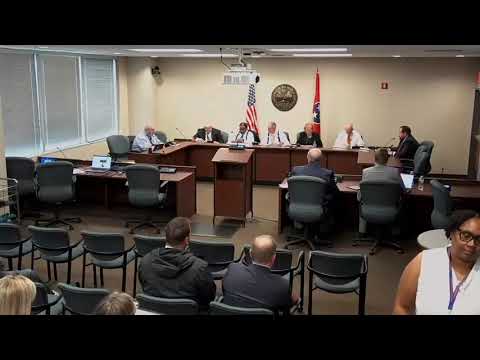
Tennessee Funeral Board approves multiple civil penalties, warning and a 60‑day suspension plan in consumer complaints
Summary
At its April 2 meeting in Nashville, the Tennessee Funeral Board accepted legal counsel recommendations in a series of consumer complaints, imposing civil penalties, a letter of warning and authorizing a 60‑day suspension tied to a $2,000 penalty for one establishment that failed to respond to prior enforcement and consumer complaints.
The Tennessee Funeral Board met April 2 in Nashville and voted on a slate of enforcement actions brought by the board’s legal staff. Legal counsel Mister Bryant presented the board’s recommendations and the board approved civil penalties, a letter of warning and, in one case, a 60‑day suspension tied to a $2,000 civil penalty and further formal hearing authority.
Board members said the actions respond to inspection findings and consumer complaints about unlicensed managers, unregistered preneed sales agents, online pricing disclosures and alleged failures to notify next of kin. “Based on the above, we'd recommend a $500 civil penalty,” Legal counsel Mister Bryant told the board while presenting several routine inspection cases.
Why it matters: The board’s votes change the regulatory status of several establishments and licensees and signal stricter follow‑through for repeat noncompliance. Board members debated how best to secure payment of penalties after several prior consent orders went unpaid; the board added language to consent orders during discussion that can freeze licensure when a signed order is not paid and said unresolved matters may be referred to collections or a formal hearing.
Key board actions and outcomes
- Complaint 260066131 (manager license lapse): Counsel recommended a $500 civil penalty after an inspection found an establishment without a licensed manager from Oct. 1–Nov. 20, 2024. The board approved the recommendation.
- Complaints 2024067381 and 2024067361 (unregistered preneed sales agents): Each involved an employee who wrote multiple preneed contracts while not properly registered. Counsel recommended $500 civil penalties for each; the board approved both recommendations.
- Complaint 2024068091 (online advertising/pricing): A complainant alleged a cremation was advertised at $795 but limited to decedents under 150 pounds. Counsel reported the respondent amended its website and that itemized pricing now appears; the board accepted counsel's recommendation of a letter of warning rather than a civil penalty.
- Complaint 2024068561 (next‑of‑kin dispute and failure to provide livestream information): The board discussed whether the funeral home made adequate inquiries about next‑of‑kin priority and failed to supply a requested livestream link. After debate, the board increased counsel’s suggested penalty from $250 to $500 and added a letter of instruction to the establishment; the motion passed unanimously.
- Complaint 2024068721 (disputed embalming/right of disposition): Following review of competing accounts about authorization to embalm and subsequent transfer to another establishment, counsel recommended closure; the board voted to close the matter.
- Complaint 02025004991 (anonymous allegations about unlicensed activity and staffing): Counsel recommended closure for lack of corroborating evidence; the board approved closure.
- Complaint 2025005021 (manager license lapse Dec. 2024–Jan. 2025): Counsel recommended a $500 civil penalty; the board approved.
- Complaint 2024060051 (alleged delay providing death certificate and history of nonpayment): Counsel recommended a $2,000 civil penalty. Board members reviewed the establishment’s disciplinary history and absence of responses. The board voted to assess the $2,000 penalty, authorize a consent order requiring payment, impose a 60‑day suspension to begin the first day of the month following receipt of a signed consent order if payment is not received, and authorize a formal hearing if necessary. The board recorded that prior unpaid civil penalties had been referred to collections in earlier matters.
- Complaints 202505031, 20300041 and 200000025005051 (employee license lapses): These companion cases involved a staff member whose funeral director and embalmer licenses lapsed and later were reinstated. The board approved a $500 total civil penalty split across the two individual licenses ($250 each) and authorized consent orders.
- Complaint 2025005091 (manager license lapse Oct.–Nov. 2024): Counsel recommended $500; the board approved.
Board discussion and process notes
Board members repeatedly emphasized license‑holder responsibility to track continuing education and renewal deadlines. Several members expressed frustration at repeat nonpayment of civil penalties and discussed stronger enforcement tools, including freezing licenses and moving to formal hearings when respondents do not respond to consent orders. Legal counsel described recent changes to consent‑order language intended to increase compliance and noted collections processes sit outside the board’s office once cases move beyond initial administrative resolution.
The board’s votes were motions on counsel recommendations; most passed on voice votes recorded as “motion carries.” The board did not publicly record roll‑call tallies for every item in the transcript; where mover and seconder were given, those names are recorded in the meeting minutes.
What’s next
Establishments and licensees receiving consent orders will be subject to the updated payment and enforcement language counsel described. The board’s executive director said staff will notify licensees of legislative changes that affect board rules and will continue monitoring reopened or unresolved cases.