Get Full Government Meeting Transcripts, Videos, & Alerts Forever!
Get email alerts on the Homelessness topic
No spam. Unsubscribe anytime.
Residents, nonprofits press council on homelessness; Pathways, U-turn for Christ propose stabilization center
Summary
A large public comment period focused on homelessness, public safety and downtown cleanliness. Nonprofits advocated a Vine Street stabilization center and case-managed services; residents raised safety, car-camping and trash concerns.
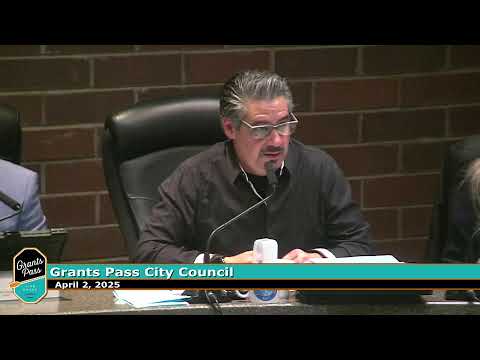
Public comment at the Grants Pass City Council meeting was dominated by concerns about homelessness, public safety, car camping and downtown cleanliness, and by presentations from local nonprofits proposing a stabilization-center model.
Residents described safety fears downtown and in parks. “Crime is going to the roof,” said Dale Aldridge, who urged stronger local action and cited people walking downtown at night. Multiple speakers, including Chris Kirby and Catherine Mathis, described feeling unsafe while running errands or walking alone. Residents reported vehicle camping in parks and along roads, tent encampments near playgrounds, and repeated nuisance behavior. One resident said repeat jail bookings were common for some individuals.
Nonprofits and service providers urged a coordinated, case-managed approach. Julie Thomas, president of PATH (Partners Assisting the Homeless), described a “stepping-stone stabilization center” that would provide 24/7 site management, security, showers, laundry, pet areas, and shared office space for nonprofit caseworkers, and said the center could provide transitional housing for more than 100 people. Kevin Darr, executive director of U-turn for Christ, said the nonprofits seek to “work ourselves out of a job” and emphasized coordination among providers to reduce emergency calls and move people into treatment and permanent housing.
Several speakers pressed for targeted responses to different populations: Brock Spurgeon and others highlighted car campers who are not using drugs and who need a place to stay; Connor Kirkpatrick proposed an immediate volunteer-led “Clean Forest” initiative to remove trash from public lands and asked the city to allow his business or nonprofits access to local dump facilities. Jordan Mortensen, who described having been homeless for eight years, urged support for programs that help people who want recovery and employment.
Councilors and staff acknowledged the breadth of concerns and discussed next steps. One councilor suggested a special meeting to gather information from the Southern Oregon Horse Racing Association on a different agenda item; another councilor urged coordination with the county on enforcement and prosecution resources. Councilors raised questions about scale and sustainability of large stabilization-site proposals and requested business plans and funding details before committing to large, long-term operations. Staff and council encouraged continued nonprofit collaboration and noted upcoming steering committee meetings on the Pathways initiative.
No formal council action on homelessness programs was taken at the meeting; councilors and staff indicated they will pursue follow-up information, consider workshops, and coordinate with county partners and nonprofits.