Get Full Government Meeting Transcripts, Videos, & Alerts Forever!
Get email alerts on the Planning Process topic
No spam. Unsubscribe anytime.
Councilmember raises design-review concerns; planning commissioners defend subcommittee role
Summary
Councilmember Victor Cabral asked the Planning Commission to review the design review subcommittee’s function after council discussion; commissioners and staff said design review provides informal, early design feedback, while staff will study options to speed permitting and reduce duplication.
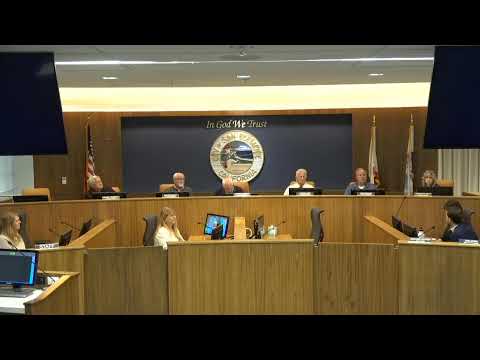
Councilmember Victor Cabral raised concerns about potential duplication and delays caused by the City of San Clemente’s Design Review Subcommittee during an April 2 Planning Commission meeting, asking staff to examine whether projects can avoid multiple reviews.
Cabral told commissioners he and others had received complaints that applicants must "have two bites at the apple"—first at design review and again at the Planning Commission—and that staff member Adam Atagmian was asked to study options. "We're trying to get a sense of the problem," Cabral said, inviting commissioners to give input to the review process.
Several commissioners defended the subcommittee as an efficiency and applicant-support tool. Commissioner Crandall said the two bodies perform distinct functions and that design review offers a lower-formality forum for schematic feedback before an applicant compiles the detailed materials required for Planning Commission action. "Design review gives the applicant an opportunity to present their thoughts ... in schematic form," Crandall said. Commissioner Camp and others said design review often improves projects and prevents denials at the Planning Commission level.
Commissioners and staff discussed potential procedural changes and trade-offs. Planning Division staff said the municipal code defines when design review is required and that some staff decisions are discretionary. Staff also noted that if design review were converted into a formal approval body, meetings would require advanced public noticing and more extensive staff packets—changes that could increase staff workload and slow the process.
Commissioners asked staff to pursue several follow-ups: examine where the design-review requirement is codified, outline options (including one-time approvals by design review or giving applicants the option to bypass it), and analyze staffing and noticing implications if the subcommittee’s role were changed. Staff said it would confer with Adam Atagmian and report back to council and commission before any changes.
The commission also discussed two related topics raised by commissioners: (1) a possible minor grading-permit category for small earthwork projects (an engineering threshold discussed informally as "50 cubic yards" but requiring staff confirmation of the precise standard or code location), and (2) the Mills Act renewal and inspection process for historic properties, including whether ongoing obligations should address visibility or landscaping that limits public benefit. Staff said Mills Act properties are now being inspected more regularly and that the commission could request additional contract terms be incorporated into future Mills Act maintenance requirements.
No formal action was taken; staff will prepare a report to council outlining options and staffing implications.