Get Full Government Meeting Transcripts, Videos, & Alerts Forever!
Get email alerts on the Dynamic Pricing topic
No spam. Unsubscribe anytime.
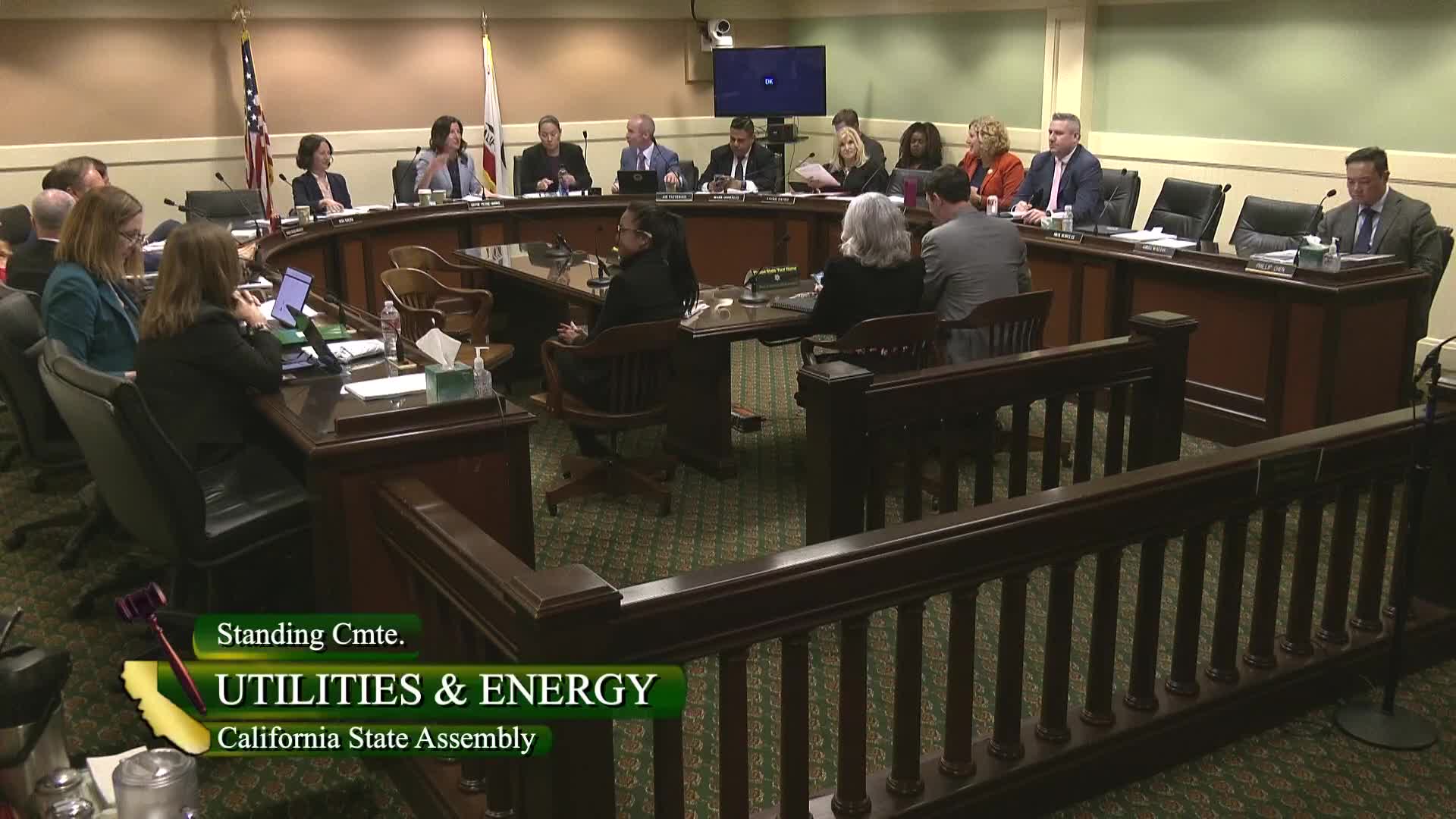
Committee sends AB 1117 to appropriations to expand optional dynamic electricity pricing
Summary
AB 1117 would require the CPUC to develop optional dynamic tariffs so customers could choose rates that vary by hour or day; supporters said dynamic pricing can lower bills and reduce grid upgrades, while utilities asked for more regulatory flexibility to work through complexities.
Assemblymember Schultz presented AB 1117, which would require the California Public Utilities Commission to develop optional dynamic tariffs that customers could elect to shift consumption away from high-cost hours and toward periods of abundant low-carbon electricity.
"AB 1117 would provide all ratepayers the option to elect a dynamic rate tariff, thereby encouraging them to shift consumption away from high priced periods when the electricity grid is its most expensive to operate," Schultz told the committee.
Supporters included large energy consumers, competitive retail providers and clean-energy advocates. Nora Sheriff of the California Large Energy Consumers Association (CLICA) said dynamic pricing has been used elsewhere to give customers a price signal and help manage grid costs, and said statutory deadlines in AB 1117 would push regulators to develop options.
Rebecca Li of NRG Energy said retail providers already offer dynamic generation-indexed rates in other markets and to some commercial customers, and described those offerings as feasible because of day-ahead market pricing and smart meters.
Investor-owned utilities registered concerns primarily about process, implementation complexity, potential cost-shifting, and the need for flexibility in regulatory design. PG&E and other IOUs said pilots and the ongoing CPUC demand-flexibility proceedings are the right venue to resolve detailed design questions.
Committee members who support dynamic pricing said it can be an affordability tool and can reduce necessary distribution and transmission upgrades by shifting demand. Members who were skeptical asked for more data on impacts to nonparticipating customers and whether hard statutory deadlines are appropriate.
The committee voted to pass AB 1117 as amended to Appropriations. The roll call recorded the vote as 14 yeas and 0 nays among members present.