Get Full Government Meeting Transcripts, Videos, & Alerts Forever!
Get email alerts on the Wage Theft topic
No spam. Unsubscribe anytime.
Bill aims to speed wage‑claim resolution by allowing judgment when employers do not participate, advocates say
Summary
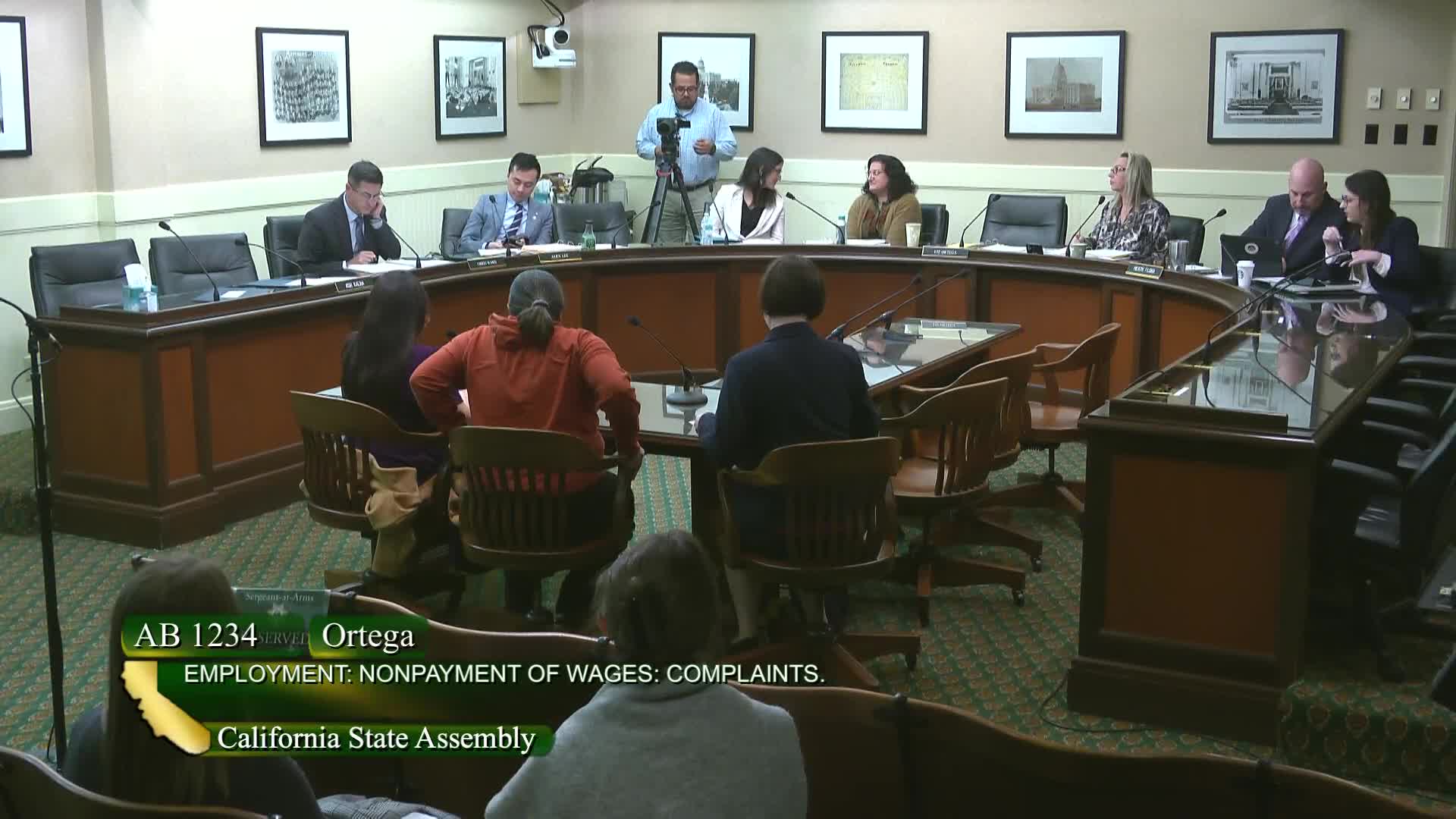
AB 1234 would permit the Labor Commissioner to enter judgment (and require defendants to explain disputes) when employers fail to answer wage claims or attend hearings. Worker advocates said the change would reduce a backlog and deter repeat offenders; business groups urged technical changes and opposed a proposed 30% administrative penalty.
Assemblymember Ortega presented AB 1234 as a measure to encourage employer participation in the Labor Commissioner's wage‑claim process and to reduce a backlog of unresolved claims. "Allowing the labor commissioner to essentially close a case when a defendant fails to participate in the process, will reduce the backlog and get workers their hard earned money sooner," the sponsor said.
Worker witnesses included Dolores Gonzalez and representatives of the Center for Workers' Rights and the Maintenance Cooperation Trust Fund, who described multi‑year delays and the personal harms caused by unpaid wages, including eviction and health effects. "Between my husband and myself, I'm owed approximately 32,000 in wages that were stolen from us," Dolores Gonzalez said through a translator.
Supporters argued employers can and often do ignore claims with little downside, leaving workers waiting for years. They said AB 1234 would create efficiencies, require defendants to explain why a claim is disputed and authorize the Labor Commissioner to enter judgment where employers fail to engage.
Opponents, including the California Chamber of Commerce and several industry groups, supported improving the process but raised concerns about procedural details and a proposed 30% administrative penalty that would be assessed when employers fail to participate. They urged amendments to mirror court default judgment procedures and to preserve opportunities for employers with bona fide disputes to respond.
The committee voted to send AB 1234 to the Judiciary Committee for further work.