Get Full Government Meeting Transcripts, Videos, & Alerts Forever!
Get email alerts on the Rps Large Hydro topic
No spam. Unsubscribe anytime.
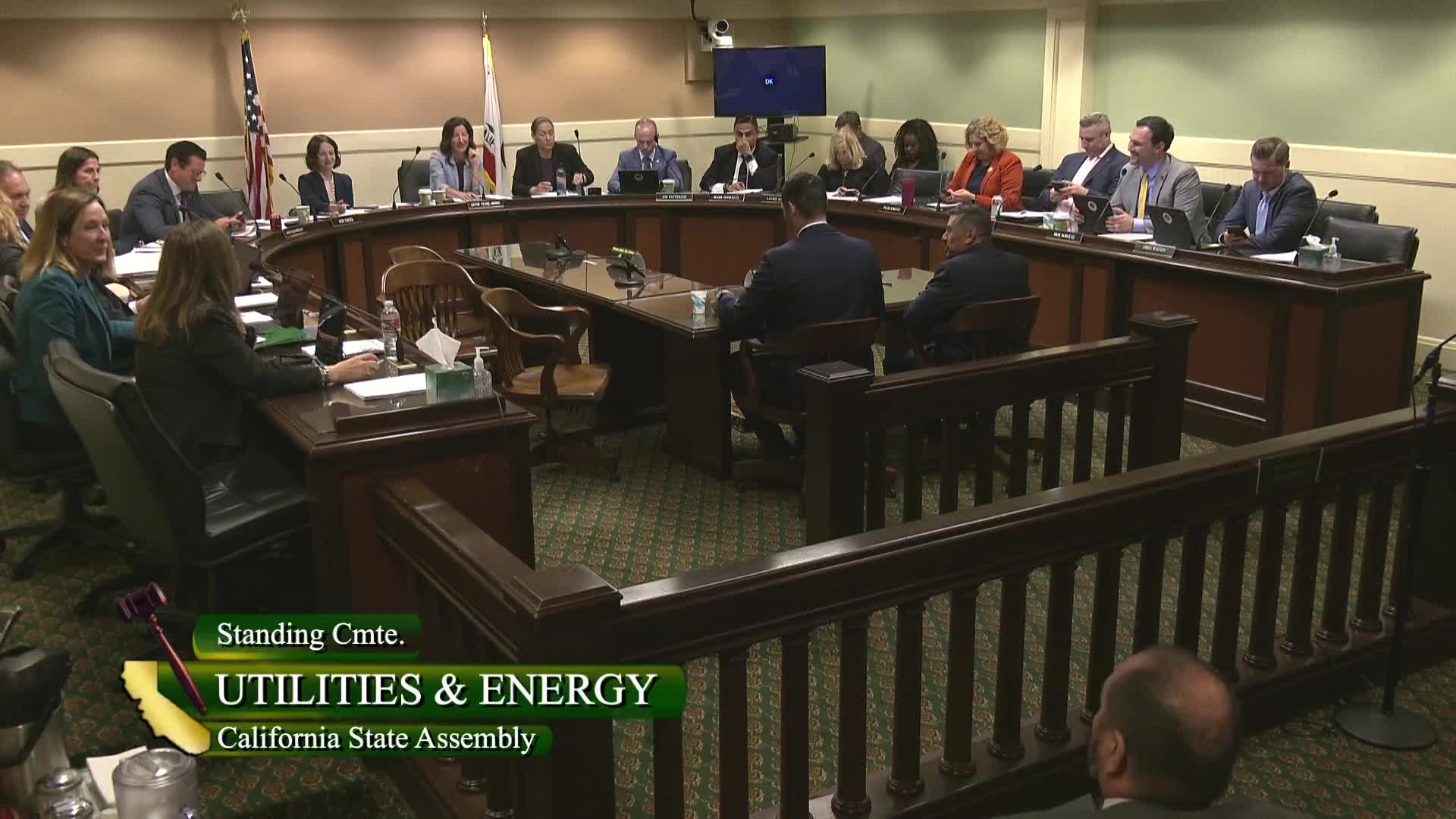
Panel rejects bill to count large hydro toward California RPS; opponents say it would undercut new renewable development
Summary
AB 1191, a proposal to make existing large-scale hydroelectric generation eligible under the Renewable Portfolio Standard, failed in committee after opponents argued it would reduce incentives for new renewables and could raise wholesale prices.
Assemblymember Tang presented AB 1191 as a proposal to allow the output of large hydroelectric facilities to count as RPS-eligible energy, arguing that including existing large hydro could lower procurement costs and immediately ease rate pressure for consumers.
"By including the state's 21 large-scale hydroelectric facilities capable of producing over 12,000 megawatts as eligible under the RPS, we could save hundreds of millions of dollars annually across the CAISO territory between now and 2030," the author told the committee.
Opponents, including TURN (The Utility Reform Network), energy trade associations, and environmental groups, said the RPS was designed to spur new renewable development and that adding existing large hydro would effectively reduce demand for new clean resources. Adria Tinnan of TURN said AB 1191 "would undermine the RPS program" and risk higher wholesale prices by raising the value of existing hydro resources.
TURN and other witnesses also argued that large hydro output is variable year to year depending on water availability; relying on hydro for compliance could produce new reliability and waiver issues during drought years and increase reliance on natural-gas-fired generation in low-hydro years.
Committee members debated the trade-offs between affordability and the statutory intent of the RPS. Some members said changes to the RPS could be considered with additional guardrails; others warned the bill would "blow up" the program as designed to incentivize new renewable projects.
The committee voted the measure down; the secretary reported the tally as 4 yeas and 11 nays.