Get Full Government Meeting Transcripts, Videos, & Alerts Forever!
Get email alerts on the Workplace Surveillance topic
No spam. Unsubscribe anytime.
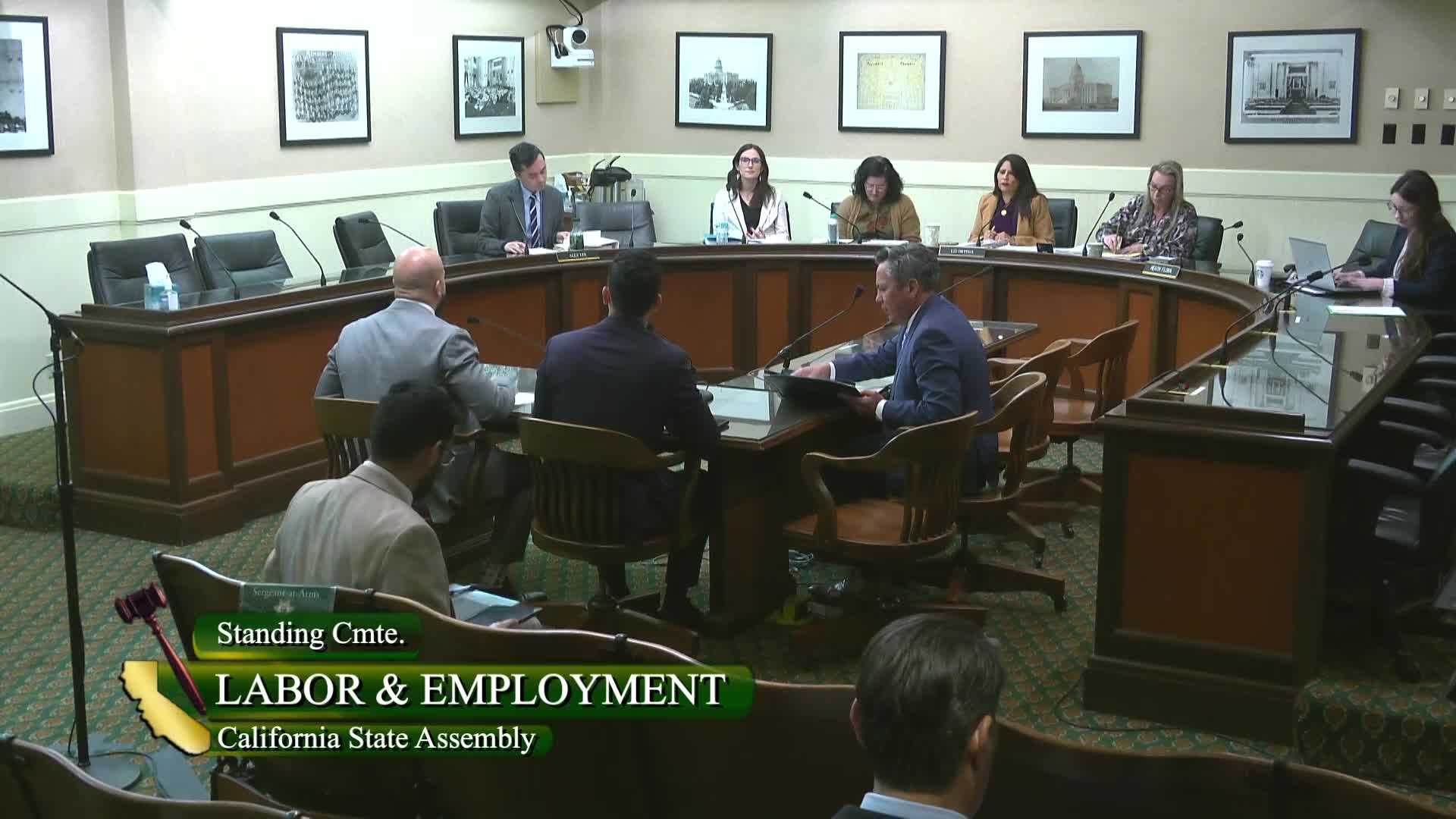
Committee hears bill to ban certain invasive workplace surveillance and protect worker data
Summary
AB 1221 would restrict the use of biometric and algorithmic surveillance in workplaces, require notice to workers, and bar employers from sharing worker data for purposes beyond interpreting it. Labor and union witnesses urged passage; business groups raised implementation and scope concerns.
Assemblymember Bridal, the bill's author, told the committee that AB 1221 would prohibit "most unreliable and potentially discriminatory types of surveillance" and require notice, human oversight, and data protections when employers use invasive technologies. "AB 1221 creates a surveillance and data protection structure for transparency, worker protection, and prohibitions on abusive technologies," Assemblymember Bridal said.
The bill would bar employers from using tools that collect or infer protected information about workers—such as immigration or health status—or that use emotional, facial, gait or retina recognition in ways that could be discriminatory. It would also require employers to provide advance notice to workers when they introduce or use surveillance tools and to produce corroborating evidence before disciplining or firing workers based on algorithmic outputs.
Yvonne Fernandez of the California Labor Federation and Shane Guzman of the Teamsters described products on the market—biometric ID badges, wearables and retail monitoring systems—and said those tools are affordable and in use now. "These wearable trackers can gather large swaths of data ranging from the workers biometrics to conversations in the workplace," Fernandez said.
Business groups, including the California Chamber of Commerce and the LA Area Chamber, testified in respectful opposition. They urged additional time to review the recently printed bill, raised concerns about mandatory disclosures that could include counsel or insurers, and warned that broad access and correction rights could create operational and confidentiality problems.
Assemblymember Bridal said the bill is a starting point and that sponsors are open to working with opponents on technical issues. The committee voted to refer the bill to the Privacy and Consumer Protection Committee for further work.