Get Full Government Meeting Transcripts, Videos, & Alerts Forever!
Get email alerts on the Budget Transparency topic
No spam. Unsubscribe anytime.
Residents press commissioners for clarity on ARP spending, jail transfers and upcoming levy
Summary
Members of the public raised questions about how American Rescue Plan (ARP) funds were spent on the sheriff's department and dispatch, sought specifics about previously allocated amounts, and asked for data to inform an upcoming levy vote; county officials responded with operational and budget context.
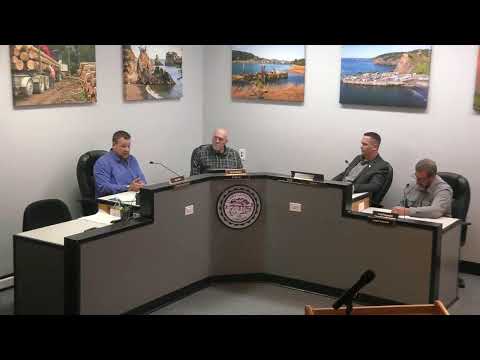
Several residents used the public‑comment period at the April 2 Curry County Board of Commissioners meeting to ask for more detailed accounting of federal American Rescue Plan (ARP) and other one‑time funds the county transferred to the sheriff's office, dispatch and vehicle purchases.
Dee Ragsdale, a Gold Beach resident, told the board she wanted to be an informed voter ahead of a forthcoming county levy and said that past public records she obtained showed transfers and expenditures that lacked detailed line‑item descriptions. Ragsdale cited amounts she said she found in county records: a transfer of $1,801,000 to the sheriff’s department for the jail, about $820,000 allocated to dispatch, and $250,000 for new vehicles. "I don't know what that grant is for that you're proposing and how that dovetails with what was or was not spent for the jail," Ragsdale said.
Director of County Operations (referred to in the meeting as Director Fitzgerald) responded with budgetary context. He said the $1.8 million referenced by Ragsdale was used for operations and that a separate federal grant application being pursued would focus on jail infrastructure improvements. "That money that we're looking for from the federal appropriation will be specifically for... update and improve the jail infrastructure," Fitzgerald said, adding staff have compiled a specific maintenance list and price estimates. He said the county used one‑time COVID (ARP) funds for operations and that the proposed infrastructure grant would be distinct from those operational uses.
Fitzgerald and commissioners also described earlier budget issues that had affected county finances: past use of road department funds to cover general patrol costs; late ledger reconciliations; and one‑time funds that the county had relied on and which are no longer available. A member of the board explained these historic funding shifts contributed to significant budget shortfalls that prompted recent reductions. The board noted that more detailed statistical information (calls for service, jail population, service gaps) would be best provided by the sheriff but that the sheriff had not been participating in meetings.
Why it matters: Several residents said they will soon vote on a levy and want transparent, itemized accounting of how one‑time federal funds were spent and how proposed grants interact with prior expenditures. Commissioners and staff acknowledged the request and identified the sheriff as the primary source for operational statistics; they also reiterated the county’s effort to reconcile ledgers and correct one‑time funding practices.
Next steps: Commissioners asked staff to continue compiling detailed information and to coordinate with the sheriff’s office for operational statistics. The board did not take a formal vote on funding or levy language at the meeting.