Get Full Government Meeting Transcripts, Videos, & Alerts Forever!
Get email alerts on the Energy And Power topic
No spam. Unsubscribe anytime.
Developer proposes solar array, data‑center offtake and a 'power city' concept to Toquerville council
Summary
Developer Jerry Eaves and energy consultants outlined a plan for a solar generation site at Boulder Ridge with an initial data‑center offtake and possible municipal revenue if Toquerville becomes a local distributor or 'power city.' Council asked technical and policy questions; no action taken.
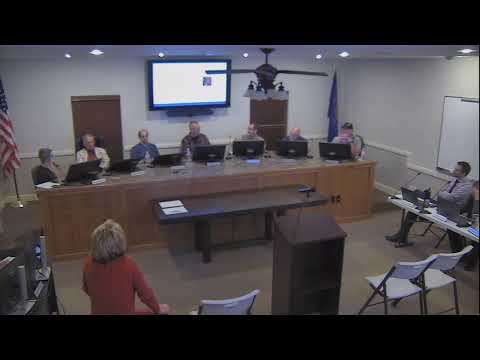
A developer and his energy partners presented a proposal at the Toquerville City Council meeting to site large‑scale solar on Boulder Ridge, pair it with an on‑site data‑center offtake and explore a city role as a local municipal power distributor.
Jerry Eaves, who said he has held property in the Boulder Ridge area since 2008, described a roughly 100‑acre site near the I‑15 interchange and urged the city to consider a designated “power area” or “power city” to capture revenue and local benefit from generation. “If there was a way possible to implement this power city and have Boulder Ridge be your first part of it, I think it's a win win situation,” Eaves told council.
Industry representatives from Plains Energy described how local generation could be used in several ways: wholesale or retail of power, direct offtake to a large new customer such as a data center, and local retailing that could give the city a revenue share. Plains Energy representatives said data centers can start at tens of megawatts and scale higher; one developer mentioned a potential first‑stage data‑center offtake of 25 megawatts with the possibility of expansion. Plains Energy technical staff added that on‑site generation can reduce wholesale transmission dependence and provide redundancy during regional constraints.
Councilors questioned grid interconnection, what the city would need to operate retail service, and water needs for data‑center cooling. The presenters said some data centers use liquid media that does not require large volumes of potable water and estimated panel cleaning needs at “one or two acre‑feet a year,” which could be met by purchased water rights or on‑site wells. Eaves and his partners said they expect to begin construction as early as fall if offtake partners move forward and that developers may proceed whether or not the city partners formally join the plan.
No formal action was requested or taken at the meeting. Presenters asked the council for feedback and indicated they would return with further technical and legal detail if the council wanted to explore municipal participation or easement coordination with Pacificorp/Rocky Mountain Power for interconnection.
Why it matters: Large local renewable generation paired with a significant electricity user could change the city’s relationship with local utilities, produce new revenue streams, and raise planning questions about land use, transmission access and water for operations.
Next steps: Presenters offered to return for deeper technical briefings. Council requested more information on legal, financial and interconnection issues before deciding whether to pursue a municipal power strategy.