Get Full Government Meeting Transcripts, Videos, & Alerts Forever!
Get email alerts on the Water Conservation topic
No spam. Unsubscribe anytime.
Toquerville council adopts updated Water Conservation Plan after staff corrects targets, clarifies secondary water role
Summary
Council voted to adopt the city’s updated water conservation plan after staff incorporated edits, noted the state update to the conservation law, and clarified the role of the city’s secondary water system and meter‑app participation.
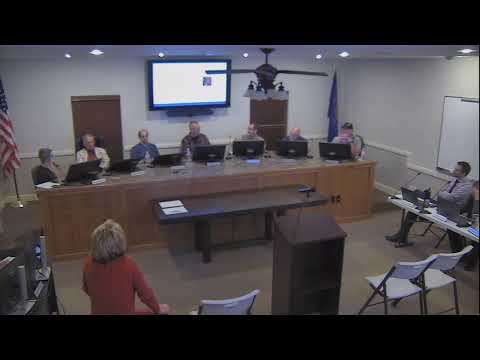
Toquerville City Council on Thursday voted to adopt the city’s updated Water Conservation Plan (Resolution 2025) after staff summarized edits and answered council questions about goals, measurement and outreach.
Planning staff said the document was revised in five material areas after comments from council and outside reviewers. Staff noted the statewide Water Conservation Plan Act was updated in 2023 and said the updated city plan now explicitly recognizes the city’s secondary water system (the city reported 560 residential connections served by the Toquerville Secondary Water System). Staff also corrected a usage table to show that per‑person usage has decreased in recent years rather than increased.
Emily, a planning department staffer, told the council the plan’s target — a 14% reduction aligned to the regional goal — would be an achievable benchmark by 2030 if the measures in the plan are implemented. “The city aims to achieve conservation goals by implementing the measures outlined in this plan,” Emily said during the presentation.
Council members pressed staff on several implementation points, including household leak detection and fixture‑replacement outreach. Staff said 81 service connections (about 24% of those with the new meters) had registered on the provider’s leak‑detection app; the city can still detect larger leaks centrally and the utility will respond to high‑threshold alarms. Staff also noted an example used in the plan that a family of four replacing pre‑1992 plumbing fixtures could save roughly 40,000 gallons a year, or about $80 in annual water costs by the estimate in the plan, though councilors questioned the payback period and cost of fixture replacement.
After discussion, a council member moved to adopt the Water Conservation Plan; the motion was seconded and carried with all councilors voting in favor.
Why it matters: The plan formalizes the city’s conservation measures, clarifies the role of secondary irrigation water in planning, and sets a numeric target (14% reduction aligned with regional goals) that staff will monitor and report on.
Next steps: Staff will roll out targeted outreach to increase meter‑app signups, pursue opportunities such as toilet buyback programs discussed during the meeting, and report back on progress toward the plan’s conservation targets.