Get Full Government Meeting Transcripts, Videos, & Alerts Forever!
Get email alerts on the Kakaako Transition topic
No spam. Unsubscribe anytime.
HCDA board hears early brief on proposal to transition Kakaʻako district to City and County of Honolulu
Summary
The Hawaiʻi Community Development Authority received an informational briefing on a legislative proposal to transition the Kakaʻako Community Development District to the City and County of Honolulu, with board members raising questions about timing, asset transfers, zoning and funding.
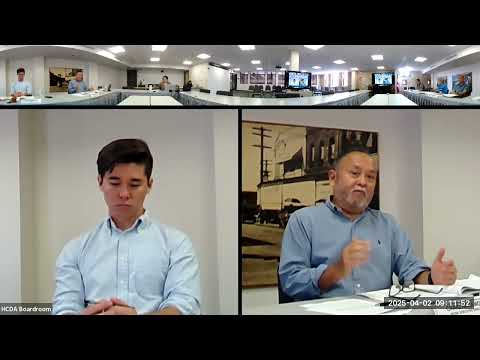
The Hawaiʻi Community Development Authority received an informational briefing April 2 on a legislative proposal to transition the Kakaʻako Community Development District to the City and County of Honolulu.
The briefing was presented by Craig Nakamoto, executive director of the Hawaiʻi Community Development Authority, who said staff brought the topic to the general authority board "for information" after the proposal surfaced as an amendment to Senate Bill 534 during the legislative session.
The board was told the proposal, as drafted during the session, would sunset or transition Kakaʻako in five years. Nakamoto said the amendment did not advance in the final bill but that some legislators continue to favor transitioning the district. He said transitioning one district could free HCDA capacity to focus on other state transit-oriented development work.
Board members questioned basic mechanics and timing. Member Yamashita asked about the enabling intent for HCDA when it was created and whether redevelopment authorities typically retain property long-term; Nakamoto said the 1976 statute intended HCDA as a redevelopment agency initially focused on Kakaʻako and that redevelopment authorities are not typically intended to exist in perpetuity. He added that not all HCDA-owned properties would necessarily be conveyed because some are revenue-producing assets the agency may wish to retain.
Members also raised numerous logistical issues that would require detailed study before any transition: outstanding liabilities and credits owed to developers; permits and vested master plans; remnant road parcels and parks owned by HCDA; which lands would transfer and which would not; and what zoning rules would apply after any transfer. Nakamoto flagged zoning and implementation as among the largest unresolved questions: whether the City and County of Honolulu would adopt HCDA rules, adopt its own, or use a hybrid approach.
Board members and staff noted that similar transfers — including earlier park transfers — have proven complex. Lindsey (HCDA staff) described the Kakaʻako Park transfer as a long, drawn-out process in which HCDA ultimately provided funding to bring facilities to city standards; she said the total HCDA funding for that transfer grew over time and that the report lists an amount of $2,200,000 as part of the park transfer paperwork.
Several members recommended forming a permitted interaction group (PIG) or similar working group to negotiate details with the city and state and to involve decision makers who control funding and conveyances. One board member recommended including representatives from HCDA, the state (those involved in funding decisions) and the city (those involved in conveyance and funding) to develop provisional agreements and memoranda of understanding to increase the durability of any transition plan.
Nakamoto and other board members warned that the five-year timeline in the draft could be insufficient given the volume of issues to resolve. Nakamoto also cautioned that initiating a formal transition process could make legislative funding for Kakaʻako projects less likely during the transition.
The presentation was informational; board members did not take formal action on the transition at the April 2 meeting. The board closed the item with staff planning to return with more analysis and, at a later meeting, a recommendation on whether to establish a PIG or other steps.
No members of the public provided oral testimony on this item during the meeting.