Get Full Government Meeting Transcripts, Videos, & Alerts Forever!
Get email alerts on the Zoning Ordinance Rewrite topic
No spam. Unsubscribe anytime.
Leesburg staff outlines major zoning ordinance rewrite, releases public draft March 6
Summary
James David, Leesburg’s director of community development, briefed the Economic Development Commission on a zoning ordinance rewrite intended to align local code with the 2022 Town Plan, consolidate districts, and introduce an online review platform; the public review draft was released March 6 and the comment period closes May 5.
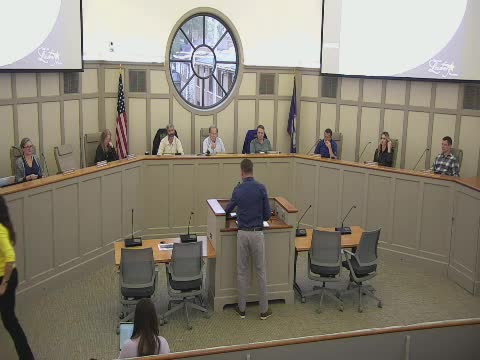
James David, director of community development for the Town of Leesburg, told the Economic Development Commission on April 2 that the town has released a public review draft of a zoning ordinance rewrite intended to align the zoning code with the 2022 Town Plan and to modernize the document.
"It's a pretty important project. Jurisdictions really don't undertake these types of things but once every 5 to 20 years," David said, explaining the scope of the effort. He said the public review draft was released on March 6 and that planning commission in‑depth review begins the night after the commission meeting.
The rewrite is intended to update a code last implemented in 2003, streamline structure and uses, and reflect recent policy work including the Crescent District master plan and newly adopted capital intensity factors. David said the team consolidated the existing zoning districts — "we went from 24 existing zoning districts down to 12" — and added new district types, including a "commercial neighborhood" district and an "innovation center" aimed at mixing residential with office, research and laboratory uses.
Why it matters: the zoning ordinance is Leesburg’s primary implementation tool for the town plan. The commission and staff described the rewrite as consequential because the ordinance governs how development projects are reviewed and what types of businesses and housing are permitted.
Key elements David highlighted include a code audit prepared by the consultant, a move to a use‑category approach to reduce the number of custom ordinance amendments, and performance standards intended to convert some special‑exception uses into limited, by‑right uses where feasible. David said capital intensity factors will provide a justifiable method for negotiating mitigation costs for residential rezonings, focusing on transportation, public safety and parks and recreation.
On development standards, David said the draft addresses parking ratios, adds bike‑parking requirements and includes sustainability incentives that could yield density bonuses or parking reductions for projects that meet green‑building standards. Signs remain under review and were not yet included in the draft, he said.
The rewrite is accompanied by an online regulatory platform using ENCODE plus that David demonstrated. The platform provides an interactive zoning map, parcel‑level rules, searchable code text and an inline comment tool. David described the comment workflow: users click the comment button, enter a name and email address, submit remarks and the town receives them immediately. He said the project team had already collected about 350 comments from focus groups held during 2023 and that the public comment period for the draft closes May 5. "We're getting those comments. We're able to look at them and use them as we go forward to try and improve this draft," David said.
Commissioners asked how the focus groups were structured; David said the town met separately with real estate agents, developers, land‑use attorneys, property owners, downtown businesses, preservation groups and residential stakeholders over rounds in 2023, and used high‑level questions (what do you like, dislike, want to change) to gather about 350 comments pre‑draft. David said he expects the planning commission to review the ordinance article by article and said the town aims to take the rewrite to town council by the end of the calendar year, an "optimistic goal."
Commissioners also asked about the new innovation center district. David said the district is "a brand new district that fosters a mix of residential, office, research, and laboratory uses in a greener setting than traditional industrial zones," and specifically noted that data centers would be handled in the industrial research district rather than the innovation center.
The presentation included examples (the Village at Leesburg as an approximate model for an innovation center) and a demonstration of the interactive parcel view that shows proposed zoning, existing zoning, applicable overlays and the lot standards relevant to that parcel. David encouraged the commission to focus feedback on four articles he flagged as most relevant to economic development: zoning districts and dimensional standards; use regulations; development standards; and review and approval procedures (process).
The draft and interactive platform are posted at the project page (leesburgva.gov/zoningordinancerewrite). David said staff will continue to accept comments after May 5 while the planning commission works through its review schedule.
The meeting discussion also touched on temporary uses and pop‑up retail. David said the town has temporary‑use and event standards but noted the need to consider greater flexibility for short‑term activation of vacant storefronts or parcels.
The commission did not take formal action on the zoning rewrite at the April 2 meeting; commissioners requested additional information and signaled interest in coordinating comment timing with the planning commission work plan.