Get Full Government Meeting Transcripts, Videos, & Alerts Forever!
Get email alerts on the Administrative Procedures topic
No spam. Unsubscribe anytime.
Committee clarifies ordinance authentication, strikes duplicate special-meeting language
Summary
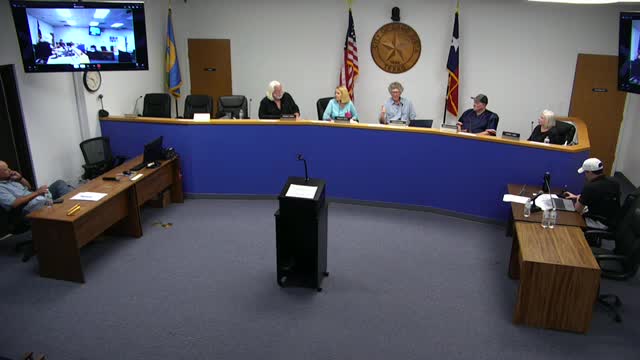
The Lago Vista charter committee revised language on who authenticates ordinances after a mayor recently declined to sign and removed duplicative wording about special-called meetings; the committee also approved a small edit clarifying rights in complaint hearings.
The Lago Vista Charter Revision Committee voted to revise two administrative portions of the draft charter: how ordinances are authenticated and removing duplicative language on special-called meetings.
On ordinance authentication, the committee approved modifying the sentence that governs signing and recording approved ordinances. Members removed the phrase "in the absence of the mayor" and adjusted punctuation so the sentence reads that an ordinance shall be authenticated by the signature of the mayor, the mayor pro tem, and the city secretary (with the city secretary also keeping the record). The change followed committee discussion prompted by a recent case in which the mayor declined to sign an approved document.
The committee also voted to remove a duplicative sentence about special-called meetings from a section that addresses council meeting times. Members said special meetings are already addressed elsewhere in the draft and removing the duplication will reduce confusion.
Hearing rights: Separately, the committee voted to clarify the rights of a council member who is the subject of a complaint. The committee added language to say the member "shall have the right to representation at the hearing, present evidence, and to question and cross-examine all witnesses." Members said the added phrase "present evidence" addresses a prior situation where a complainee was cut off during a public hearing and they wanted to avoid that procedural ambiguity in future cases.
Votes and next steps: Committee members approved the edits and asked staff to incorporate them into a clean draft for presentation to the full city council. The city attorney will continue to advise on related procedural questions.
Why it matters: The changes aim to remove ambiguities that surfaced during recent charter-related disputes and to make the post-approval administrative process and hearing rules clearer for both elected officials and the public.