Get Full Government Meeting Transcripts, Videos, & Alerts Forever!
Get email alerts on the Charter Enforcement topic
No spam. Unsubscribe anytime.
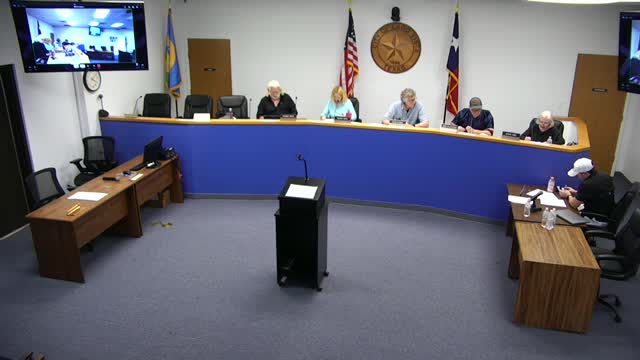
Charter committee narrows options on how to handle alleged charter violations, adds intermediate penalties
Summary
Lago Vista's charter committee debated whether automatic filing mechanisms are appropriate for charter violations and approved new language raising the threshold for removal from office and authorizing intermediate sanctions including censure, short suspensions and temporary loss of voting rights.
The Lago Vista Charter Revision Committee voted to recommend changes to how the city handles alleged violations of the city charter, endorsing a complaint-driven process while adding intermediate penalties and raising the removal threshold.
Committee members spent more than an hour debating whether the city should allow an "automatic" filing mechanism ' for example, empowering the city manager or city attorney to file complaints when members of the public or council do not ' or keep the process complaint-driven. After back-and-forth about due process and practical consequences, the committee favored retaining a complaint-based system but added new language that would (1) require a higher vote threshold to remove an elected official and (2) permit lesser sanctions short of removal.
Why it matters: The committee's revisions address an issue that became public earlier this year when the mayor declined to sign a required document, prompting a citizen complaint and a council response. Committee members said they wanted clearer rules so future charter disputes do not hinge on ad hoc interpretations or procedural confusion.
What the committee approved: The committee voted to recommend an amendment to the section governing removal and penalties. The recommended changes include: - Raising the vote threshold for removal. The draft language the committee approved increases the number of council votes required to declare removal is warranted (the committee discussed changing the required number from a simple majority to five council members). - Adding lesser penalties. The committee recommended giving the council discretion to impose lesser sanctions when removal is not warranted, specifically: censure; suspension up to 30 days; and loss of voting rights at council meetings for up to 90 days (subject to attorney review on legality and implementation). - Clarifying finality. The committee agreed to shorten a sentence about council decisions so it reads that the council's decision is "final and binding" (members removed the qualifying phrase "so long as it is made in good faith").
Discussion and dissent: Committee members expressed sharply different views. - Some members argued that charter violations are serious and should lead to immediate removal; one said "one violation of charter, one violation of your oath, it should just be one and done. You're out." Others said removing an elected official who was recently elected could be politically fraught and recommended intermediate penalties. - Several members objected to an "automatic" filing mechanism that would empower staff (city manager or city attorney) to initiate a complaint without a sworn filing by a citizen or fellow council member, saying it would depart from the adversarial complaint model that resembles regular judicial processes. - Concerns were raised about forcing council members to file complaints against colleagues; a motion to add a mandatory duty for council members (and others) to file complaints failed for lack of support.
Process next steps: The committee directed staff to prepare a clean draft incorporating the approved wording and to bring it back for review. The committee also asked that the city attorney review the proposed suspension and loss-of-vote sanctions to confirm legal viability.
Quotes: Committee members referenced an earlier public incident involving the mayor as context for the discussion. One member said, "we all probably are familiar with what happened when the mayor refused to sign the document for the airport," and used that example to argue for clearer processes. Another member urged caution: "If you violate the charter, you're removed. No discussion, no options," while others asked for options short of removal to avoid a political firestorm.
What the recommendation does not do: The committee did not adopt an automatic filing mechanism and did not change the fundamental rule that a complaint must initiate the process; the panel favored retaining a complaint-driven trigger for investigations and hearings.
What comes next: The committee will present the revised draft to the full city council for deliberation; the charter committee asked the city attorney to vet the legality of suspension and voting-rights sanctions before the next presentation.