Get Full Government Meeting Transcripts, Videos, & Alerts Forever!
Get email alerts on the Workforce Development topic
No spam. Unsubscribe anytime.
American YouthWorks highlights HealthCorps pre‑apprenticeship and community health worker pipeline
Summary
American YouthWorks described its HealthCorps and YouthBuild pre‑apprenticeship programs, which combine academics, vocational training and service learning to prepare low‑income young people for health careers and community health work.
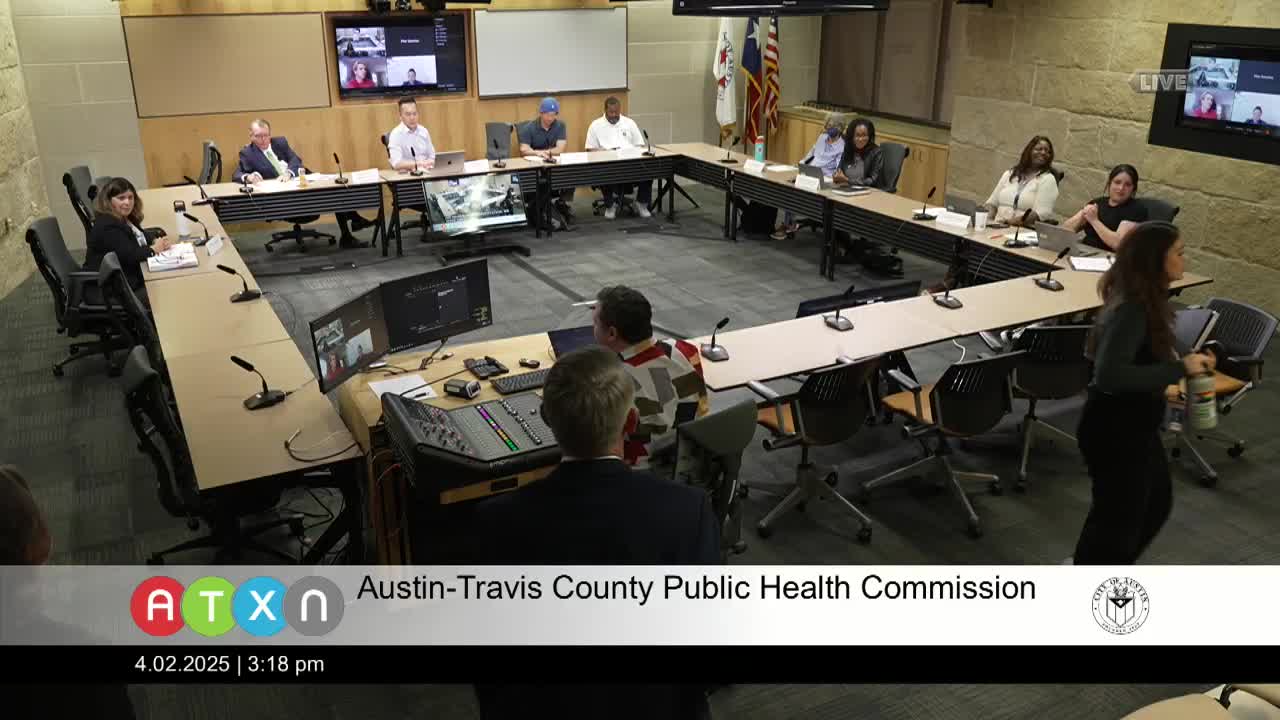
American YouthWorks presented its HealthCorps and YouthBuild pre‑apprenticeship programs to the Austin‑Travis County Public Health Commission, describing education, certification and community service components aimed at getting young people into health careers.
Park Smith, chief executive officer of American YouthWorks, said the nonprofit — founded in 1975 — offers an "earn‑and‑learn" model that combines academics (high school diploma or GED preparation) with vocational training, certifications and supervised community service. David (program staff) and Asi Tan, Community Health Corps coordinator, described the organization’s recent emphasis on community health worker training and a Public Health AmeriCorps track.
Key details: Smith and staff said HealthCorps focuses on community health worker certification and related public health training rather than the traditional certified nursing assistant (CNA) pathway. The program includes classroom instruction, vocational certifications, and supervised service placements at clinics and community organizations. Members typically serve a full‑time AmeriCorps term of about 1,700 hours and receive training and supervised externships prior to placement.
Metrics and outcomes: Presenters reported that in the program’s first full year they served more than 1,600 clients and completed about 15,000 hours of community service. They said the organization has helped over 10,000 young people since its founding and that most current participants are low‑income; presenters noted about 94% of recent participants meet low‑income thresholds (at or below 200% of the federal poverty guideline).
Partner network and placements: American YouthWorks named partners including Austin Community College for credentialing, Central Texas Food Bank, Austin‑Travis EMS pop‑up clinics, Vivint Health (as a host site), Planned Parenthood, mission‑based clinics and local school districts. Presenters asked the commission for help identifying additional placement sites and city or county funding to support program expansion.
Commissioner and staff feedback: Commissioners and staff praised the program’s community‑based training model and suggested additional placement opportunities and collaborations. Austin Public Health staff noted the Medical Reserve Corps as a potential partnership for clinics and vaccination events. Commissioners and partners discussed the importance of supportive supervision at placement sites, workforce development contracts with Travis County, and continuing collaborations with local health clinics.
Next steps: Presenters requested the commission consider referrals to potential host sites and advised they will continue to pursue foundation and grant funding. Commissioner questions focused on sustainability, city and county funding options, and opportunities for expanded placements in clinics and community health organizations.
Provenance: The discussion opened when American YouthWorks began its presentation and concluded after commissioners and staff offered suggestions and questions. (See provenance.)