Get Full Government Meeting Transcripts, Videos, & Alerts Forever!
Get email alerts on the Humanitarian Protection topic
No spam. Unsubscribe anytime.
UN Security Council speaker urges action after record aid-worker deaths
Summary
Madame Joyce Suya told the Security Council that 2024 was the deadliest year on record for humanitarian workers, called for protection measures, stronger legal accountability and a survivor-centered response, and cited attacks across Gaza, Sudan, Haiti, Yemen and the DRC.
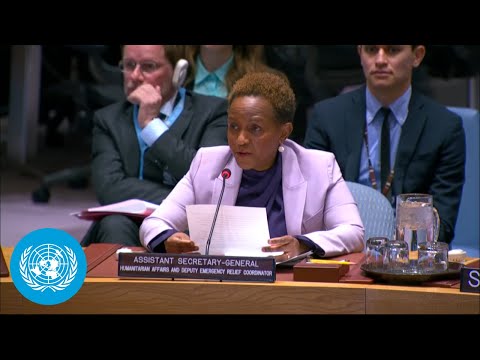
Madame Joyce Suya, Representative, addressing the United Nations Security Council, urged immediate action and accountability after what she said was a record number of humanitarian workers killed in 2024 and widespread threats to aid operations.
Suya said the killings and attacks are gravely undermining lifesaving relief and disproportionately affect locally hired staff. "Humanitarian workers are being killed in unprecedented numbers," she said, and called for perpetrators to be held to account.
According to Suya's statement to the council, available data show 377 aid workers were killed across 20 countries in 2024, an increase she described as almost 100 more fatalities than in 2023 and a 137 percent rise from 2022. She said many more were injured, kidnapped, attacked and arbitrarily detained.
The speaker cited specific incidents witnessed or reported by humanitarian teams. She said an OCHA team and personnel from the Palestinian Red Crescent recovered the bodies of 15 emergency and aid workers in Rafa after what she described as an incident in which "their clearly marked vehicles were found destroyed and crushed." Suya said another United Nations colleague was killed and six others injured in Gaza on March 19, bringing the total number of aid workers killed in the Gaza Strip since July 2023 to more than 408, a figure she described as making Gaza "the most dangerous place for humanitarians ever."
Suya stressed that local staff bear the greatest burden: "The vast majority of those killed — about 95% — are local aid workers," she said, adding that relief efforts would collapse without them. She cited a finding from the International Federation of Red Cross and Red Crescent Societies that the killing of a local aid worker receives far less media coverage than that of an international staff member.
Beyond direct attacks, Suya said humanitarian personnel face detention, criminalization and misinformation campaigns that have targeted aid organizations in Haiti, the Occupied Palestinian Territory, Yemen and the Democratic Republic of the Congo. She said false claims of partiality in Sudan since April 2023 have led to attacks at checkpoints and impeded operations.
Addressing the council, Suya offered three specific asks rather than announcing any new council action. First, she urged member states and the council to "act to ensure respect for international law and to protect humanitarian and UN workers," including steps such as council visits, fact-finding missions and withholding arms transfers where appropriate. Second, she asked the council and UN membership to speak out consistently to condemn harm to UN and humanitarian personnel and to defend organizations targeted by smear campaigns. Third, she called for strengthened domestic and international legal frameworks and for accountability measures, including referring situations to the International Criminal Court "when national jurisdictions fail." She also urged a survivor-centered approach that would ensure legal aid, reparations and access to mental health and trauma counseling for those affected.
Suya framed these recommendations as responses to a humanitarian protection crisis rather than as formal Council decisions. No vote or formal council action on her proposals was recorded during the statement.
In closing she reiterated condolences to the families of victims and urged tangible steps to make humanitarian operations safer going forward.